Journal: Strong Signals–Las Vegas as Next 9/11

08 Wild Cards, 09 Terrorism, 10 Security, 11 Society, Civil Society, Collective Intelligence, Government, Law Enforcement, Methods & Process
Ground Zero Las Vegas--Full Story Online

Monday, December 28, 2009

SPOOK'S JOURNAL

Nine of the ten largest hotels in the world are in Las Vegas. Four of them share one intersection: Las Vegas Boulevard (The Strip) and Tropicana Avenue. Together, these four corners comprise 12,953 rooms, most of which enjoy high occupancy year-round and are often full. Figure 25,000 people huddled on four corners.

The imagery is also appealing to terrorists: Occupying one corner is New York, New York, with a “skyline” that features the Empire State Building, the Chrysler Building, and the Statue of Liberty.

This thought: It is no longer necessary for al-Qaeda terrorists to hijack two Beechcraft C99 planes out of Vegas, as easy as this would be. Instead, why not drive (three-and-a-half hours from Vegas) to Grand Canyon West Airport with a few vans filled with ammonium nitrate (fertilizer) and diesel fuel? Armed with a few baseball bats, one could take command of the airstrip in less than a minute. Then wait for the Beechcrafts to arrive. Loaded with ammonium nitrate (or a low grade chemical or biological agent), these vector weapons could then be dispatched back at Las Vegas, a mere 15 minutes away at full throttle, or Hoover Dam, half the distance.

Phi Beta Iota: This posting was brought to our attention by a patriotic citizen who finds a great deal of common sense on this web site, and none at all within the so-called Department of Homeland Security (DHS).  We recollect the period 1990-1994 when Peter Black, Winn Schwartau, and Robert Steele, among others, tried to warn Congress and the Executive about the cyber-threat, to include substantive correspondence to the top National Information Infrastructure security officer, Marty Harris, sounding the alarm.  We vividly recollect testifying on behalf of Hackers and trying to tell the Secret Service it should hire them, not torment them.  Now we have a government spending hundreds of billions of dollars in the wrong way, and failing to LISTEN to common sense solutions from its citizens.

Journal: Weaponizing Web 2.0

Memorandum: Talking Points on Homeland Defense Intelligence

1999 Setting the Stage for Information-Sharing in the 21st Century: Three Issues of Common Concern to DoD and the Rest of the World

Journal: Selected MILNET Headlines

05 Civil War, 08 Wild Cards, 10 Security, Government, Military

On Point in AF--Full Story

Roadside Bomb Hunting: Learned Skill or Intuition?

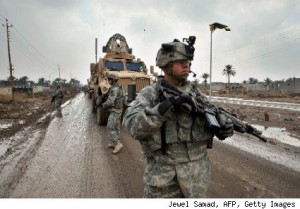
With IED casualties since 2001 mounting (2,451 dead, 23,650 wounded, in Iraq and Afghanistan as of Dec. 5), the military is mounting a determined effort to find out whether spotting IEDs is an intuitive, innate skill, like the ability to quickly pick up a new language, or whether it is learned through experience. Because if it's learned through experience, the military can teach other people to be good at it. And save lives.
The same questions arose 40 years ago when the Army and Marines began to wonder if they could clone the guys who were really, really good at walking point and guiding the troops around mines and booby-traps. Two major studies were completed, but the military lost interest as the war wound down and its attention turned back to the Cold War.

Official: Taliban Confident Of Afghan Victory

“They have chosen the IED as the way they are going to fight us,” the intelligence official said, adding the Taliban still engage troops in firefights and use suicide bombers.

“But the IED has had a strategic effect, and it's the weapon of choice. … And I say it's akin to the surface-to-air missile system for the mujahedeen back in the Soviet era.”

AWOL From The Battlefield In war, death of trust invited defeat

With President Obama's announcement the Afghan surge is for 18 months, any possibility trust between U.S. forces and the Afghan people will factor into the stability equation is minimized. Locals will be reluctant to trust U.S. forces just “passing through” the area; reports on militant activity will trickle, not flow, in.

Also missing will be the Afghan people's trust for their own military and police. . . .Trust by NATO troops for Afghan security forces suffers, too, as militants successfully infiltrate such security forces.  . . .  Additionally, many Muslims in Afghanistan and Pakistan distrust U.S. motives in Afghanistan. . . .

Spirit Of America In Afghanistan

In 2003, Sgt. First Class Jay Smith and his Army Special Forces team were based in Orgun-e, Afghanistan and were taking regular rocket fire from al Qaeda fighters. But Sgt. Smith and his men were armed with an effective counterweapon—gifts of school supplies and sports gear for children, and clothing, shoes and blankets for nearby families, all provided by American donors.

After receiving these items, the grateful villagers reciprocated by forming a night-watch patrol to protect our soldiers. Good relations with locals helped save American lives. I've witnessed this success on the front lines, aided by support from home, repeated many times since Sgt. Smith.

Elsewhere:


Continue reading “Journal: Selected MILNET Headlines”

Journal: Evaluating the Gaza Confrontation

04 Inter-State Conflict, 05 Civil War, 06 Genocide, 07 Other Atrocities, 08 Wild Cards, 10 Security, 11 Society, Civil Society, Cultural Intelligence, Ethics, Government, Military, Peace Intelligence
Chuck Spinney

The American strategist and military reformer Colonel John Boyd argued that nations and groups should shape their domestic policies, foreign policies, and military strategies so that they:

  • pump up one's own resolve and increase one's own solidarity,
  • drain away the resolve of one's adversaries and weaken their internal cohesion,
  • reinforce the commitments of allies to one's own cause and make them empathetic to one's success
  • attract the uncommitted to our cause or makes them empathetic to one's success
  • end conflicts on favorable terms that do not sow the seeds for future conflicts

These criteria are the essence of grand strategy and can be thought of as guidelines for evaluating the wisdom of specific policies or actions. And while they make sense logically and intuitively, the difficulty of defining policies that simultaneously conform to and strengthen to all these criteria is equally obvious. The latter challenge is particularly difficult for the unilateral military strategies and the coercive foreign policies like those preferred by Israel or the United States. Military operations and political coercion are often destructive in the short term, and these destructive strategic effects can be in natural tension with the aims of grand strategy, which should be constructive over the long term.

Moreover, the more powerful a country, the harder it becomes to harmonize the often conflicting criteria for a sensible grand strategy. Overwhelming power breeds hubris and arrogance which, in turn, carry a temptation to use that power coercively and excessively. But lording over or dictating one's will to others breeds resentment. Thus, possession of overwhelming power increases the risk of going astray grand strategically.

That risk is particularly dangerous when aggressive external actions, policies, and rhetoric are designed to prop up or increase internal cohesion for domestic political reasons. Very often, the effects or military strategies or coercive foreign policies that are perceived as useful in terms of domestic political cohesion backfire at the grand-strategic level, because they strengthen our adversaries' will to resist, push our allies into a neutral or even an adversarial corner, or drive away the uncommitted … which together, can set the stage for continuing conflict.

With these general thoughts about grand strategy in mind, read the following article by Uri Avnery and ask yourself if Israel's most recent war in Gaza made sense at the tactical level of conflict?, the strategic level of conflict? … and most importantly, at the grand strategic level of conflict?

Chuck Spinney

Full Story Online

Cast Lead 2


Antiwar.com

December 28, 2009

Did we win? Sunday marked the first anniversary of the Gaza War, alias Operation Cast Lead, and this question fills the public space.

Continue reading “Journal: Evaluating the Gaza Confrontation”

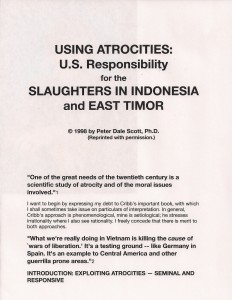
Reference: US Responsibility for Atrocities in Indonesia

04 Indonesia, 05 Civil War, 10 Security, Law Enforcement, Military

Full Source Online

Phi Beta Iota:  We take everything with some skepticism.  We are quite certain that 95% or more of the U.S. officers training Indonesian military and police personnel had no intention of enabling the atrocities that came later–the problem–as we personally experienced in Central America–is when the 1% to 5%, including personal emissaries from the White House, the Secretary of Defense, and the Central Intelligence Agency all say that there will be no U.S. retribution or blow-back from committing atrocities using US training, equipment, and forms of organization intended to counter bona-fide subversion.  Hence, one bad apple rots the entire barrel of good apples.

Journal: High-Tech Low-Risk No-Brains Zero-Sum

10 Security, Ethics, Government, Military, Peace Intelligence

Tim Haake

Washington Times  December 24, 2009   Pg. 4

High-Tech, Low-Risk Wars By Tim Haake

Retired Maj. Gen. Tim Haake is a Washington lawyer who served on active and reserve duty in special operations for 36 years.  Now he is a lobbyist.

Phi Beta Iota: The article has to be read in the original.  Well-intentioned and totally divorced from reality, it is what the Military-Industrial-Intelligence-Congressional Complex (MIICC) wants the taxpayer to believe.  Missing from this fairy tale depiction are the realities:   we cannot afford, nor is there sufficient time, nor can the Air Force carry, nor can the intelligence community inform, such a force, spending $5 million for every $1 spent by asymmetric opponents holding the moral high ground.  Furthermore, and Jim Bamford and Will Durant agree on this point, the only infintely expandable resource we have is the human brain–neglecting our investments in global education and national population health as we have been and will continue to do, is the certain death of the Republic.

Journal: A Tale of Two Flying Pigs

03 Economy, 10 Security, Ethics, Government, Methods & Process, Military
Chuck Spinney

The below article written by my two good friends Winslow Wheeler and Pierre Sprey is one of the very best case studies describing how the incredible corruption of critical thinking that prevails in the day to day life of the Military – Industrial – Congressional Complex (MICC) produces techno trash.

With programs like the F-35 populating the Pentagon's modernization plan, there can be no question of why the defense budget is now at a post World War II high, yet is powering the Defense Department into a Death Spiral, where forces continue to shrink (the AF is now contemplating yet another reduction of its fighter structure by 2 more tactical fighter wings), weapons continue to get older, and there is continual pressure to cut readiness, even though we are fighting two wars.  Add in the fact that the Pentagon's planning and budgeting system can not pass a simple audit that identifies and verifies the links between money appropriated by Congress to the money expended by the Pentagon, which is required by the Chief Financial Officers Act of 1990, not to mention the Accountability and Appropriations Clauses of the same Constitution every member of the federal government has sworn to protect and uphold … and you have a prescription for ever increasing disasters at ever higher costs.

Chuck Spinney

Military.com Archives
Online Archives
A-10 Wikipedia Page

A Tale of Two Pigs

by Winslow T. Wheeler and Pierre M. Sprey

Huffington Post

23 December 2009

Setting aside the not-so-proud history of the P-38, the Lightning II moniker is a poor fit for the F-35. Despite the F-35's whopping (and still growing) $122 million per copy price tag, the Air Force and other advocates pretend it is the low-priced, affordable spread in fighter-bombers. Though horrendously overburdened with every high tech weight and drag inducing goodie the aviation bureaucracy in the Pentagon can cram in, the Lightning II is hardly a pioneer, being little more than a pastiche of pre-existing air-to-air and air-to-ground technology – albeit with vastly more complexified computer programs. The P-38 Lightning of the twenty-first century it is surely not, especially for those who hold the P-38 in undeserved high regard.

In the interests of giving credit where credit is due, a more historically fitting moniker for the F-35 would be “Aardvark II.” Aardvark — literally ground pig in Afrikaans — was the nickname pilots (and ultimately the Air Force) gave to the F-111–and for good reasons. The F-111 was the tri-Service, tri-mission fighter-bomber of the 60s, and also a legendary disaster. The F-35 is rapidly earning its place as the Aardvark's true heir.

There are astonishing parallels between the two programs.

Click A Tale of Two Pigs to read entire story.   other references below the fold.

Continue reading “Journal: A Tale of Two Flying Pigs”

Journal: TSA Clears Illegal Immigrants To Work At NY Airport–Accepts False ID’s, Grants “Trusted Agent” Full Access

10 Security, Cultural Intelligence, Government

Full Story Online

In the latest of many shameful lapses, the federal agency in charge of securing the nation’s transportation system approved background checks for a dozen illegal immigrants working in sensitive areas of a busy U.S. airport.

The illegal aliens, from Central America and Mexico, worked in operational areas of Stewart International Airport, a 2,400-acre facility located about 60 miles north of New York City. Stewart is a major passenger airport for the state’s mid-Hudson region that also handles large quantities of cargo and serves as a military field.

The illegal aliens all had security badges approved by the Transportation Security Administration (TSA), the agency created after the 2001 terrorist attacks mainly to protect airlines. The TSA’s national background check failed to detect the fake Social Security numbers and other bogus documents provided by the illegal immigrants to obtain clearance.

So the embattled 43,000-member Homeland Security agency, which has received hundreds of millions of dollars from Congress to fulfill its mission, granted the undocumented aliens “trusted agent” security badges.
noble gold