Open Source Insurgency = System Disruption

09 Justice, 11 Society, Civil Society, Commerce, Corruption, Counter-Oppression/Counter-Dictatorship Practices, Cultural Intelligence, Government, IO Deeds of Peace, IO Deeds of War, Law Enforcement, Military, Peace Intelligence
John Robb

Thursday, 30 June 2011

WAR NERD: How the IRA used Systems Disruption

I've enjoyed The War Nerd for years.  Great, colorful writing.  The author of the column, “Gary Brecher,” was never on the same page as me when it came to warfare.  However, that's changed.

He now thinks, and makes an excellent case for global guerrilla thinking.  In short: that blood and guts warfare is counter productive and that systems disruption (hiting network systempunkts/nodes to generate high ROI‘s and publicity) is a potential path to long term victory for guerrillas.  In short: in the modern context, if you keep the blood/guts to a min, and keep the cost ratio massively in your favor while staying alive, you will eventually win.

To demonstrate this, he has a great article on how the IRA eventually adopted systems disruption:

“In 1994, they took the idea of non-lethal warfare a notch up by doing one of the most revolutionary things any guerrilla army has ever done: IRA mortar teams dropped shells on the runways at Heathrow Airport, totally stopping air traffic… but the shells weren’t even designed to explode. Intentional duds. That’s amazing; I’ve never heard of anything like that. It shows how far they’d come by that stage, away from the simple Al Qaeda maximum-blood crap I bought into in that earlier article.  In contemporary urban guerrilla warfare, at least in Western Europe, killing civvies is counterproductive. What you want to do, what the IRA had mastered by the 1990s, was messing with the incredibly fragile and expensive networks that keep a huge city going. Interrupt them and you cost the enemy billions of dollars, and they don’t even have any gory corpses to shake in your faces. Fucking brilliant, and I was too dumb to see it!

Continue reading “Open Source Insurgency = System Disruption”

Cost of War: Obama and Dr. Gates Both Lie….

03 Economy, 04 Inter-State Conflict, 05 Civil War, 07 Other Atrocities, 08 Wild Cards, 10 Security, 11 Society, Budgets & Funding, Corruption, Cultural Intelligence, Government, Military, Peace Intelligence
Winslow Wheeler

Released Wednesday by the sponsoring Watson Institute of Brown University, a new multi-author study of the costs of the post-9/11 wars is availableMost prominently, the study finds the appropriations thus far to have been between $2.3 and 2.7 trillion; with an additional $884 to $1,334 billion to already have been incurred for future costs for veterans and their families. This would make a total, incurred thus far, of from $3.2 Trillion to $4.0 trillion. (Find a summary of these costs at http://costsofwar.org/article/economic-cost-summary.)  It is important to note that these are basically budget costs to the federal government, not the broader economic costs to the economy or other costs to state and local governments.

The study also addresses still other expenses, such as the human costs in terms of civilian dead, the wounded, refugees, and more.

There is certainly some you will find to disagree with, but it is clear that advocates of the various conflicts who pretend the costs have been only the $1 trillion that President Obama articulated last week are feeding the nation grotesquely inaccurate information.  Others, like departing SecDef Gates, who pretend that DOD spending is not a major factor in the size of our deficit are not particularly skilled in “math,” an elementary skill for government types that Secretary Gates has chosen to deride and to leave to others to perform.

I participated in the Costs of War study; see my paper on the DOD .  It makes two basic points on p. 14:

1) “… while [the Congressional Research Service] and others have done long, hard, and excellent work to capture the identifiable appropriations to the Pentagon for the Post-9/11 wars, the $1.2 trillion CRS has, for example, identified in current dollars is problematic, but the fault is not with CRS, CBO, or GAO. The available figures have gaping holes and problems in them because of the sloppy, inept and misleading accounting of the costs by the Defense Department and Congress.”

2) “The $667 billion in 2011 dollars ($617 billion in current dollars) appropriated to the Defense Department's base budget since 2001 as a result of the wars, while squandered, should be included in any comprehensive attempt to capture the total cost of the wars. These amounts would bring the total DOD costs of the wars to $1.98 Trillion in constant 2011 dollars and $1.82 trillion in current dollars.”

A Reuters story below summarizes the overall “Costs of War” study.

Cost of war at least $3.7 trillion and counting

By Daniel Trotta

NEW YORK | Wed Jun 29, 2011

(Reuters) – When President Barack Obama cited cost as a reason to bring troops home from Afghanistan, he referred to a $1 trillion price tag for America's wars.

Staggering as it is, that figure grossly underestimates the total cost of wars in Iraq, Afghanistan and Pakistan to the U.S. Treasury and ignores more imposing costs yet to come, according to a study released on Wednesday.

The final bill will run at least $3.7 trillion and could reach as high as $4.4 trillion, according to the research project “Costs of War” by Brown University's Watson Institute for International Studies.

Phi Beta Iota: Emphasis added above.  Brown, like Rutgers, is a hotbed of left-leaning intellectuals who probably wonder how a Democratic President could have become a neo-fascist war-monger.  The answer is simple: corruption has no ideology.  It is pervasive.  Interestingly, the wire services (AP, Reuters, AFP, Bloomberg on occasion) and Russian Television as well as Al Jazeera, are emerging from this period as examples of integrity in action.

Greece About Future of Democracy, Not Budget

08 Wild Cards, 11 Society, Civil Society, Cultural Intelligence, Government
John Steiner

Postcard From Greece: This Should Not Be About Austerity, It's About The Future Of Democracy

Arianna Huffington

Huffington Post, 28 June 2011

Given that the Greeks invented democracy, it's only fitting that they're now being given the chance to reinvent it. And yes, I know we Greeks have a reputation for mythmaking and drama — but, as I found out during my trip to Greece last week, those really are the stakes.

Until I went over and witnessed what's happening, I too had become convinced that the real issues were the ones the media were obsessively covering: the effects of a potential sovereign default on the Euro and worries about the crisis spreading to other European countries.

But here's the bigger issue: Can a truly democratic movement break the stranglehold of corrupt elites and powerful anti-democratic institutional forces that have come to characterize not just the politics of Greece, but most Western democracies, including our own? Greece is only an extreme example of an unfolding seismic social shift that is challenging democracies the world over.

What happens in Greece might very well tell us whether democracy will recover from the crisis of legitimacy exacerbated by the financial crisis or whether it will shrink — undermined by the very forces that brought on the crisis in the first place.

It's way too early to tell whether the forces of democracy will prevail, but I came away extraordinarily moved and heartened by the courage, passion, engagement and dedication I witnessed during a trip in which three different perspectives converged.

Read full article….

Landmark Afghan hotel attacked

08 Wild Cards, 10 Security, 11 Society, Civil Society, Corruption, Counter-Oppression/Counter-Dictatorship Practices, Cultural Intelligence, Government, IO Deeds of War, Military
Click on Image to Enlarge

UPDATED to add photo.  Guards at the front door, no guards across the totally exposed back end.  Sheraton San Salvador was attacked from the ravine.   Deja vu.

Landmark Afghan hotel attacked

Los Angeles Times, 28 June 2011

Gunmen and suicide bombers strike the tightly secured Intercontinental Hotel in Kabul, which has large foreign clientele. It was not immediately known how many people were killed or wounded.

Read full article…

Phi Beta Iota: Well-intentioned professionals like to say that if the US only has enough will to persist, it can prevail against any enemy.  That is not correct.  When the US engaged in elective wars and lacks legitimacy in the eyes of the occupied public, it will inevitably lose.  When the US Government is delusional and ignoring the harsh realities at home, it loses its domestic legitimacy.  Events like the Tet Offensive, or the increasing attacks in the heart of Kabul, accentuate the cognitive dissonance among all parties.  This will not end well for the US.

Structural Power and Federal Feudalism

09 Justice, 11 Society, Civil Society, Corruption, Counter-Oppression/Counter-Dictatorship Practices, Cultural Intelligence, Government
Nathan Allen

While the U.S. government may be described as a massive wealth transferring scheme, looting the middle class for the elite, I’d suggest that ‘wealth’ and ‘elite’ are not precisely correct. The transformation in Western power structures over past three centuries is such that the ‘elite’ was formerly indistinguishable from the government, which is the hallmark of feudal government; whereas now, the locus of power is the government itself, not any particular group of people.

We still find the old system at work in dictatorships – Libya, N. Korea – in which the government is indistinguishable from a small group of people and for whom wealth accumulation is the primary goal.

But wealth isn’t the primary goal of western governments; they have a nearly unlimited ability to create their own wealth (debt and printing money) – or destroy it (debt and printing money). The primary concern of these supposedly post-feudal governments is stability and power, and their primary means to securing these ends is patronage.

Patronage existed in feudal governments, but it was a means to an end (wealth accumulation), and not the end in itself. As such, it’s then not surprising that the primary purpose of most government endeavors – the education and court systems, intelligence communities, healthcare – is to employ the greatest number of people, thus securing widespread government support. Critical mass is reached when a simple majority of the voters earn >50% of their income from government sources – there are people who work for a living and people who vote for a living, and once the latter reaches >50%, the former becomes politically irrelevant.

Continue reading “Structural Power and Federal Feudalism”

Resiliency Wiki & Open Source Insurgency

09 Justice, 11 Society, Blog Wisdom, Civil Society, Counter-Oppression/Counter-Dictatorship Practices, Cultural Intelligence, IO Deeds of Peace
John Robb

JOURNAL: The Resilient Community Wiki

The great part about starting out small, simple, and a little cheesy is that it can only get better from there.  Using that logic, my friends and I have launched a wiki called Miiu (pronounced me-you).  Miiu is a visual wiki.  Essentially, a catalogue of things (products, tools, etc.) and places (homes, businesses, gov't buildings, etc.).

The Resilient Community Wiki

To start off, our goal is to do what lots of people have asked me to create: a wiki that catalogues everything related to resilient communities.  We'd like to create a visual catelogue of the things (from DIY solar stills to an inventory of homes, farms, businesses in your community) that will be useful in the development of resilient communities.

JOURNAL: Lulzsec as an Open Source Insurgency

Lulzsec has some claims to being an open source insurgency.  It operated as a foco by generating a plausible promise: its hacks were high profile and successful, proving that it's possible to successfully attack/damage all big organizations despite the billions they spend on computer security.   This promise has also generated copycats/clones around the world.  Finally, it is now disbanding (forgoing any formal leadership role).  If they can disband in a way that lets them escape unscathed, that only adds to the promise. Quote from their website:

“For the past 50 days we've been disrupting and exposing corporations, governments, often the general population itself, and quite possibly everything in between, just because we could.  We hope, wish, even beg, that the movement manifests itself into a revolution that can continue on without us. The support we've gathered for it in such a short space of time is truly overwhelming, and not to mention humbling.  Please don't stop. Together, united, we can stomp down our common oppressors and imbue ourselves with the power and freedom we deserve.”

Snapshots of the US Government–Really…

10 Security, 11 Society, Corruption, Cultural Intelligence, Government, IO Impotency, Law Enforcement
Who, Me?

TSA diaper screening of 95-year-old draws angry reader reactions: ‘Home of the free?'

Texas lawmakers revive TSA anti-groping measure

TSA's Diaper Grope Sparks More Criticism of Feds

A Florida group is calling on state lawmakers to enact a law “against state-sponsored perversion and oppression” in the wake of an aggressive TSA patdown of a diapered 95-year-old woman at Northwest Florida Regional Airport.

Phi Beta Iota: This is real simple.  State by state, nullify the TSA and administer security as a state function.  If the federal government does not like that, secede from the Union.   TSA is not blocking flights from Europe or anywhere else that are fortunate in not having to put up with what passes for security in the USA.

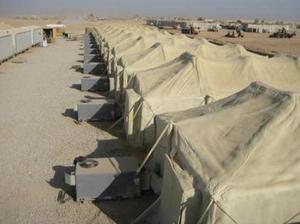
Among The Costs Of War: $20B In Air Conditioning

June 25, 2011

The amount the U.S. military spends annually on air conditioning in Iraq and Afghanistan: $20.2 billion.

That's more than NASA's budget. It's more than BP has paid so far for damage during the Gulf oil spill. It's what the G-8 has pledged to help foster new democracies in Egypt and Tunisia.

Phi Beta Iota: It is always helpful to remember Medard Gabel's graphic on the cost of peace versus war.  For what we have spent on the military-industrial-intelligence complex these past ten years, never mind the legalized fraud of Wall Street, we could have eradicated the ten high-level threats to humanity.  The US Government lacks both intelligence and integrity.  Good people trapped in a very bad system–we need to set them free.  An nation's best defense is an educated citizenry that pursues a foreign policy of peace and commerce with truth and trust as core value and core outcome.

noble gold