Friday, November 12, 2010 from 8:30 AM – 4:30 PM (ET)
Washington, DC
About HealthCampDC
CareFirst BlueCross BlueShield is the Foundation Sponsor for HealthCampDC which takes place on Friday November 12th, 2010.
HealthCampDC is the latest in the HealthCamp un-conference series addressing the Transformation of Health Care to a participatory model with active patient engagement through the use of Social Networks, Open Standards and Web 2.0 Technology. This is part of the Health 2.0 movement towards participatory health care inspired by the definition that Ted Eytan and others (including patients) evolved for Health 2.0:
Health 2.0 is participatory Healthcare
Enabled by information, software, and community that we collect or create, we the patients can be effective partners in our own healthcare, and we the people can participate in reshaping the health system itself.
Join Physicians, entrepreneurs, bloggers and others who are passionate about improving Health Care at CareFirst BlueCross BlueShield's DC offices (at 840 1st St, NE, Washington, DC 20002) on Friday November 12th, 2010.
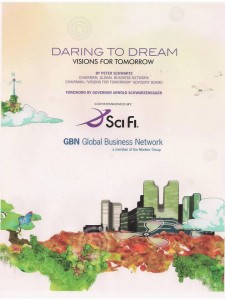
1. Restoring Belief in the Future to Overcome Fear, Pessimism, and Passivity
2. Cultivating Leaders Who are Thoughtful, Inspiring, and Think Long-Term
3. Empowering Six Billion People Economically and Politically
4. Harmonizing Cultural, Racial, and Gender Differences in a Globalizing World
5. Reinventing an Outdated Educational System for the 21st Century
6. Guiding Technological Progress Wisely
7. Addressing Climate Change and Creating Social and Environmental Responsibility
Tip of the Hat to Paul Harper.
Phi Beta Iota: There are two sucking chest wounds in this otherwise superb report: first, the complete absence of any sort of strategic analytic model with which to actually inform decisions; and second, the no doubt deliberate avoidance of the raw fact that corruption is the single largest obstacle to achieving any of these dreams, the reason the public strategic analytic model and public intelligence in the public interest are needed.
What I have found to be true is that when the issue faced is more important than their position, people in power positions will engage. In other words, they’ll step up when:
the situation reaches the point that they realize that they can’t solve it alone;
it is critical to their success; and
they’ve found a partner to work with that they’re willing to trust.
Essentially, these are the conditions when anyone will engage. It’s just that people with more to lose tend to wait longer. By then, the situation is really messy and they’re desperate.
Peggy Holman knows a lot about change in organizations and communities and she wrote Engaging Emergence to help people not only deal with unexpected and chaotic change, but even come out ahead by engaging it proactively.
But proactive engagement means letting go of some things just as much as discovering new things. To help you navigate, Peggy presents her list of The Five Things We Need To Let Go Of To Effectively Deal With Emergence:
One reason why Apple is innovating and winning, while Nokia is not.
Unfortunately, the headline using a dramatic effect to get attention, but is not an accurate statement. Be careful about too much credit to Apple's current design efforts. Apple has had several flops in the past. Is this conscious or are they experiencing their own randomness?
It can be easily observed that systems endure with marginal improvements. Of course, if you do not want the undesirable effects that are being generated by your system, making marginal improvements has little hope of removing these undesirable effects, since effects can only be created by deeper cause(s).
So to claim that looking at the past to design the future demands that you will crash and burn is an easily disproved hypothesis. Yet, we also know that when you design a system for the future, you can also build an ineffective system. The world is littered with dead businesses created on the belief that they will have the utopian design.
Marketing involves spending money and it's fraught with the fear of failure (because it often doesn't work).
This mix creates the perfect opportunity to play it safe and to follow the leader.
Jumping on the brandwagon, if you must coin a phrase.
Here's the thing: while the second imitator might make it pay, the third, the fourth, the tenth–not so much. The more you try to fit in, the worse you do. The more you rush to follow the leader, the less likely you will be to catch up.
Phi Beta Iota: A major negative feature of bureaucracy, apart from its inherent propensity to magnify fraud, waste, and abuse, lies in its eradication of diversity and innovation. It is a bureaucracy precisely because the past demanded control and repetition and reliability from small cogs in big machines. That is NOT what we need now, in fact it is counter-productive. Live free or die….
The Citizen Initiative Review is a major development on the road to sustainability. It should be supported and promoted by everyone involved with environmental, ecological, and sustainability issues. Let me explain.
1. INTELLIGENCE
Think about what intelligence actually is and why it evolved in the first place. Intelligence evolved because it helps us make better decisions about how to engage with the world around us. It enhances our ability to be “right”, to see what's really going on and act accordingly. Organisms and societies that make stupid decisions get weeded out by natural selection — sooner or later.
Thus there is a tight relationship between intelligence — the ability to learn our way into congruence/fit with our environment, adjusting to changes and challenges as we go — and sustainability — the ability to maintain our society over time in the face of changes and challenges. Collective intelligence at the societal level — the ability of a society as a whole to perceive, reflect on, understand, and act on the real conditions it faces — is an obvious and absolutely fundamental necessity for developing sustainability. To the extent we can't collectively perceive, reflect on, understand and act on the real conditions we as a civilization face, we will collapse, taking down much of nature with us (because we are so big and powerful and have our fingers in virtually every natural pie). On the other hand, to the extent we can engage intelligently with the world around us, we will survive — or, to speak ecospeak, we will “be sustainable”. This follows the pretty standard Evolution 101 survival-if-you-fit logic.
The only reason I can see why all this is not totally obvious to everyone is that the societal capacity — and the field of inquiry and practice — that I and thousands of other theorists and practitioners call “collective intelligence” is simply not widely known or understood by society at large and by activists in particular. While this is understandable — because the field is so new — it is a potentially fatal area of ignorance.
The naming of this phenomenon — “collective intelligence” — has been a vital a step in its development — as vital as Newton naming “gravity”. Before Newton, apples just “fell”. We had apples and we had “falling”. We didn't have “gravity”. Once Newton framed this phenomenon of “falling” as a force acting on the apple and gave that force a name — “gravity” — he instantly made modern astrophysics and space travel possible. Before that, those things were simply beyond our reach.
Similarly, to the extent we understand (a) that collective intelligence — especially societal intelligence — is a vital whole-system capacity without which we WILL NOT achieve sustainability and (b) that there is a rapidly growing body of wisdom and know-how about how to enhance that capacity, then and only then will mass movements for a sustainable society include the development of that capacity as a priority in their work — right up there with spreading the word on climate change, stopping the destruction of rain forests, and developing sustainable agriculture, transportation, buildings and energy.
2. CITIZEN DELIBERATION AND SOCIETAL INTELLIGENCE
One of the most powerful innovations to further collective intelligence at the whole-society level is the citizen deliberative council. It is important because citizens individually lack what they need to practice high quality citizenship. They lack sufficient time, sufficient quality information, sufficient freedom from distraction, and sufficient opportunity to talk with each other productively. So they fall back on partisan opinion leaders to tell them what to do — or else they simply slide along the well-greased track of entertaining or bread-winning distractions-from-citizenship. This leaves the field open to massive manipulation — a process in which environmentalists only occasionally get the upper hand, only to be defeated repeatedly by the self-interested agents of collective stupidity.
SEATTLE — Microsoft is starting to incorporate what your friends do on Facebook right into its Bing search engine.
A new feature rolling out Wednesday will start showing what Facebook friends “like” on the search results page.
On Facebook and sites around the Web, people can click a “like” button to show support or share information with friends. On Bing, if you search for a topic in the news, articles friends have shared on Facebook might appear. Restaurants and movies that friends have “liked” could help you decide what to do on your next date.
Microsoft has been working with Facebook since 2006.
The feature could help distinguish Bing from Google, which only has access to information users make public.
Phi Beta Iota: The various Microsoft initiatives are both inspiring and troubling–inspiring because Microsoft is clearly struggling with its inner demons and reaching out to “not invented here” options; and troubling because there does not appear to be any over-arching strategy. Amazon is the mother lode for intelligent content–when will Microsoft bite the bullet and make Jeff Bezos an offer he cannot refuse? THAT will be a game changer.