Alleviating poverty is more guesswork than science, and lack of data on aid's impact raises questions about how to provide it. But Clark Medal-winner Esther Duflo says it's possible to know which development efforts help and which hurt — by testing solutions with randomized trials.
About Esther Duflo
Esther Duflo takes economics out of the lab and into the field to discover the causes of poverty and means to eradicate it. Full bio and more links
It is not as if the disaster described below, in the Afghan war logs released by Wikileaks to the Guardian, the New York Times, and der Spiegle, was not foreseeable. Here, for example, is an op-ed I wrote for Defense Week in April 2001, well before we began the wars in Afghanistan and Iraq.
And I was hardly alone or invisible. Readers familiar with the work of reformers Colonel John Boyd, Pierre Sprey, Colonel James Burton, Colonel Mike Wylie, Colonel GI Wilson, Colonel Bob Dilger, and Tom Christie, among others, will know that they have been highly visible canaries in the high-tech coal mine since the late 1960s. For those unfamiliar with their critical analyses, I refer you to James Fallows' National Defense (Random House 1981), and Robert Coram's Boyd: The Fighter Pilot Who Changed the Art of War (Little Brown, 2002), or The Winds of Reform,Time (7 March 1983). Emphasis below added. Chuck.
This is an audio presentation by David Harvey accompanied by an animation that shows an interesting series of recent historical and geographical connections in the global financial system. The speaker admits to not having any solutions, but only providing the overview of what has happened.
I was on MSNBC talking about the schism among Democrats regarding Arizona’s new immigration law and the Justice Department’s response. Obama is worried about his plummeting poll numbers among Hispanics (down 12 points this year), while Arizona Congressional Democrats are worried about being voted out of office. But nobody is talking about pot.
Full Story Online
When asked about it by Dylan Ratigan, I said that everyone discussing the “immigration problem” was ignoring the elephant in the middle of the room: marijuana prohibition. It’s channeling millions in drug money into the Mexican cartels, and represents 60% of all cartel profits. That money gets used to finance violence not only at the border but in over 200 cities across the United States where they currently have a presence — up from 100 cities three years earlier.
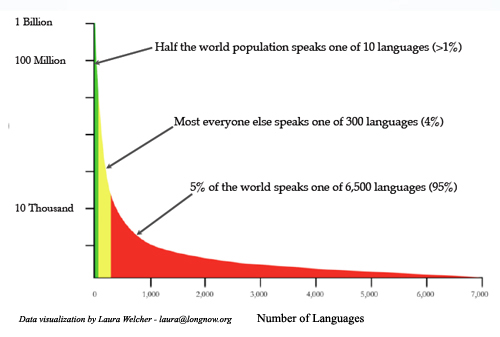
The Rosetta Project is pleased to announce the Parallel Speech Corpus Project, a year-long volunteer-based effort to collect parallel recordings in languages representing at least 95% of the world’s speakers. The resulting corpus will include audio recordings in hundreds of languages of the same set of texts, each accompanied by a transcription. This will provide a platform for creating new educational and preservation-oriented tools as well as technologies that may one day allow artificial systems to comprehend, translate, and generate them.
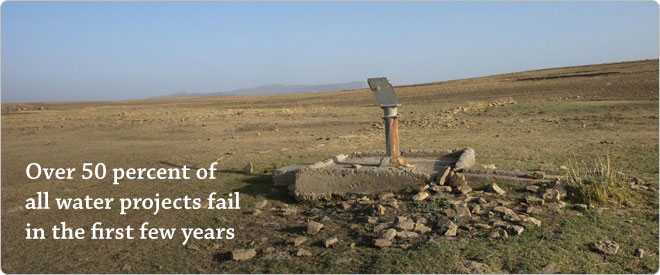
Play becomes work with playpump + eventually no water, no maintenance, and elder women can't use it. See synopsis and watch the Frontline video here
(clips from the synopsis about the Frontline video documentary)
Five years ago, Amy Costello reported a story for FRONTLINE/World. It was about the challenges of getting water in Africa, and a promising new technology called the PlayPump.
After years of covering “bad news” in Africa, she was happy to report a story that seemed to offer something to cheer about. Her story showed how simple it might be for children to pump fresh water just by playing. Behind it all, a South African entrepreneur named Trevor Field.
“A report commissioned by the Mozambique government on the PlayPump that was never released, cited problems with the pumps – women finding it difficult to operate; pumps out of commission for up to 17 months; children not playing as expected on the merry-go-rounds, and maintenance, “a real disaster,” the report said. “
Field had made his career in advertising, but when he heard about this new device, he formed a company and started making PlayPumps himself.
To cover maintenance costs, he proposed selling ads on the sides of the water tower. He said the PlayPump model would be a big improvement over the hand pumps that Africans have struggled with for years.