One of the probable spinoffs of America's disastrous “you are with us or against us” unilateralism in Iraq, Afghanistan, Pakistan, Yemen, Iran, etc., is a loss of our moral authority to lead other nations into supporting our adventures. In this regard, the future of Nato is the big question mark. This question can not be separated from the internal stress now endangering the future of EU. The attached op-ed by William Pfaff, a euro-centered, American writer, provides an interesting perspective on these questions. CS
What Next for NATO?
Posted By William Pfaff On May 18, 2010 @ 11:00 pm
The European Union doesn’t know where it stands at this moment. NATO thinks it knows and is gambling.
Global Traffic Map 2010 The Global Traffic Map depicts voice traffic flows on the world’s largest international calling routes. Accompanying figures and tables provide valuable insight into regional traffic flows, price and revenue trends, top calling destinations, the impact of mobiles on the international voice market, and the scale of Skype.
A new study from Interphone, a study group within the , a segment of the World Health Organization, says there is no increased risk of brain cancer from cell phone use … but then seems to waiver a bit in its position. When it comes to adults, an increased risk of brain cancer is not established…
CS Note: Note this is focused on deterring Israel and is consistent with Turkey's emerging regional grand strategy of rapprochement with its neighbors, in this case Iran and Syria.
Thursday May 13, 2010 by Saed Bannoura – IMEMC & Agencies
Turkey has installed Anti-Aircraft Hawk Missiles at a village close to the Syrian border in an attempt to prevent Israeli war jets from violating Turkish Airspace in case of an attack against Iran or Syria.
A Turkish paper reported that Turkey will not allow Israel to use its Airspace to attack Iran, Syria or any other country, and will act against any such violations.
The Anti Aircraft batteries were installed in Kayeel village, south of Turkey and located close to the Syrian b14 Mayorder.
Speaking on condition of anonymity, a Turkish military official stated that the batteries are meant to protect Turkey and its Airspace against any violations, including American or Israeli war jets should Israel or the United States decide to attack Iran or Syria.
Turkey Installs Anti-Aircraft Batteries Near Syrian Border
A report by Jonathan Landay and Dion Nissenbaum for McClatchy Newspapers provides important insights into our rapidly diminishing prospects for success in Afghanistan, some direct, others inferential:
First, the direct: the Qandahar operation that General McChrystal began trumpeting in late February is clearly going wobbly before it begins. The promise to demonstrate progress (i.e., to see light at the end of the tunnel) in Afghanistan by this summer is being bow-waved at least into the Fall, during the height of mid-term election season. The scope of the looming operation is also being scaled back, and its goals are being redefined in more ambiguous terms.
. . . . . . .
That the leaders in the United States military believe they can construct a successful strategy based on the premise that outsiders like themselves will be able to manipulate Pashtun leaders like puppets descends into transparent absurdity, when one juxaposes McChrystal’s ambition to the fact, well known among Pashtuns if not Americans, that the United States has contributed directly or indirectly to the murderous horror that has been Afghanistan since 1979.
The American complicity in this horror goes back at least to 1979, when the US National Security Adviser, Zbigniew Brzezinski, established the policy of inflaming Islamic fundamentalists (via the CIA) to destabilize Afghanistan in the hope that the threat of fundamentalist instability on Soviet Union’s vulnerable Central Asian flank would induce the Soviets to invade Afghanistan. Brzezinski’s aim was seduce the Soviets into entrapping themselves in their own Vietnam-like quagmire. The plan worked like a charm, as Brzezinski proudly admitted in a still little appreciated interview in the influential Parisian news magazine, Le Nouvel Observateur (15-21 January 1998, translation
Now, ten years and a lot of stirring later, the details of the script may have changed, but the arrogance of the ignorance shaping the outlook of our leaders has not.
here). When asked if he had any regrets, Brzesinski dismissed the question in a tone that dripped with condescension, “What is most important to the history of the world? The Taliban or the collapse of the Soviet empire? Some stirred-up Moslems or the liberation of Central Europe and the end of the cold war?” [see the last two paragraphs of the interview]
The below article by Professor Aruri is an excellent summary of the Palestinian-Israel conflict. It provides yet more information on why the two-state solution is kaput. Had he discussed the water issue, his case would have been even stronger, but this is a nitpick on an excellent analysis that is both clearly and succinctly written.
Phi Beta Iota: The author's bottom line quote and quick link:
Within a few years, Palestinians are likely to constitute a majority in all the territories controlled by Israel today. Already, the prospects of a workable and durable two-state solution have been ruled out. Will the President use the financial resources the US provides Israel as a means of enforcement and pressure? Most likely, no. Finally, if the process fails, will the President be prepared to give a full accounting of why it failed? Again, most likely, no. Perhaps a single state based on the equal protection of the law (as in the 14th Amendment to the US Constitution) could emerge as the only humane alternative to the insufferable status-quo.
Naseer Aruri, is Chancellor Professor (Emeritus) at the University of Massachusetts Dartmouth. He is the author of
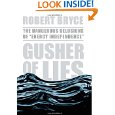
My good friend Robert Bryce tries to inject a little truth into a green technology known as Carbon Capture. He is author of several energy-related books, including the the book shown below.
May 12, 2010
A Bad Bet on Carbon
By ROBERT BRYCE
On Wednesday John Kerry and Joseph Lieberman introduced their long-awaited Senate energy bill, which includes incentives of $2 billion per year for carbon capture and sequestration, the technology that removes carbon dioxide from the smokestack at power plants and forces it into underground storage. This significant allocation would come on top of the $2.4 billion for carbon capture projects that appeared in last year’s stimulus package.
Washington
Amazon Page
That’s a lot of money for a technology whose adoption faces three potentially insurmountable hurdles: it greatly reduces the output of power plants; pipeline capacity to move the newly captured carbon dioxide is woefully insufficient; and the volume of waste material is staggering. Lawmakers should stop perpetuating the hope that the technology can help make huge cuts in the United States’ carbon dioxide emissions.
The search term brings up appropriate results, but the fact of the search gives us an opportunity to provide comment.
1) Nothing now being used by governments, and certainly not iBase or Palantir, both aging technologies that do not scale and have too many fat-finger handicaps, fulfills the originial requirements documents crafted in the late 1980's.
2) The ONLY programs that have gotten anywhere close are COPERNICUS plus plus, and SILOBREAKER. However, both of these have been slow to recognize the urgency of integrating–fully integrating–capabilities that address each of the eighteen functionalities. Below is the list of softwares now in use by US Special Operations Command J-23 Open Source Intelligence Branch along with the STRONG ANGEL TOOZL and a couple of other things.
The global standard for multinational information-sharing and sense-making is in the process of being designed, funded, and distributed. If you think you have something relevant to that, generally only open source software will be considered, get in touch with any of the individuals above.