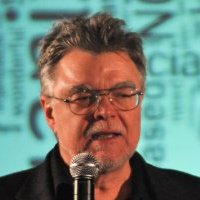
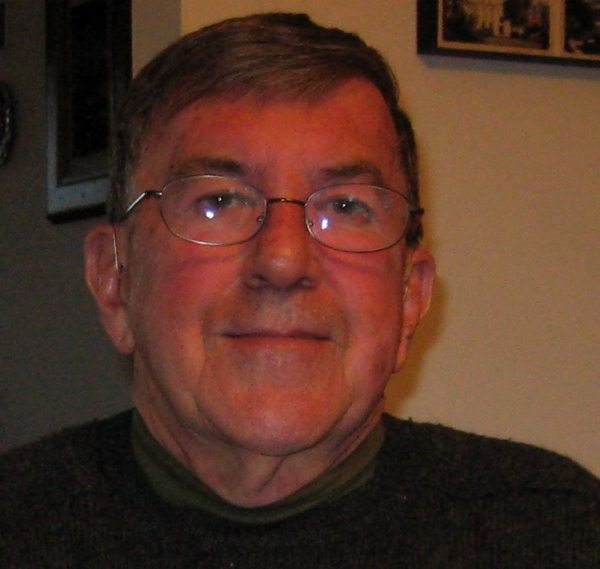
(Washington, D.C.) – The USDA Coalition of Minority Employees (http://www.agcoaliation.org) and watchdog group ACORN 8 (http://www.acorn8.com) united with 40 national and international coalitions of good government, open government, civil rights and human rights groups as well as hundreds of individual Occupy Wall Street protesters from across the country, announce an assembly at the Washington DC Capitol to be held May 20-22, 2012. We are proud to announce that MSNBC Host Dylan Ratigan has agreed to moderate and the PACIFICA Radio Network has committed to broadcast the historic event this year.
Over the last six years members from the Make it Safe Coalition (MISC) have arranged an assembly of whistleblowers in Washington, DC each year for an annual conference originally known as Washington Whistleblower's Week. The USDA Coalition of Minority Employees will co-host this year's Whistleblower Summit—Civil & Human Rights Conference , in Washington, DC. The Coalition has been very active at the US Department of Agriculture since 1994, regarding their continued widespread racism, sexism, reprisal, intimidation, sexual assault, hostile work environment, and other abuses against USDA employees and minority farmers.
The week's events will include an Opening Plenary, New Media Panel Discussion, No FEAR Anniversary Reception, Civil and Human Rights Roundtable, Book Signing, Movie Night, Citizen's Tribunal, Press Conference, Peace & Justice Demonstration, Congressional Lobby Day, Solidarity Dinner and much, much, more. Featured speakers will include some of the following:
Angela Lee: Audience preference and editorial judgment: a study of time-lagged influence in online news
To what extent are audiences influencing editors and journalists, and vice versa? Editorial judgement measured based on placement on paper; audience preference measured by clicks, looking at a 3-hour interval. Audience preference influences editorial decisions three hours later (which suggests editors are watching behavior and responding). However not seeing a reciprocal effect of editorial judgement on audiences.
I’m wondering if the results are influenced by assumptions embedded in the structure of the methodology for the report.
Some popular stories get pushed down on the home page, not sure why? Could be relevance of speed and immediacy – stories might be pushed down to make room for fresh content. Lee calls for input from journalists at the conference.
Alfred Hermida (who’s also been live blogging the conference, and who wrote the book on Participatory Journalism).
Sourcing the Arab Spring: A case study of Andy Carvin’s sources during the Tunisian and Egyptian revolutions. How is sourcing evolving in the networked social sphere?
“We looked at sourcing, because sourcing matters.” Who we talk to as journalists affects not just what we report, but the meaning we derive from the reporting. When journalists cite non-elite sources or alternative voices, we treat them as deviant, as the others. Powerful and privileged dominate sourcing.
Carvin was doing a very different type of reporting, messaging and retweeting on Twitter. Carvin was like a “must-read newswire” (per Columbia Journalism Review). 162 sources in Tunisia, 185 sources in Egypt. Coded into categories: mainstream media, institutional elites, alternative voices, and other. Alternative voices included people involved in the protests.
Certainly worth a read. As time goes by, but only retrospectively, long after everyone has retired or died, accountability in terms of cost versus gain will eventually come to the fore.
Phi Beta Iota: There are two forms of accountability, neither of which is achievable today. The first is as mentioned above, cost-benefit analysis. General Tony Zinni has nailed it with his assessment that today's $80 billion a year community produces “at best” 4% of what a major commander needs — General Mike Flynn documented results even worse than that for Afghanistan. The other form of accountability has to do with laxity in counterintelligence and operations security. NSA biggest dirty secret for the past 50 years is that the Soviets captured core crypto machines in Viet-Nam, and then got the key cards from penetrations of the US Navy. The raw fact is that secrecy is used to hide fraud, waste, and abuse 90% of the time. Best quote on the latter point:
“Everybody who's a real practioner, and I'm sure you're not all naive in this regard, realizes that there are two uses to which security classification is put: the legitmate desire to protect secrets, and the protection of bureaucratic turf. As a practitioner of the real world, it's about 90 bureaucratic turf, 10 legitimate protection of secrets as far as I am concerned.”
Rodley B. McDaniel, then Executive Secretary of the National Security Council, on page 68 C3i: Issues of Command and Control (NDU Press, 1991)
General Michael Flynn (USA) has been nominated to become the Director of the Defense Intelligence Agency (DIA) in spite of or because of his severe criticisms of the inability of the U.S. Intelligence System to produce useful strategic intelligence on Afghanistan. As a result among the small portion of the media that even noted his nomination, a good deal of nonsense has been written about DIA. I hope this will clear the air a bit.
The DIA was created by Secretary of Defense Robert McNamara in 1961 with the specific mission of providing a single voice for the individual military service intelligence commands. As with many of Secretary McNamara’s ideas, DIA completely ignored reality. The service chiefs simply ignored DIA and the directors of DIA (all general officers of those services) went along. In the press of the Vietnam War Secretary McNamara paid no attention to DIA after creating it. So DIA really had no defined mission and became known as the “redundant agency.”
Since its creation DIA has struggled to find a viable mission that would not interfere with the missions of the service intelligence commands or of the National Security Agency (NSA) which also was under the Department of Defense (DOD) or the independent Central Intelligence Agency (CIA) which had considerable status as the senior intelligence authority and in the theory the ear of the President. This continues to be a problem with DIA having only Measurement and Signature Intelligence (MASINT) as its exclusive domain. DIA also has numerous heavily classified programs and projects, but when these see light of day they often prove to be pointless or even lunatic. DIA does have one central mission and that is to serve as the J2 (intelligence arm) for the Joint Chiefs of Staff (ICS). Having actually worked in J2, I can testify that this does not give DIA a good deal of authority either in the Intelligence Community (IC) or even with JCS.
One of the most disruptive men in the sprawling U.S. spy community, someone who turned the military’s elite killers into top spies, will likely soon be in charge of all military intelligence.
The Pentagon on Tuesday nominated Army Lt. Gen. Michael Flynn to be the head of the Defense Intelligence Agency, the U.S.’ central military-intel hive. That might not go over so well with many responsible for battlefield intelligence. The first time most people outside of the shadows heard of Flynn, he was loudly complaining that military intelligence in Afghanistan sucked.
All this disruption ended up professionally beneficial — a likely consequence of how highly the Defense Department esteems JSOC’s intelligence prowess. McChrystal’s successor in Afghanistan, Gen. David Petraeus, now the CIA director, kept Flynn on his team even as the rest of the McChrystal staff flamed out after a Rolling Stone expose. Flynn’s next job, which he retains, was to be a top deputy to the Director of National Intelligence, nominally the head of the 16-agency spy community.
The Defense Intelligence Agency is a powerful if obscure organization responsible for providing intelligence to military commands, the Pentagon and the Joint Chiefs of Staff. Its secret weapon: It’s chiefly responsible for all of the Defense Department’s human informants. Yet it can seem overly bureaucratic and in eclipse compared to the military tactical-intelligence shops it helps man.
“Flynn’s nomination is interesting because he does not seem like someone who would choose to be a placeholder at an agency in decline,” says spywatcher Steve Aftergood of the Federation of American Scientists. “The appointment may signal a revival of DIA, or at least some upheaval.”
Flynn is the latest to ascend, pending Senate approval. And he’s probably not done breaking the spy community’s furniture.
Phi Beta Iota: From the US IC point of view, nothing changes as long as the money is constant. The point of the US IC is to waste $80 billion a year on corporate vaporware, not to actually provide intelligence. Jim Clapper, the single best qualified DNI in history, failed to change the IC because he did not focus on outputs–he let inputs and collection continue to drive the train, did nothing about processing, nothing significant about HUMINT, nothing at all about analysis which is worse off than it ever was, and he failed to actually create intelligence for Whole of Government or to implement initiatives in the open source intelligence and the multinational, multiagency, multidimentional, multidomain information-sharing and sense-making arena. He has been–like Gates was at DoD–a place holder, a token leader of one of the US budget's sucking chest wounds. Flynn does not know what he does not know — he is simply not armed with what he needs to know to make the big changes that need to be made if intelligence with integrity is to be restored not just within DoD, but across Whole of Government. With his present knowledge base, surrounded by the ever-present sychophants, he will make changes on the margin. He will NOT change the craft of intelligence, especially if he continues to let contractors drive the train and rob the government of its key personnel. He is inheriting a corrupt, pathologically-fragmented mess completely lacking in integrity.
A US general who once blasted the work of military spies in Afghanistan as “only marginally relevant” has been nominated to take over the Pentagon's intelligence agency, officials said.
The decision to name Lieutenant General Michael Flynn suggests a possible shake-up of the sprawling Defense Intelligence Agency as the general has earned a reputation for pushing for dramatic change in his work with special forces.
Flynn was a scathing public critic of military intelligence in Afghanistan, where he served as a top intelligence officer in 2010, saying it failed to provide decision makers with a clear picture of conditions on the ground.
He chose to publish his critique through a Washington think tank, the Center for a New American Security, instead of sticking to customary channels within the Pentagon bureaucracy.
“Eight years into the war in Afghanistan, the US intelligence community is only marginally relevant to the overall strategy,” his report said.
“Having focused the overwhelming majority of its collection efforts and analytical brainpower on insurgent groups, the vast intelligence apparatus is unable to answer fundamental questions about the environment in which US and allied forces operate and the people they seek to persuade,” it said.
Flynn is credited with playing an influential role during his tenure at Joint Special Operations Command (JSOC), the secretive headquarters that oversees elite commandos like the team that killed Osama bin Laden in May 2011.
At JSOC, Flynn reportedly persuaded special forces to place a higher priority on scooping up intelligence while carrying out targeted attacks on militants.
His nomination reflects the ascendancy of special forces in policy making both within and outside the American military, a trend reinforced by the successful operation against Bin Laden.
Flynn, whose nomination must be approved by the Senate, currently serves as the assistant director of national intelligence for partner engagement at the Office of the Director of National Intelligence.
Phi Beta Iota: General Flynn has many challenges facing him at DIA: too many civilians with zero combat experience, redirection of MASINT dollars to HUMINT, while also integrating the fifteen slices of HUMINT into one coherent network using best in class commercial technologies; and resurrecting the now dead concepts of intelligence support to policy and acquisition (that is to say, intelligence with integrity that keeps policy honest and acquisition relevant). We pray for his success.
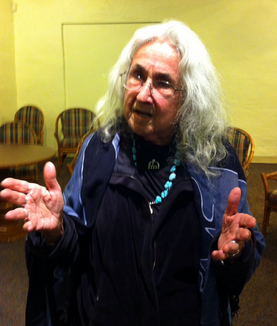
Deena Metzger is a poet, novelist, essayist, storyteller, teacher, healer and medicine woman who has taught and counseled for over forty years, in the process of which she has developed therapies (Healing Stories) which creatively address life threatening diseases, spiritual and emotional crises, as well as community, political and environmental disintegration.
Click on Image to Enlarge
She has spent a lifetime investigating Story as a form of knowing and healing. As a writer, she asks: Who do we have to become to find the forms and sacred language with which to meet these times?
She conducts training groups on the spiritual, creative, political and ethical aspects of healing and peacemaking, individual, community and global, drawing deeply on alliance with spirit, indigenous teachings and the many wisdom traditions. One focus is on uniting Western medical ways with indigenous medicine traditions.
With her husband, writer/healer Michael Ortiz Hill, she has introduced the concept of Daré, meaning Council, to North America. The Topanga Daré relies on Council, alliance with Spirit and the natural world, ancestor work, indigenous and wisdom traditions and teachings, music healing, dream telling, divination, kinship, and story telling to achieve personal transformation, community healing and social change.
She is the author of many books, including most recently, the novels La Negra y Blanca andFeral; Ruin and Beauty: New and Selected Poems; From Grief Into Vision: A Council; Doors: A fiction for Jazz Horn; Entering the Ghost River: Meditations on the Theory and Practice of Healing; The Other Hand; Tree: Essays and Pieces, A Sabbath Among the Ruins, Looking for the Faces of God andWriting For Your Life.