For his constant demonstration of the utility of Open Source Intelligence (OSINT) in the understanding of social networks, emerging technologies, and cultural realities. As a world-renowned authority on information and communications, with a deep understanding of the public policy value of open source information, he has made himself available around the world, and had much more influence than most realize. His publication of the book, “The Google Legacy,” is a mere milestone in one of the most distinguished information careers in the world.
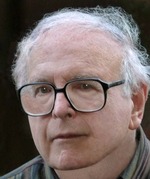
PLATINUM Jack Davis, De Facto Dean of the U.S. Intelligence Analytic Corps
For over three decades, Jack Davis has been the heir to Sherman Kent and the mentor to all those who would strive to be the world’s most effective all-source intelligence analysts. As a Central Intelligence Agency analyst and educator, he combines intellect, integrity, insight, and an insatiable appetite for interaction with all manner of individuals regardless of rank and disposition. He is the most able pioneer of “analytic tradecraft,” the best proponent for the value of human analysis over technical processing, and one of those very special individuals who helped define the end of 20th Century centralized analysis and the beginning of 21st Century distributed multinational multiagency analysis.
Clicking on the photo leads to a seminal essay by Jack Davis on Sherman Kent and the Analytic Craft.
Below are his origional reflections prepared for OSS '03. At the Frog is a link to his unqiue collection of memoranda on Analytic Tradecraft.
Jack DavisJack Davis Compendium of Analytic Tradecraft Notes
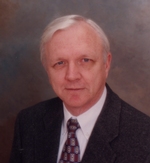
Dr. Ran Hock has done more than any single individual to educate both government and private sector parties with respect to the value of the deep web. He has single-handedly trained hundreds of individuals in the nuances of this major new intelligence resource base. Emphasizing individual analytic skills and common sense rather than arcane expensive and generally unproductive technologies, he represents the intersection of integrity, intelligence, and intuition in the service of all legitimate governments and organizations.
The Open Source Intelligence (OSINT) revolution began in 1988, and one could say that the Internet revolution began to sweep seriously into government in 1993 or so, that is the year that both DDCI Bill Studeman and Robert Steele both got emails and websites. Dr. Ran Hock has been “the” online access trainer of choice for the multinational audience choosing to attend the annual conferences, and the handbooks he created, new each year, have been prized references.
Below is his presentation to OSS '03 (actually just the summary), and on the right, click on the Frog to go to the current up-to-date OSINT Handbook Online that he maintains.
Dr. Joseph Markowitz is without question the most qualified Open Source Intelligence (OSINT) pioneer in the ranks of those presently in or retired from U.S. government service. As the only real chief of the Community Open Source Program Office (COSPO) he tried valiantly to nurture a program being systematically undermined by both the leadership and the traditional broadcast monitoring service. When he moved on to advise the Defense Science Board, he served America well by helping them fully integrate the need for both defense open source information collection and exploitation, and defense information sharing with non-governmental organizations. His persistent but diplomatic efforts merit our greatest regard.
Clicking on the photograph leads to the 1995 Strategic Plan that was rejected by a series of Directors of Central Intelligence (DCI) for all the wrong reasons. Since then Dr. Markowitz has written the Open Source Intelligence (OSINT) elements of all the major Defense Science Board (DSB) reports, and it is to his credit, as well as that of Don Gessaman, that the most senior civilians in the Office of Management and Budget (OMB) fully understand both the draconian short-falls in our capaiblity, and the ease with which they could be resolved.
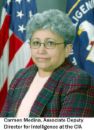
Carmen Median retired–her brilliance and innovative spirit surfaced at the top too late in the game. She is, however, like General Peter Schoomaker, USA (Ret), one of those bright lights that in our view should be brought back in to manage a global multinational information sharing and sense-making grid. She is not forgotten, and we hold her in the very highest esteem.
Below is the presentation she made to OSS '03, and a link to the article in Studies in Intelligence that remains, along with everything written by Jack Davis, seminal.
Carmen MedinaCarmen Medina What to Do When Traditional Models Fail
These two guys are worth over $50billion a year to the Internal Revenue Service (IRS), but the U.S. Government does not seem to care about intelligence-driven revenue-collection.
These guys ROCK and represent all that academics should be in the service of their country and theircommunity.
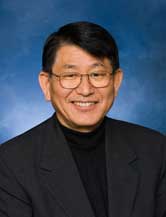
Dr. Simon J. Pak and Dr. John S. Zdanowicz, Penn State University and Florida International UniversityOSS '03: For their extraordinary demonstration, with a tangible value to the public of $50 billion a year in tax fraud savings, of new methods of academic investigation into public trade records, and the consequent discovery of specific instances of import-export money laundering and financial fraud, as well as weight variances associated with the smuggling of contraband and the mis-representation of cargo.
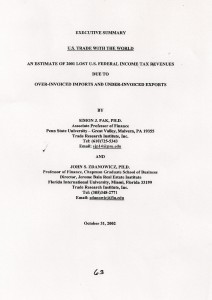
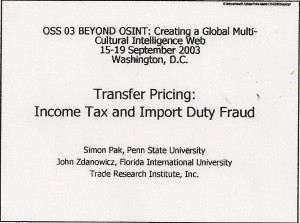
Below are their paper and slides as presented at OSS '03. These guys should have their own investigative cell fully-funded by the IRS and ultimately in ther service of all governments (a multinational global service).