Almost a complete blackout across the board when we there should be a national mobilization of state and local civil officialdom including schools to begin the measured precautions to protect our kids, particularly on the West Coast.
The purpose of a business, Peter Drucker famously said, is to create a customer. Yet, rather than creating customers, many innovators create a fantastical piece of what you might call Microsoft fiction.
This hit home for me during a recent client project. I was working with a team that had been tasked by the company’s CEO to develop a new venture in a promising market space. Its three members had been working for about six weeks. They’d conducted detailed research, talking both to prospective customers and numerous industry experts. And then they used Microsoft’s most popular products to produce what they thought was a business plan. But it actually was a kind of fiction built in three chapters: an Excel spreadsheet with sophisticated analyses showing breathtaking financial potential, a PowerPoint document blending facts and figures with compelling videos and pictures, and a Word document summarizing all of it in prose so lucid Malcolm Gladwell would shed a tear.
Still, it isn’t a business until you create a customer. After listening to the team describe its work, I asked a simple question: “Who is your first customer?”
The team turned to page 12 of chapter 2 of their Microsoft fiction, proudly displaying a PowerPoint slide citing detailed demographic figures. The slide said that 60% of the target market would be 18-to-34-year-old males with annual incomes within a certain range.
So I asked the question again. Instead of summary facts and figures, I wanted the team to be very precise. What is the customer’s name? Where does he live? What does he look like? What are his hopes, dreams, and aspirations? What does he love? What drives him crazy? How would the team’s idea fit into his life?
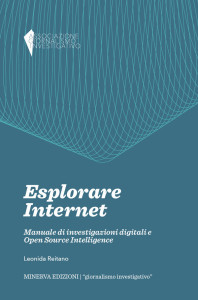
Questo è il primo manuale italiano rivolto all’utilizzo professionale della rete Internet per ricavare informazioni su fenomeni sociali e criminali, persone fisiche e giuridiche, profili individuali e collettivi. Un manuale per i giornalisti d’inchiesta, ma che torna utile a tutte le professioni aventi a che fare con l’investigazione.
La metodologia illustrata è l’OSINT (Open Source Intelligence, analisi delle fonti aperte) che comprende diversi ambiti disciplinari combinati tra loro (strumenti di hacking della rete, uso avanzato dei motori di ricerca, utilizzo dei portali di investigazioni digitali, tecniche di analisi investigative per valutare il materiale e proiettarlo su strumenti di elaborazione grafica dei dati) e ricorre a diverse fonti (mezzi di comunicazione di massa, dati pubblici, file multimediali, dati provenienti da database con informazioni istituzionali o da database a pagamento con informazioni di provenienza editoriale).
Attraverso l'analisi delle fonti aperte su Internet è possile ottenere informazioni significative pur partendo da pochissimi dati. L'indirizzo di un sito web, un'email, un semplice curriculum vitae possono diventare delle miniere di notizie e dettagli informativi. In un mondo aperto come quello di Internet, documenti, dati e informazioni saranno sempre più messi a disposizione degli utenti della rete. Conviene essere preparati e pronti allo sfruttamento di questa immensa risorsa.
In Italia il giornalismo investigativo è in piena espansione. Dal lato televisivo, per esempio, ci sono programmi come Report, Inchieste di Rainews24, Presa Diretta. È quindi il momento più adatto per lanciare sul mercato editoriale una collana giovane e agile, con nomi di spicco ma anche con esordienti in grado di realizzare inchieste di qualità: nasce così la nuova collana giornalismo investigativo, frutto dell’incontro tra l’AGI (Associazione di Giornalismo Investigativo) e Minerva Edizioni.
The last time I saw American soldiers in Afghanistan, they were silent. Knocked out by gunfire and explosions that left them grievously injured, as well as drugs administered by medics in the field, they were carried from medevac helicopters into a base hospital to be plugged into machines that would measure how much life they had left to save. They were bloody. They were missing pieces of themselves. They were quiet.
It’s that silence I remember from the time I spent in trauma hospitals among the wounded and the dying and the dead. It was almost as if they had fled their own bodies, abandoning that bloodied flesh upon the gurneys to surgeons ready to have a go at salvation. Later, sometimes much later, they might return to inhabit whatever the doctors had managed to salvage. They might take up those bodies or what was left of them and make them walk again, or run, or even ski. They might dress themselves, get a job, or conceive a child. But what I remember is the first days when they were swept up and dropped into the hospital so deathly still.