US Naval War College Professor Joshua Rovner discusses the misuse of intelligence by the US Government particularly during the Iraq and Vietnam Wars. Produced by Segal, K.
Phi Beta Iota: A useful benchmark on where the edge of conventional wisdom is within the US government. Goes in the wrong direction — more secrecy. Wants to remove intelligence from the public debate. Does not understand the reality that secret intelligence provides, at best, 4% of what major policymakers need, and nothing at all for everyone else.
Here’s an amazing fact: None of the world’s vaunted intelligence organizations boast a single “Peace Intelligence” division. Defense and offense are two major strategic aspects of each country’s governance, and national intelligence organizations expand enormous resources to produce and disseminate intelligence aimed at improving each country’s defensive and offensive postures.
Our political masters keep telling us that making and maintaining peace is one of their top strategic goals. Why then do we invest nothing at all at collecting, studying, assessing and exploiting peace-related intelligence?
It just doesn’t make sense.
Theoretically, politicians, decision makers, and other consumers of intelligence reports should strive to get the broadest possible analysis and recommendations. Incorporating high-quality, peace-related intelligence into the daily briefing portfolio of any governing and executing body will achieve just that.
Yet we are told that political and operational decision makers encourage the intelligence producers to come up with impoverished binary (Go/No Go) operational products. In the new Israeli documentary The Gatekeepers, six former heads of Israel’s internal intelligence services say exactly that (and much more).
I am not talking about intelligence organizations’ obsession with studying real or imagined peace movements because they view such movements as potentially subversive, destabilizing, or lawless. What I am suggesting is exactly the opposite – the creation of dedicated “peace intelligence” departments that will try to determine to what extent peace action in “target” countries constitutes an opportunity, not a threat.
Here is a proposal for a “Peace Intelligence” division that will improve the work of any intelligence organization. It would consist of several sections.
Disaster response apps have multiplied in recent years. I’ve been reviewing the most promising ones and have found that many cater to professional responders and organizations. While empowering paid professionals is a must, there has been little focus on empowering the real first responders, i.e., the disaster-affected communities themselves. To this end, there is always a dramatic mismatch in demand for responder services versus supply, which is why crises are brutal audits for humanitarian organizations. Take this Red Cross survey, which found that 74% of people who post a need on social media during a disaster expect a response within an hour. But paid responders cannot be everywhere at the same time during a disaster. The response needs to be decentralized and crowdsourced.
In contrast to paid responders, the crowd is always there. And most survivals following a disaster are thanks to local volunteers and resources, not external aid or relief. This explains why FEMA Administrator Craig Fugate has called on the public to become a member of the team. Decentralization is probably the only way for emergency response organizations to improve their disaster audits. As many seasoned humanitarian colleagues of mine have noted over the years, the majority of needs that materialize during (and after) a disaster do not require the attention of paid disaster responders with an advanced degree in humanitarian relief and 10 years of experience in Haiti. We are not all affected in the same way when disaster strikes, and those less affected are often very motivated and capable at responding to the basic needs of those around them. After all, the real first responders are—and have always been—the local communities themselves, not the Search and Rescue Team sthat parachutes in 36 hours later.
In other words, local self-organized action is a natural response to disasters. Facilitated by social capital, self-organized action can accelerate both response & recovery. A resilient community is therefore one with ample capacity for self-organization. To be sure, if a neighborhood can rapidly identify local needs and quickly match these with available resources, they’ll rebound more quickly than those areas with less capacity for self-organized action. The process is a bit like building a large jigsaw puzzle, with some pieces standing for needs and others for resources. Unlike an actual jigsaw puzzle, however, there can be hundreds of thousands of pieces and very limited time to put them together correctly.
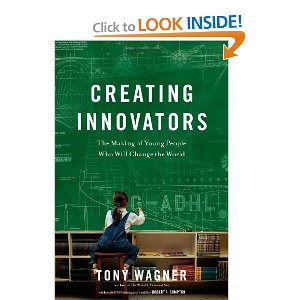
5.0 out of 5 stars Creating Innovators is NOT What Most US Schools Do…., February 27, 2013
I had a chance to go through this book today while visiting a school in Fairfax Virginia and I liked it. I have gone with 5 stars because it is a message that needs repeating as the educational “establishment” is still not listening, but those that rated it at only four stars have good reason to do so. I browsed the many interviews, and focused on the synthesis bits.
I completely agree with the criticism of the Quick Response codes, in this instance they are largely useless and a waste of time — the concept is however sound, and a great deal more needs to be done to better integrate books to video and also video to books.
The author's earlier book, (The Global Achievement Gap: Why Even Our Best Schools Don't Teach the New Survival Skills Our Children Need–and What We Can Do About It) listed seven survival skills that I repeat below, and the author tells us that this book is intended to move beyond those seven skills.
01 Critical thinking & problem solving
02 Collaboration across networks and leading by influence
03 Agility and adaptability
04 Initiative & entrepreneurship
05 Accessing and analyzing information (this is HUGE and where I have spent 30 years and will spend 30 more)
06 Effective oral & written communications (to which I would add graphic visualization)
07 Curiosity and imagination
I have reviewed here at Amazon 150 books tagged Education (General) and 60 books tagged Education (Universities) with about 20 of them being core [all my reveiews sorted by 98 categories are at Phi Beta Iota the Public Intelligence Blog, this is not something one can do via Amazon now, but they all lead back to their respective Amazon page). One of them I want to link here early on because it is the first book that made me realize that teaching to the test is beating the creativity out of our kids and also NOT teaching them to think conceptually or innovatively, was Orbiting the Giant Hairball: A Corporate Fool's Guide to Surviving with Grace.
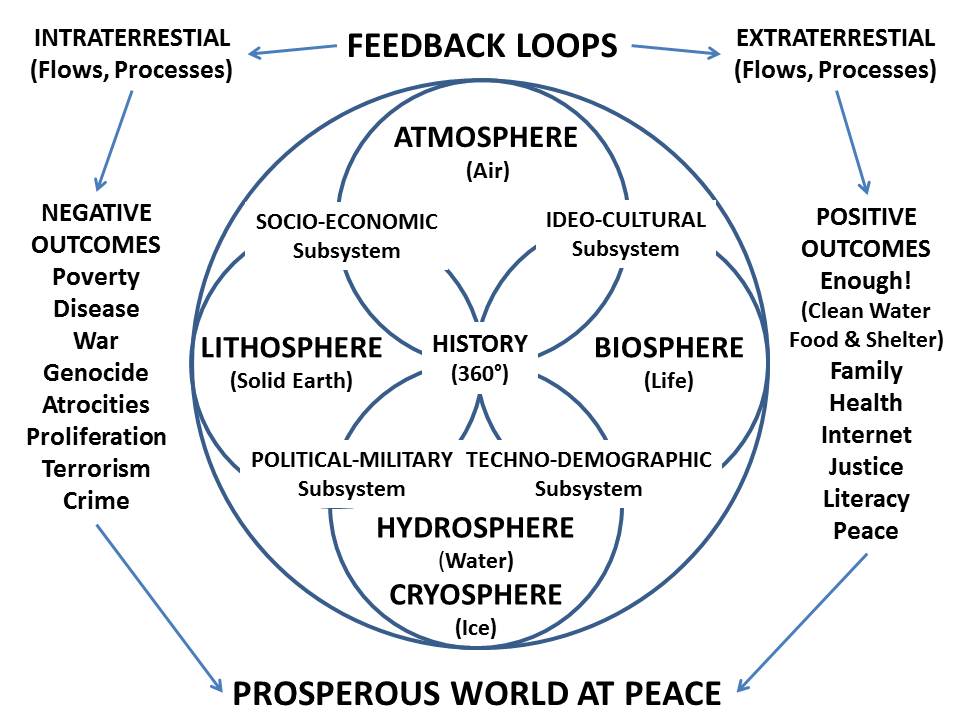
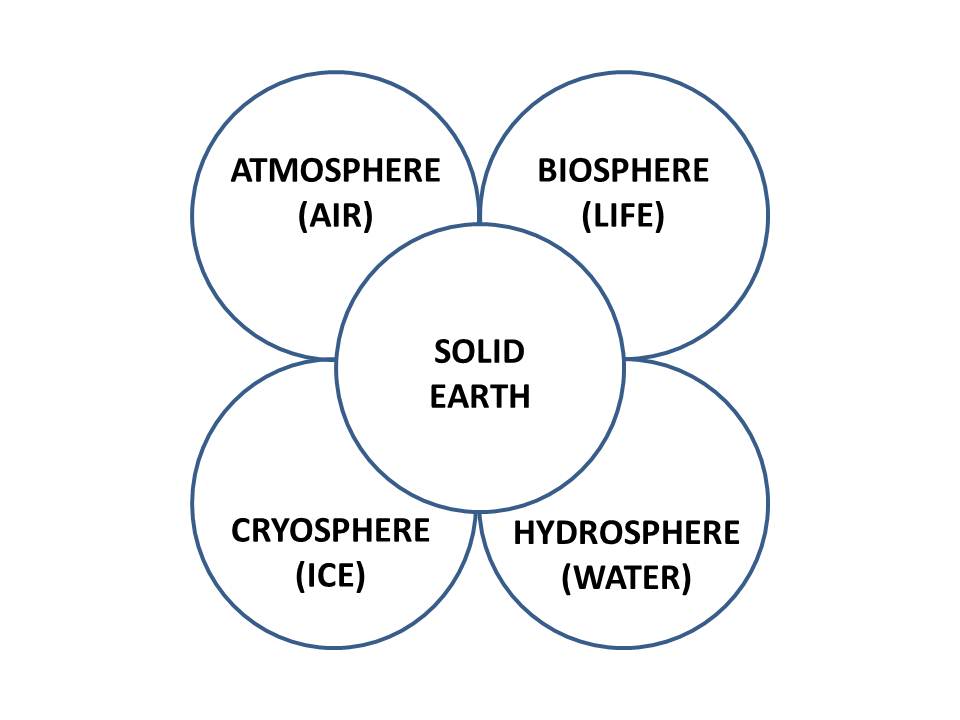
Inspired by Earth Systems as shown at Graphic: Earth Systems. If anyone can track down the missing URL for proper credit to the original, please send email to robert.david.steele.vivas [at] gmail [dot] com.