Processes of Radicalization and De-Radicalization Center for Interdisciplinary Research (ZiF)
Bielefeld, Germany April 6-8, 2011
The conference is hosted by the International Journal of Conflict and Violence (IJCV) Wilhelm Heitmeyer, Donatella della Porta, Gary LaFree in cooperation with the Working Group “Orders of Violence” in the German Association for Political Science (DVPW)
The International Conference on Cyber Conflict is CCD COE’s third annual conference and will be held on
June 7-10, 2011 in Tallinn, Estonia.
In 2011 the conference will have a closer look on Cyber Forces discussing their defensive and offensive as well as management and policy aspects. Different views on cyber defense and operations in the current and envisaged threat environments will be combined, touching also related topics of interest.
Robert Steele: this was just brought to my attention, the eight minute extract has received 1,842,483 visits as of 8 December 2017. below is the original full video.
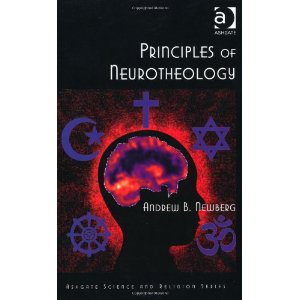
Andrew B. Newberg, Associate Professor, Department of Radiology, University of Pennsylvania, USA.
Publisher's Description: “Neurotheology” has garnered substantial attention in the academic and lay communities in recent years. Several books have been written addressing the relationship between the brain and religious experience and numerous scholarly articles have been published on the topic, some in the popular press. The scientific and religious communities have been very interested in obtaining more information regarding neurotheology, how to approach this topic, and how science and religion can be integrated in some manner that preserves both. If neurotheology is to be considered a viable field going forward, it requires a set of clear principles that can be generally agreed upon and supported by both the theological or religious perspective and the scientific one as well. “Principles of Neurotheology” sets out the necessary principles of neurotheology which can be used as a foundation for future neurotheological discourse. Laying the groundwork for a new synthesis of scientific and theological dialogue, this book proposes that neurotheology, a term fraught with potential problems, is a highly useful and important voice in the greater study of religious and theological ideas and their intersection with science.
In my early 20's, circa 1973, I questioned why each culture had it's own distinct religion much like they spoke a distinct tongue? Clearly, people speaking a language addressed a universal need to communicate. Did religion address some need so fundamental to human nature that, like our different languages, groups of people, separated in time and space would evolve different religious systems independently? The 1960's saw the world grown smaller by telecommunications and jet travel, increasing awareness of the disparities in belief systems and the consequent conflicts arising therefrom, convinced me that we were entering an era in which an appreciation of our universality was critical as our capacity for self-destruction grew. The works of individuals, like Carl Jung and Joseph Campbell, began to build bridges across an enormous chasm of endless distinctions in practices and details.
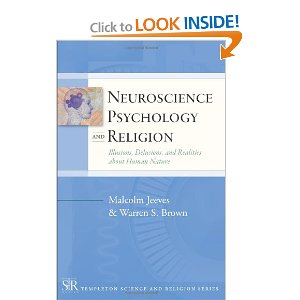
A rare accomplishment, this book journeys to the heart of those questions at the level of a Scientific American article; with eloquence and an impressive scope and command of the research. It is the most balanced account of the neuroscience perspective on religion that I have had the pleasure to read. Readers seeking more imaginative interpretations of the neuroscience data, where authors find “the God Module” on fMRI or proof of God's existence in the brain's design, will be disappointed. Here, as well, there is no treatise of comparative religious mythology or proof in the validity of any particular belief system over others. Despite being written by two admittedly Catholic scholars, they are, as well, first-rate neuroscientists. The only faith peddled here is what brain science can inform us about the phenomenon of religiosity as seen on it's effect in the central nervous system and visa versa. This is a cutting edge neuroscience view of how the brain begets the mind and what is specific to a mind hooked on religion.