by Audrey on 11. Feb, 2011
There’s a new app in BitTorrent’s recently released App Studio today, one that really exemplifies the importance of the BitTorrent technology — the ability to distribute large files to people with low-bandwidth: Khan Academy.
The Khan Academy app will bring over 2000 educational videos to the BitTorrent community. Users can freely download and share the educational videos, whose subjects range from statistics to algebra to organic chemistry.
In a 13 February 2011 op-ed column [also attached below], George Will, a self-proclaimed conservative, who by definition must favor adherence to the Accountability and Appropriations Clauses of the Constitution, not to mention the rule of law (for example, the Chief Financial Officers Act of 1990), announced that he has discovered the Pentagon's bookkeeping shambles! He ends his op-ed by saying … “To govern is to choose, always on the basis of imperfect information. If, however, the strong language of [Congressman Randy] Forbes and [Senator Tom] Coburn is apposite, Congress cannot make adequately informed choices about the uniquely important matters that come to McKeon's committee. This fact will fuel the fires of controversy that will rage within the ranks of Republicans as they come to terms with the fact that current defense spending cannot be defended until it is understood.”
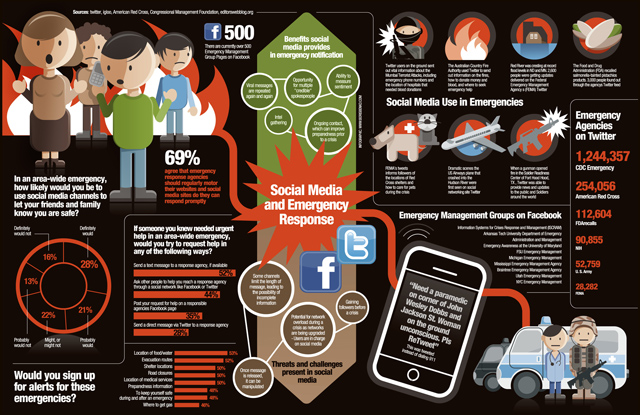
The use of social media during national and international crises, both natural and political, is something that Mashable has followed with great interest over the past few years.
As a culture, we started becoming more aware of the power of social media during times of crisis, like when the Iran election in 2009 caused a furor, both on the ground and on Twitter. More recently, the Internet and social media played an important role in spreading news about the earthquake in Haiti and political revolution in Egypt.
But what about other kinds of natural disasters or crime? Can social media be used to good effect then?
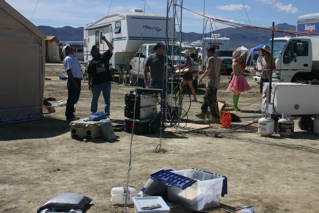
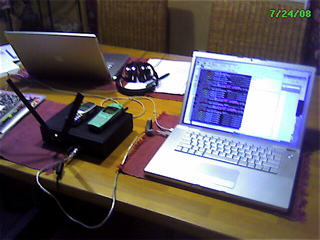
OpenBTS is an open-source Unix application that uses the Universal Software Radio Peripheral (USRP) to present a GSM air interface (“Um”) to standard GSM handset and uses the Asterisk® software PBX to connect calls. The combination of the ubiquitous GSM air interface with VoIP backhaul could form the basis of a new type of cellular network that could be deployed and operated at substantially lower cost than existing technologies in greenfields in the developing world.
In plain language, we are working on a new kind of cellular network that can be installed and operated at about 1/10 the cost of current technologies, but that will still be compatible with most of the handsets that are already in the market. This technology can also be used in private network applications (wireless PBX, rapid deployment, etc.) at much lower cost and complexity than conventional cellular.
Phi Beta Iota: This is as close to “world-changing” as it gets. Neither Microsoft nor the cellular providers–nor the governments whose people stand to gain the most (but whose corrupt politicians prefer the status quo)–want to surf this wave, they would rather fight it. If there were ONE social networking initiative that is guaranteed to change the world for the better, this is the one. In our always humble opinion.
On issues ranging from abortion to guns, it is possible for adversaries to find common ground
February 10, 2011|By Robert Fersh and Andrew L. Yarrow
EXTRACT: These processes are most successful when participants have strong, informed opinions and can make a difference if they reach agreement. This was the case in the U.S.-Muslim Engagement Project, where 34 diverse American leaders joined in an influential consensus report in 2008 to show a way forward for the United States in its relations with Muslim majority countries. The group included a former Clinton administration secretary of state, former Republican members of Congress, high-ranking former officials of the George W. Bush administration, 11 Muslim-American leaders, a former director of the American Israel Public Affairs Committee, clergy of differing faiths, and others. Vin Weber, a former Republican congressman from Minnesota, said: “This report provides clear-headed ideas and analysis that the American public and bipartisan leaders can get behind in working to improve U.S.-Muslim relations. The process by which the group reached consensus is a good model for dialogue for the tough issues our country faces.”
Kevin shares this great quote from the Count of Monte Cristo:
“I have been told,” said the count, “that you do not always yourselves understand the signals you repeat.”
“That is true, sir, and that is what I like best,” said the man, smiling.
“Why do you like that best?”
“Because then I have no responsibility. I am a machine then, and nothing else, and so long as I work, nothing more is required of me.”
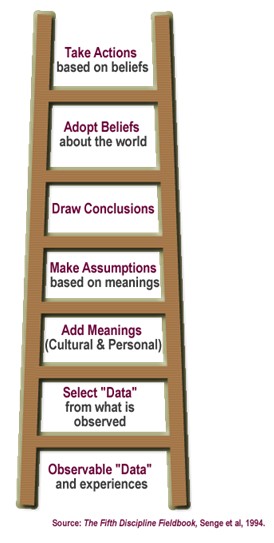
Phi Beta Iota: The blinding flash of insight here, related to the Ladders of Inference Search, is that both the institutions that are rushing blindly and repetitively into the past with their archaic and failed paradigms, AND their critics who keep repeating the same criticisms, and going nowhere. This realization is what powers the transpartisan, dialog & deliberation, and general “engagement for emergence” memes–UNTIL you are willing to sit down and LISTEN to those you consider antithetical to all that you are and do, you will not be capable of learning or evolving in a holistic manner. Hence, Advanced Cyber/IO must be FIRST about connecting all to all, THEN about establishing TRUST (see Robert Garigue's Contributions), ONLY THEN about sharing and sense-making, and finally about concerted consensus. The emphasis on cyber-security is ignorant and misplaced–it is a cancer on the art and science of global engagement.
Searches are how we harness the distributed intelligence of our visitors. Thank you for this. On this site, the search produces one reference to Senge:
On the wider web, your search helps bring back to this site and its collective, the following, remixed in descending order of brevity and utility; multiple sources suggest this concept and primary diagram were developed by Chris Argyris then presented by Peter Senge in The Fifth Discipline.