Review: The New American Story

3 Star, Biography & Memoirs, Corruption, Politics
0Shares

BradleyBill Bradley (D) for President and Bloomberg (I) for VP?,

May 28, 2007

Bill Bradley

Edit of 5 Jul 09 to observe Bradley is theater–a fraud–as are all the others. With Obama it has become clear that the Borg consists of Wall Street (including Allen & Co) owning Congress, Treasury, Justice, and the Fed. We the People have been mugged.

Edited 25 Jun 07 to focus on possibility of Bradley-Bloomberg and comment.

This is a very solid, well-written and well-documented, and with great insights that I am all too happy to absorb in my capacity as an estranged moderate Republican. On balance I find Bill Bradley to be smarter, more nuanced, more deliberate, and not so trivially, taller and fitter than Al Gore. I am so impressed by the possibilities that I am immediately going back to my existing copy of Price of Loyalty, the story of how Dick Cheney betrayed Paul O'Neill and all the rest of us moderate Republicans, to see if there is a cross-walk that can be done. If these two worthies will agree to electoral reform and a transpartisan Cabinet, we can save the Republic in 2008.

The book begins with a marvelous review of the many false stories the extremist Republicans and their White House neo-cons have been telling about everything from tax cuts and the deficit and Medicare to Iraq, terrorism, and so on He has mastered the story-telling dynamic so recommended by Stephen Denning, the World Bank's Chief Knowledge Officer until his retirement.

In Part II of the book the author explores the break-downs in global cooperation and global responsibility, and specifically points to the growth of religion as a force we cannot ignore. See Left Hand of God. He addresses the big picture issues including the concentration of wealth and the drop in savings, increase in inequality, and failure to invest in the future (education, infrastructure).

His review names three systems–economic, social, and national defense–where we are being pushed to the breaking point. In a somewhat scattered fashion, he moves across education, the deficit, tax reform, geopolitical instability, oil, water, pensions, stock market, and health care (specifically praising Paul O'Neil and holistic reform.

In part III he identifies voter turn-out and electoral reform as the two keys to victory over money and conglomerate media spin. The book then ends with what for me was complexly new and useful insight on why the Republicans cannot fix nor manage America, and why the Democrats continue to flounder.

His eight “curses” of the Democratic Party:
1) Fear of thinking big
2) Capitulation on defense (hard vs soft power)
3) Inability to counter accusations of being wasteful spendthrifts
4) Close-minded devotion to the secular
5) Wealth-bashing
6) Special Friends in teachers, trial lawyers, and auto workers
7) Ceased to stand on principle
8) Hypnotized by charisma

There is no one now running that I consider worthy of being the first transpartisan president. Bradley, if he adopted the three standards: electoral reform as the only truly urgent issue; transpartisanship and a transpartisan cabinet announced in advance; and a commitment to show a balanced budget addressing all ten threats with all ten policies by November 2008, I'd want to be part of that restoration of the Republic.

The Price of Loyalty: George W. Bush, the White House, and the Education of Paul O'Neill
Democracy's Edge: Choosing to Save Our Country by Bringing Democracy to Life
The Tao of Democracy: Using Co-Intelligence to Create a World That Works for All
Escaping the Matrix: How We the People can change the world
All Rise: Somebodies, Nobodies, and the Politics of Dignity (Bk Currents)
Society's Breakthrough!: Releasing Essential Wisdom and Virtue in All the People
A Crowd of One: The Future of Individual Identity
Blessed Unrest: How the Largest Movement in the World Came into Being and Why No One Saw It Coming
Running on Empty: How the Democratic and Republican Parties Are Bankrupting Our Future and What Americans Can Do About It
THE SMART NATION ACT: Public Intelligence in the Public Interest
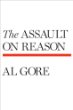
Review: The Assault on Reason

3 Star, Politics
0Shares

Assault on ReasonNine Years Too Late, Lacks Passion & Credibility,

May 26, 2007

Al Gore

Edit of 5 Jul 09 to observe that Mr. Gore is now worth $100M. Greg Palast not only called the fix before the election, but the one after as well. How sweet it must be to cast We the People adrift.

This book is nine years too late. It lacks passion & credibility. By way of context, and to disclose my inherent bias, I am an estranged moderate Republican who will never forgive Al Gore for 1) picking the de facto Israeli Ambassador and a closet neo-conservative as his running mate; 2) refusing to act on the advance disclosure by Greg Palast of the Bush plan to steal the election by disenfranchising 35,000 to 50,000 people of color in Florida; and 3) refusing to sign or encourage any other Senator to sign the legitimate House of Representatives demand for a repeal of the Florida results and a new election.

In that context, this book is shallow, pedantic, and largely pointless, as futile as his last sixteen years. You would be better off with the ten books I list below, or even with the reviews alone of those ten books. This is a double-spaced easily readable statement of the obvious.

1) TV and advertising have destroyed reason
2) Passionate faith blinds and makes the loyal brain-dead
3) Generals are not allowed to tell the truth and ignored when they do
4) Concentrated wealth and concentrated power doom democracy
5) Corporate power and mass deception go hand in hand
6) Bush administration has taken secrecy and withheld information to new heights
7) Loss of civil liberaties and rise of a police state, including torture, set a new low for America
8) Education and being informed are not the same thing.
9) His top threats are the environment, water, terrorism, drugs & corruption, and pandemics. Evidently he is not familiar with the ten high-level threats identified by LtGen Scowcroft and the United Nations (poverty, environmental degradation, infectuous disease, inter-state conflict, civil war, gencoide, other atrocities, proliferation, terrorism, and transnational crime).
10) Congress failed America by becoming the hand-maiden of the President rather than the Article 1 balance of power.
11) Internet offers hope (but no recognition of the missing sense-making tools including total transparency for all budgets)

I've met Al Gore and I have dealt with his senior staff both in office and now. My bottom line is that he is a very intelligent and well-intentioned individual with a very shallow staff and absolutely no sense of how to build a transpartisan team. He may run for President in 2008, if he does, he will lose unless he discovers the following three fundamentals:

1) Transpartisan meme as represented by Reuniting America (Unity 08 is a fraud, the last gasp of the two-party spoils system, the same one that displaced the League of Women Voters from the Presidential debate process in order to exclude the more sensible Libertarian, Green, Reform and Independent candidates from the debate)
2) Electoral reform as the ONLY major issue facing America
3) Selecting and announcing a multi-party Cabinet in advance, and challenging all the others to do the same–America is too complicated to be managed by a white boy and his cronies! It's time we destroy the Republican and the Democratic Party machines, restore participatory democracy, and end the corrupt “winner take all” system in both the Legislative and Executive branches.

Al Gore continues to have potential, but on his present course he will not earn the Nobel (Paul Hawkin, Herman Daly, and Lester Brown have done more) and he will not restore democracy in America. He's too busy being a hedge fund manager and celebrity speaker with one probllem and no solutions. That's how I see it. He has not earned my vote yet, but I will change parties and vote Democratic if he first wins the Democratic primaries, then selects a Republican as a running mate, and commits to the three ideas above. It's not rocket science. It just takes passion and an appreciation for diversity and dissent, and that is one thing Al Gore has not been able to unleash.

The Tao of Democracy: Using Co-Intelligence to Create a World That Works for All
Escaping the Matrix: How We the People can change the world
Society's Breakthrough!: Releasing Essential Wisdom and Virtue in All the People
All Rise: Somebodies, Nobodies, and the Politics of Dignity (Bk Currents)
Blessed Unrest: How the Largest Movement in the World Came into Being and Why No One Saw It Coming
Ecological Economics: Principles And Applications
Plan B 2.0: Rescuing a Planet Under Stress and a Civilization in Trouble
Losing America: Confronting a Reckless and Arrogant Presidency
The Best Democracy Money Can Buy
Breach of Trust: How Washington Turns Outsiders Into Insiders

Review: Unintended Consequences–The United States at War

4 Star, Politics, Strategy, War & Face of Battle
0Shares

UnintendedStrong Buy, Simplistic but Focused,

May 20, 2007

Kenneth J. Hagan

I think enough of this book by Hagan and Bickerton, both, significantly, respected professors in the US military war college system, to recommend it very strongly. It is simplistic, but in combination with the books I list below, it is quite striking.

Key points:

1. Wars have consequences, not only in the defeated region, but within the USA where the national and regional cultures (Nine Nations) can be conflicted.

2. War *alters* policy for all future generations.

3. America's wars have been engines of economic growth, but the authors fail to observe that the rich benefit while the poor die.

4. The post-war period is a continuation of the war and cannot be ignored. Both explicitly and implicitly, they crucify Cheney, Rumsfeld, Wolfowitz, and Feith.

5. In every single case, the outcome of the war has been “far removed” from the stated objectives.

6. Each war brings with it repressive measures against those who dissent. I am reminded of Valley Girl Condi Rice suggesting that General Tony Zinni was a “traitor” for saying the idea of invading Iraq was idiocy. How now, cow?

7. War tends to loosen the bonds of traditional authority and undermine community.

8. Across our history, not just at our inception, Native Americans have lost big. Genocide was not only perpetuated in the wars of independence, but after the Civil War, when the US Army practices scorched earth war.

9. The most importance consequence of the war of 1812 was it total lack of achievement of ANY of its goals, together with an accentuation of sectional differences within the USA.

10. On page 47: “Enhanced chauvinism, ambitious jingoism, and patriotism [per Samuel Johnson, the last refuge of the scoundrel] were unintended consequences of the war. The slave trade continued.

11. The Indian Wars were deliberately genocidal.

12. In general, in its first hundred years, the USA was a belligerent against Canada, Mexico, and the Indian Nations.

13. The war on Mexico caused long-term host8ility and led to the civil war by aggravating differences between North and South (and one might add, Texas as the largest ego in the West). The war on Mexico was mostly fought and led by the South.

14. The Civil War was America's first ideological war.

15. The Emancipation Proclamation applied only to slaves in hostile states, not to Northern states.

16. Civil War extended the power of the Federal Government, which increasingly sold the American people out to special interests including European banks.

17. The authors provide a *fascinating* description of Abraham Lincoln's unprecedented abuse of presidential powers, including the suspension of habeas corpus, and I can now understand why “W” thinks he is following greatness by turning America into a police state.

18. Civil War introduced total annihilation (scorched earth) as an American “war of war.”

19. Spanish-American-Cuban-Filipino war is, in the author's view, most similar to the Iraq war in terms of the mendacity preceding and the insurrections following.

20. WWI, WWII, and the Cold War are discussed in terms that show the US to have been the more belligerent. Stalin learned not to trust the US, and this led to the ideological stand-off and the emergency of “fantasy war.”

21. In Korea, General McArthur exceeded his authority, the Chinese warned the US via an Indian who was blown off, and the game was on.

22. The US concurrence in the restoration of the French in Indochina (now Viet-Nam), and the conflicts that Johnson had in having to support being a hawk on Viet-Nam in order to have his “Great Society,” are covered.

23. The authors are *brutal* on the Bush Family, to the point that one is inspired to think of a lunatic asylum as the natural resting place for the whole lot of them.

24. According to the authors, Iraq is a “phony war” in every sense of the word except the casualties.

25. Iran is not in the index but the authors observe that US pressure on Syria to withdraw from Lebanon opened the door for Iran.

Bottom line: going to war does not solve problems, it creates more of them. The authors conclude that war is both folly and futile. I agree.

All Americans have a choice in 2008: they can continue business as usual, with the corrupt and inept Republican and Democratic “machines” that are “running on empty” and totally beholden to Wall Street, or Americans can reassert the fact that this is a Republic and the government as a whole can be fired for cause. See the books listed below. May God have mercy on our souls. It's time we started living up to our sacred responsibility as citizen-warriors, as Minutemen.

The authors lose one star to simplicty and an avoidance of both the intelligence availabale but ignored, and lack of couinter-vailing forces (e.g. Congress and the media inevitably fall for the Executive deceptions).

American Fascists: The Christian Right and the War On America
The Nine Nations of North America
None So Blind: A Personal Account of the Intelligence Failure in Vietnam
Running on Empty: How the Democratic and Republican Parties Are Bankrupting Our Future and What Americans Can Do About It
The Sorrows of Empire: Militarism, Secrecy, and the End of the Republic (The American Empire Project)
The American Way of War: A History of United States Military Strategy and Policy
The Fifty-Year Wound: How America's Cold War Victory Has Shaped Our World
The Unconquerable World: Power, Nonviolence, and the Will of the People
War Is a Racket: The Anti-War Classic by America's Most Decorated General, Two Other Anti=Interventionist Tracts, and Photographs from the Horror of It
Who the Hell Are We Fighting?: The Story of Sam Adams and the Vietnam Intelligence Wars

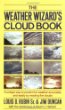
Review: The Weather Wizard’s Cloud Book–A Unique Way to Predict the Weather Accurately and Easily by Reading the Clouds

4 Star, Nature, Diet, Memetics, Design, Sailing
0Shares

Wizard WeatherSuperb, portable, and incomplete,

May 16, 2007

Louis D. Rubin Sr.

I bought this book in preparation for an advanced mariner's meteorology course, and could not have made this comment without having first gained that higher level of knowledge.

This is a suberb book with two major flaws:

1) It sticks to the two-dimensional depiction of weather that is common to the average person. Although there are a couple of illustrations showing altitude, the author could easily have put in a few pages on the rotation of the earth, the 500 mb level, and how weather on the surface cannot be understood without underestanding what is happening at the 18,000 level. As my instructor put it, the high-level troughs are the chicken that hatches the surface level (scrambled) egg.

2) It provides the pictures of the clouds, but missed the key chance to break down the names into the original latin meanings, to create a matrix of high (Cirro), medium (alto), and low (strato), with substantive meaning including layer (stratus), curly (cirrus), stacked in a vertical heap (cumulo-cumulus), and delivering rain (nimbus).

Add this little matrix above, and read “Mariner's Guide to the 500-Millibar Chart” by Joe Stenkiewicz and Lee Chesneau, and Google for <Lee Chesneau> to find his web site, and you'll have all you need to move to the better three-dimensional interactive viewing of weather and weather charts.

I also recommend Understanding Weatherfax

AA Mind the GapClick Here to Vote on Review at Amazon,

on Cover Above to Buy or Read Other Reviews,

I Respond to Comments Here or There

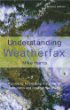
Review: Understanding Weatherfax

4 Star, Nature, Diet, Memetics, Design, Sailing
0Shares

WeatherfaxReally great book, part of the whole picture,

May 16, 2007

Mike Harris

I bought this book in preparation for an advanced mariner's meteorology course, and could not have made this comment without having first gained that higher level of knowledge.

This is a suberb book. It provides superb information about the weather fax, including an excellent and easily portable manual for the various symbols. It has two areas for improvement:

1) It sticks to the two-dimensional depiction of weather that is common to the average person. Although there are a couple of illustrations showing altitude, the author could easily have put in a few pages on the rotation of the earth, the 500 mb level, and how weather on the surface cannot be understood without underestanding what is happening at the 18,000 level. As my instructor put it, the high-level troughs are the chicken that hatches the surface level (scrambled) egg.

2) It does not make the connection, at least that I could see, between the vital importance of making your own observations at 00 and 12 Zulu, so that when you finally receive the weather fax six or seven hours later, you can compare reality with what was provided. This also applies to forecasts–you can keep them, compare your own observations as the time passes, and get a sense of the difference.

Add the above, and read “Mariner's Guide to the 500-Millibar Chart” by Joe Stenkiewicz and Lee Chesneau, and Google for <Lee Chesneau> to find his web site, and you'll have all you need to move to the better three-dimensional interactive viewing of weather and weather charts.

I also recommend The Weather Wizard's Cloud Book: A Unique Way to Predict the Weather Accurately and Easily by Reading the Clouds

AA Mind the GapClick Here to Vote on Review at Amazon,

on Cover Above to Buy or Read Other Reviews,

I Respond to Comments Here or There

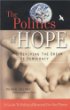
Review: The Politics of Hope–Reviving the Dream of Democracy

3 Star, Democracy, Politics
0Shares

Politics of HopeFormula Book “Good Enough” for Many,

May 14, 2007

Donna Zajonc

EDIT of 19 March 2008 to reframe appreciation. My first evalution was written from a perspective one who reads a great deal and is angry about the limitations of those with narrow perspectives. In the past year I have become much more aware of the importance of appreciating the good in context, and reinforcing it. Although I do not normally go back and re-do reviews, in this one instance I choose to do so because I now see the book as a serioius contributor to the emergence of Conscious Evolution.

This book is a fine summary based on the author's own experience of ideas that are discussed in greater detail and more diversity by Tom Atlee, James McGregor Burns, Robert Buckman, Allison Fine, Robert Fuller, William Greider, Richard Moore, Bill Moyer, Steven Pinker, James Rough, and many others.

Here are the topics covered in a very easy to read fast book:

Four Stages of Political Evolution
1) Anarchy
2) Fear & Polarization
3) Silence & Resignation
4) Politics of Hope

Seven Practices for Beocming a Concious Political Leader
1) Finding Your Spiritual Center
2) Serving with Higher Motives
3) Sharing Your Unique Gifts
4) Cultivating Your Political Habitat
5) Communicating with Integrity & Trust
6) Trusting the Mystery
7) Answering the Call

This is not a book I would recommend for those deeply engaged with all of these processes, but I can no longer dismiss it as completely as I once did.

The Tao of Democracy: Using Co-Intelligence to Create a World That Works for All
Transforming Leadership
Building a Knowledge-Driven Organization
Momentum: Igniting Social Change in the Connected Age
All Rise: Somebodies, Nobodies, and the Politics of Dignity (Bk Currents)
Who Will Tell The People? : The Betrayal Of American Democracy
Doing Democracy
Escaping the Matrix: How We the People can change the world
The Blank Slate: The Modern Denial of Human Nature
Society's Breakthrough!: Releasing Essential Wisdom and Virtue in All the People

AA Mind the GapClick Here to Vote on Review at Amazon,

on Cover Above to Buy or Read Other Reviews,

I Respond to Comments Here or There