Today’s educational system is all about standardization. We treat every kid the same. But not every kid learns the same. Some need the microscopic first, others the macroscopic. Some people are tangential learners, some prefer their facts in a linear fashion. Some are quick, others slow. Thankfully, this is changing.
. . . . . . .
Microscopic learning doesn’t really harness this system. It builds the patterns up slowly, one block at a time, but rarely does it require the kind of intuitive BIG PATTERN RECOGNITION that macroscopic learning demands. By keeping things microscopic, we’re keeping things boring. Sure, kids learn this way, but not all kids and, anyway, it’s not much fun.
UN member states have historically been hesitant to provide the UN with an intelligence-collection mandate at either strategic (headquarters) or operational (field) levels. However, the increased size, length and complexity of peacekeeping operations, compounded by severe security threats to UN personnel, make a stronger UN intelligence capability in the field increasingly necessary.
I had occasion to look at the Report of the Secretary General on the Work of the Organization, and thought this would be a good time to integrate some of what I have learned from working directly with the United Nations (UN), and what I believe could be helpful to the UN as it contemplates “next steps” into the 21st Century. My thoughts are deeply rooted in my perception of how badly governments have failed at governance, and how dysfunctional the Industrial Era approach to bureaucracy and information channeling has become. As the world prepares to migrate to hybrid forms of public governance, the UN's Industrial Era forms of organization and delivery are an impediment to its future viability. That is a challenge I would like to address, treating the UN as the logical hub for my emergent theory and practice of Public Governance (a mosaic) replacing Public Administration (a stovepipe) in the 21st Century.
Below the line is the document I have drafted in full text, followed by a number of links that are not in the document.
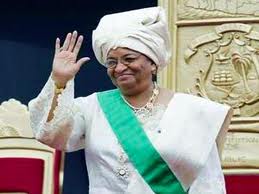
The Honorary Consulate General of India in Liberia has announced that President Ellen Johnson Sirleaf has been awarded the Indira Gandhi 2012 price for peace, disarmament, and development.
A communication issued by the Indian Honorary Consul General Upjit Singh Sachdeva on November 19, 2012 said the Indira Gandhi Prize for Peace, Disarmament and Development is one of India's most prestigious awards, administered by the Indira Gandhi Memorial Trust.
The release said the award will be conferred upon President Sirleaf by the President of India Pranab Mukherjee during the Liberian leader's pending visit to India, which is being arranged.
Ellen Johnson Sirleaf President of Liberia
The Consul General said the prize was instituted to commemorate Indira Gandhi's outstanding contribution to India and global well-being, as well as to promote the laudable causes she espoused.
“After receiving nominations from around the world, final selection for the Prize is made by a Jury of eminent persons, headed by the Prime Minister of India Dr. Manmohan Singh and including eminent International Scientists and Jurists,” the release said.
The Consul General said the 2012 Indira Gandhi Prize for Peace, Disarmament and Development is being awarded to President Sirleaf for serving as “an example and an inspiration to many a woman in Africa and beyond; for ensuring the return of peace, democracy, development, security and order in Liberia; and her strong interest in the consolidation and improvement of Liberia's relations with India since her first election as President in 2005 and her re – election in 2011”.
Moreover, President Sirleaf has been singled out for the prize for restoring financial health to Liberia which was on the verge of fiscal breakdown.
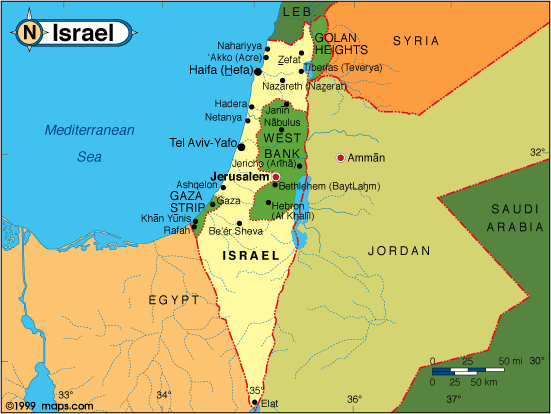
Jordan: Update. Anti-government protests occurred for four days last week and might still be taking place. However no mainstream news services have provided recent update reports on anti-government ferment in Jordan.
Comment: The Gaza story has more glamor than Jordan, but threats to the Hashemite monarchy are far more significant for the stability of the Middle East than the Gaza fighting.
Phi Beta Iota: The three dictatorships that surrounded Israel and provided stability for Israel despite the cost to their own populations, are in turmoil. Egypt is no longer stable; Syria may re-stabilize but is at risk; Jordan is increasingly at risk. It is Israel's tragedy that it is an invented state; that it has chosen to be genocidal toward the Palestinian people whose land it has taken over; and that it has relied on its stability and survival on three dictators. This is not a sustainable proposition.


 Improving United Nations Intelligence