As China is expected to rise to the status of a financial superpower within the next 8 years and eclipse the US economy by 2020, Africa becomes center stage in the greatest currency war the world has seen since the 1930s, which is now shifting into overdrive.
Brazil, Russia, India, China and South Africa, collectively known as the BRICS nations, are moving forward with their plan to unseat the US dollar from its throne as the global trade currency and to replace it with a Chinese-denominated “super-sovereign” international currency.
Click on Image to Enlarge
This Geo-political game to establish global monetary dominance is by no means limited to the attack on the US dollar. Instead this is merely the first strike of a concerted campaign of worldwide economic warfare that will soon follow which seeks to bring the United States and its western allies to their knees.
Ultimately the BRICS collective is staging a coup to overthrow the current global financial regime that has been dominated by the World Bank and the International Monetary Fund since the last global currency war was won at the end of World War II.
The attack comes partially in retaliation for the latest round of quantitative easing in which we witnessed the Federal Reserve deliberately printing trillions of dollars in an attempt to jump-start the U.S. economy by forcing investors back into the U.S. stock market by devaluing the US dollar.
Phi Beta Iota: One third of the global economy is transnational crime, and one third System D or “off the books” entrepreneurial information economics routing around governments. Now that we know the final third is legalized crime, it becomes much easier to understand why two thirds of the brain power on the planet has opted out of the legalized crime world that favors the 1%.
The US has become more accepting of capitalism in the past century, even as economic security has declined.
Al Jazeera, 26 March 2012
New Haven, Connecticut – One day in 1917, US President Woodrow Wilson sat in his office scratching his head. He faced a dilemma. The war in Europe was very good for American business, but he needed to persuade the American public that entering the war was good for democracy.
The problem was that Americans were deeply sceptical of capitalism, far more than today. As John Reed wrote in “Whose War?”, an essay that ran in the socialist magazine The Masses: “The rich has [sic] steadily become richer, and the cost of living higher, and the workers proportionally poorer. These toilers don't want war… But the speculators, the employers, the plutocracy – they want it… With lies and sophistries, they will whip up our blood until we are savage – and then we'll fight and die for them.”
Reed wasn't on the fringe. Six weeks after Congress officially declared war, enlistment totalled over 70,000 recruits. The military needed a million men. Something needed to be done, but initiating a draft alone would only incite rioting in the streets.
So Wilson launched an enormous propaganda campaign to turn public opinion around. He sent 75,000 speakers into communities around the country to deliver 750,000 speeches in favour of war. For the unmoved, Congress passed the Espionage Act, which criminalised criticising the government during wartime.
Americans often ascribe to economcis effects that are in fact caused by politics. Before the Espionage Act, for instance, there were hundreds of radical newspapers, many of them socialist or communist – or just sympathetic to the plight of workers. After the war, most disappeared. That wasn't the result of market forces. The US government went to great pains at great expense to persuade Americans to embrace an approved ideology while it silenced dissidents with old-fashioned censorship. The Masses, along with 70 other radical publications, went out of business, because the US Post Office wouldn't deliver it.
Yet they were the lucky ones.
‘A turnkey totalitarian state'
The Wilson era saw 2,000 prosecutions under the Espionage Act. One was Eugene V Debs, the union organiser. He was sentenced to 10 years in prison for giving a speech, lambasting the draft for World War I. Today, the Obama administration hopes to convict Bradley Manning for allegedly leaking documents to WikiLeaks, including a video of an American helicopter gunning down Iraqi children.
The War on Terror has inspired new laws and new ways to decimate civil liberties. The US Department of Justice recently rationalised the killing of Americans abroad. Attorney General Eric Holder twisted himself into knots trying to separate due process from judicial process. The difference apparently means that it was okay to murder an American working for al-Qaeda in Yemen.
Worse is our spying on everyone, including Americans. The National Security Agency (NSA) is building a huge complex in Utah to house server farms that can handle yottabytes of data (a yottabyte equals one septillion bytes, or one quadrillion gigabytes). According to James Bamford, the NSA wants to eavesdrop without needing court orders. As one source said, we are becoming “a turnkey totalitarian state“.
The US touts itself as the land of free, but it has laws which are designed to crush criticisms of the state.
Al Jazeera, 22 March 2012
New Haven, CT – In 1893, a massive financial panic sent demand for the Pullman Palace Car Company into a downward spiral. The luxury rail car company reacted by slashing workers' wages and increasing their work load. After negotiations with ownership broke down the following year, the American Railway Union, in solidarity with Pullman factory workers, launched a boycott that eventually shut down railroads across the US. It was a full-scale insurrection, as the late historian Howard Zinn put it, that soon “met with the full force of the capitalist state“.
Click on Image to Enlarge
The US Attorney General won a court order to stop the strike, but the union and its leader, Eugene V Debs, refused to quit. President Grover Cleveland, over the objections of Illinois' governor, ordered federal troops to Chicago under the pretense of maintaining public safety. Soldiers fired their bayoneted rifles into the crowd of 5,000, killing 13 strike sympathisers. Seven hundred, including Debs, were arrested. Debs wasn't a socialist before the strike, but he was after. The event radicalised him. “In the gleam of every bayonet and the flash of every rifle,” Debs said later on, “the class struggle was revealed“.
I imagine a similar revelation for the tens of thousands of Americans who participated in last fall's Occupy Wall Street protests. As you know, the movement began in New York City and spread quickly, inspiring activists in the biggest cities and the smallest hamlets. Outraged by the broken promise of the US and inspired by democratic revolts of Egypt and Tunisia, they assembled to protest economic injustice and corrupt corporate power in Washington.
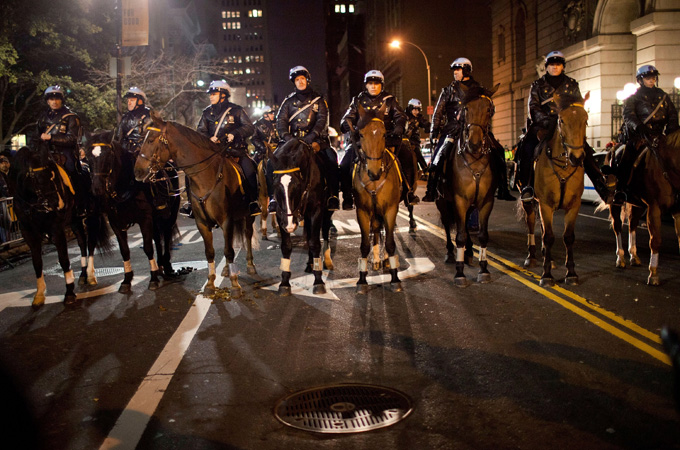
Yet the harder they pushed, the harder they were pushed back – with violence. Protesters met with police wearing body armour, face shields, helmets and batons; police legally undermined Americans' right to assemble freely with “non-lethal” weaponry like tear gas, rubber bullets and sonic grenades. There was no need for the president to call in the army. An army, as Mayor Bloomberg quipped, was already there.
Before Occupy Wall Street, many protesters were middle- and upper-middle class college graduates who could safely assume the constitutional guarantee of their civil liberties. But afterward, not so much. Something like scales fell from their eyes, and when they arose anew, they had been baptised by the fire of political violence.
Saudi Arabia: For the record. European Christian websites have reported Grand Mufti Sheikh Abdulaziz Al al-Shaikh, one of the most influential religious leaders in the Muslim world, issued a fatwa against non-Muslim places of worship last week.
In response to a Kuwaiti lawmaker who asked whether Kuwait could ban church construction in Kuwait, the Sheikh ruled that further church construction should be banned and existing Christian houses of worship should be destroyed.
Comment: Senior European Christian prelates have pointed out the Grand Mufti is contradicting King Abdallah's policy of supporting interfaith dialogue. The King is seeking to build an interfaith center in Austria, taking advantage of freedoms and tolerance not available in Saudi Arabia and most of the Arab world. Foreign Christian minorities make up substantial and significant portions of the working populations of the United Arab Emirates, Qatar, Kuwait, Bahrain, Oman and Yemen.
The Catholic Bishop for the Christians in the UAE, Oman and Yemen warned that some Muslims will be influenced to act on the Grand Mufti's edict. A delayed terrorist reaction against Christian churches is the threat, and has occurred in Iraq and Egypt.
Phi Beta Iota: This is also the best indication that the Assisi Peace Summit sponsored by the Most Holy Father was a clear failure. Although the Pope has done two important pronouncements, one on religion and science both seeking the truth, the second on the cancer of corruption, the Catholic Church — and the various other denominations — lack a coherent strategy for education, intelligence, and research toward inter-faith tolerance. We continue to recommend that an inter-faith campaign against secular corruption be the basis for advances in cultural and spiritual tolerance.
The Syria Tracker Crisis Map is without doubt one of the most impressive crisis mapping projects yet. Launched just a few weeks after the protests began one year ago, the crisis map is spearheaded by a just handful of US-based Syrian activists have meticulously and systematically documented 1,529 reports of human rights violations including a total of 11,147 killings. As recently reported in this NewScientist article, “Mapping the Human Cost of Syria’s Uprising,” the crisis map “could be the most accurate estimate yet of the death toll in Syria’s uprising […].” Their approach? “A combination of automated data mining and crowdsourced human intelligence,” which “could provide a powerful means to assess the human cost of wars and disasters.”
On the data-mining side, Syria Tracker has repurposed the HealthMap platform, which mines thousands of online sources for the purposes of disease detection and then maps the results, “giving public-health officials an easy way to monitor local disease conditions.” The customized version of this platform for Syria Tracker (ST), known as HealthMap Crisis, mines English information sources for evidence of human rights violations, such as killings, torture and detainment. As the ST Team notes, their data mining platform “draws from a broad range of sources to reduce reporting biases.” Between June 2011 and January 2012, for example, the platform collected over 43,o00 news articles and blog posts from almost 2,000 English-based sources from around the world (including some pro-regime sources).
Syria Tracker combines the results of this sophisticated data mining approach with crowdsourced human intelligence, i.e., field-based eye-witness reports shared via webform, email, Twitter, Facebook, YouTube and voicemail. This naturally presents several important security issues, which explains why the main ST website includes an instructions page detailing security precautions that need to be taken while sub-mitting reports from within Syria. They also link to this practical guide on how to protect your identity and security online and when using mobile phones. The guide is available in both English and Arabic.
Eye-witness reports are subsequently translated, geo-referenced, coded and verified by a group of volunteers who triangulate the information with other sources such as those provided by the HealthMap Crisis platform. They also filter the reports and remove dupli-cates. Reports that have a low con-fidence level vis-a-vis veracity are also removed. Volunteers use a dig-up or vote-up/vote-down feature to “score” the veracity of eye-witness reports. Using this approach, the ST Team and their volunteers have been able to verify almost 90% of the documented killings mapped on their platform thanks to video and/or photographic evidence. They have also been able to associate specific names to about 88% of those reported killed by Syrian forces since the uprising began.
Depending on the levels of violence in Syria, the turn-around time for a report to be mapped on Syria Tracker is between 1-3 days. The team also produces weekly situation reports based on the data they’ve collected along with detailed graphical analysis. KML files that can be uploaded and viewed using Google Earth are also made available on a regular basis. These provide “a more precisely geo-located tally of deaths per location.”
In sum, Syria Tracker is very much breaking new ground vis-a-vis crisis mapping. They’re combining automated data mining technology with crowdsourced eye-witness reports from Syria. In addition, they’ve been doing this for a year, which makes the project the longest running crisis maps I’ve seen in a hostile environ-ment. Moreover, they’ve been able to sustain these import efforts with just a small team of volunteers. As for the veracity of the collected information, I know of no other public effort that has taken such a meticulous and rigorous approach to documenting the killings in Syria in near real-time. On February 24th, Al-Jazeera posted the following estimates:
Syrian Revolution Coordination Union: 9,073 deaths
Local Coordination Committees: 8,551 deaths
Syrian Observatory for Human Rights: 5,581 deaths
At the time, Syria Tracker had a total of 7,901 documented killings associated with specific names, dates and locations. While some duplicate reports may remain, the team argues that “missing records are a much bigger source of error.” Indeed, They believe that “the higher estimates are more likely, even if one chooses to disregard those reports that came in on some of the most violent days where names were not always recorded.”
The Syria Crisis Map itself has been viewed by visitors from 136 countries around the world and 2,018 cities—with the top 3 cities being Damascus, Washington DC and, interestingly, Riyadh, Saudia Arabia. The witnessing has thus been truly global and collective. When the Syrian regime falls, “the data may help sub-sequent governments hold him and other senior leaders to account,” writes the New Scientist. This was one of the principle motivations behind the launch of the Ushahidi platform in Kenya over four years ago. Syria Tracker is powered by Ushahidi’s cloud-based platform, Crowdmap. Finally, we know for a fact that the International Criminal Court (ICC) and Amnesty International (AI) closely followed the Libya Crisis Map last year.
Among the last known images of Osama bin Laden is a video seized at his compound the night he was killed, which shows the al-Qaeda leader hunched before a television screen studying a video of himself. It’s testimony to bin Laden’s obsession with the media side of his war against the United States.
This modern face of bin Laden’s jihad comes through clearly in a 21-page letter from his media adviser, a U.S.-born jihadist named Adam Gadahn. The letter is undated, but it appears to have been written after November 2010, in the last six months of bin Laden’s life.
Gadahn wrote much as if he were a media planner corresponding with a client. He included suggestions about the timing of video appearances after the 2010 U.S. midterm elections and use of high-definition video, and made snarky evaluations of major U.S. networks.
As I wrote last week, Gadahn hated Fox News (“falls into the abyss”); he liked MSNBC but complained about the firing of Keith Olbermann; he had mixed feelings about CNN (better in Arabic than in English) and made flattering comments about CBS and ABC. Basically, he wanted to play them all off to al-Qaeda’s best advantage. He also mentioned print journalists, most prominently Robert Fisk of The Independent of Britain. He cites three Americans (“Brian Russ,” “Simon Hirsh” and “Jerry Van Dyke”), though it’s uncertain whom he meant.
The media guidance was among the documents taken from bin Laden’s compound the night of May 2. It was made available to me, along with a small sample of other documents in the cache, by a senior Obama administration official.
Gadahn’s memo shows an organization struggling to stay on the media offensive despite devastating U.S. attacks. It’s partly aspirational, with dreams of jihad, but there’s a core of sharp self-criticism that makes clear Gadahn, like his boss, understood that al-Qaeda was losing its war.
Gadahn even worried that al-Qaeda’s reversals in Iraq and elsewhere represented “punishment by God on us because of our sins and injustices.” Like bin Laden, he was deeply upset that al-Qaeda’s affiliates had killed so many Muslims and listed 13 operations that showed “the tragedy of tolerating the spilling of [Muslim] blood.”
Gadahn is an intriguing figure whose life story would seem far-fetched if sketched by a Hollywood screenwriter. He was born Adam Pearlman in 1978, grandson of a California doctor who had served on the board of the Jewish Anti-Defamation League. Gadahn converted to Islam when he was 17, migrated to Pakistan at 20 and then disappeared in March 2001 into al-Qaeda’s world. In 2006, he was indicted by the United States for treason.
Phi Beta Iota: This gets sillier and sillier – including the built-in throw-away lines to explain what is probably typically ignorant US “covert operations” fiction. Most likely possibility at this point: young Adam was recruited early as a Mossad sleeper agent in the USA, and sent toward jihad generally. However, if Al Qaeda was in any way a fully-funded CIA/Safari Club operation as some claim (hybrid opportunist cross-over is more likely) then Adam could have been one of the few truly deep case officers developed or a joint Mossad/CIA puppy. We tend to doubt this “evidence.” Ignatius has zero credibility with us. At this point, anything he claims to accept is in our judgment false flag across the board and an illegal covert action / propaganda operations against the U.S. public. Ignatius is not ignorant — he is polished, professional, and deeply read. This is an ethics issue.
I just read Henry A. Giroux's article below when you have time. I provides all sorts of discourse for us to use in promoting SDD/ILIS and making it clear why it is important, i.e., making it intelligible to people who have not yet experienced it …
It is a long, dense article … but absolutely outstanding.
Henry A. Giroux, Truthout: “A group of right-wing extremists in the United States would have the American public believe it is easier to imagine the end of the world than it is to imagine the end of a market society. Comprising this group are the Republican Party extremists, religious fundamentalists such as Rick Santorum and a host of conservative anti-public foundations funded by billionaires such as the Koch brothers, whose pernicious influence fosters the political and cultural conditions for creating vast inequalities and massive human hardships throughout the globe.”
Overlaying the festering corruption is a discourse in which national destiny (coded in biblical scripture) becomes a political theology drawing attention away from the actual structural forces that decide who has access to health insurance, decent jobs, quality schooling and adequate health care. This disappearing act does more than whitewash history, obscure systemic inequalities of power and privatize public issues. It also creates social automatons, isolated individuals who live in gated communities along with their resident intellectuals who excite legions of consumer citizens to engage in a survival-of-the fittest ritual in order to climb heartlessly up the ladder of hyper-capitalism. The gated individual, scholar, artist, media pundit and celebrity – walled off from growing impoverished populations – are also cut loose from any ethical mooring or sense of social responsibility. Such a radical individualism and its shark-like values and practices have become the hallmark of American society. Unfortunately, hyper-capitalism does more than create a market-driven culture in which individuals demonstrate no responsibility for the other and are reduced to zombies worried about their personal safety, on the one hand, and their stock portfolios on the other. It also undermines public values, the centrality of the common good and any political arenas not yet sealed off from an awareness of our collective fate. As democracy succumbs to the instrumental politics of the market economy and the relentless hype of the commercially driven spectacle, it becomes more difficult to preserve those public spheres, dialogues and ideas through which private troubles and social issues can inform each other.