Journal: One World, Region by Region, Tribe by Tribe

02 China, 03 India, 05 Iran, 06 Russia, 08 Wild Cards, Commercial Intelligence, Earth Intelligence, Peace Intelligence, Policies
Chuck Spinney

Phi Beta Iota: Chuck Spinney's flagging of the below piece supports the point we were making with the post on dynamic planning.  For fifty years the USA has been throwing its weight around on the basis of partisan, ideological, and often illegimiate purposes, and it has been able to get a way with it because in an Industrial Era, might does make right.  We are no longer in an Industrial Era.  We've entered an era in which information asymmetries are being extinguished, while power asymmetries are emergent–demographic power trumps everything else when you get right down to it.  This entire web site makes that point in the aggregate.  On a sidenote, Kashmir is about water but no one seems to acknowledge that.  Water is one of the things we are going to have to figure out how to do in a non-zero fashion.  Hence, for the USA to dig itself a grave in Central Asia without giving any thought to the ten high-level threats to humanity as a whole, and the twelve policies, and the eigth demographic challengers, and to calculate a non-zero course through this maze, is nothing more than idiocy on steriods.

Full Story Online

The Afghan Triangle: Kashmir, India, Pakistan

Graham Usher

Graham Usher is a writer and journalist based in Pakistan and a contributing editor of Middle East Report.

For the last 61 years the fight has been fought, mostly, in and for Indian-occupied Kashmir (IoK): the territory Delhi and Islamabad have contested since the 1947 partition cleaved them into two states—and Kashmir into “Pakistani” and “Indian” parts. Sometimes (1947, 1965, 1971, 1999) the war has been hot. More often it has been waged via Pakistani proxies against a standing Indian military. Since 1989, it has been channeled through a low-intensity, Pakistan-backed separatist-Islamist insurgency that has killed 50,000 people and incurred an Indian military occupation three times the size of America’s in Iraq and three times as lethal.

See also:

Scott Atran

Scott Atran

Professor and author

Posted: December 30, 2009 11:57 AM

The Terror Scare

Journal: MILNET Focus on Iraq

03 India, 04 Indonesia, Communities of Practice, Ethics, Peace Intelligence, Policies, Threats

Full Story Online

In 2010, A World Of Turmoil

Yet Iraq could be the biggest success story

By David Ignatius

Will Iraqi democracy be 2010's big success story? Visiting Anbar province several weeks ago and listening to the governor of Ramadi talk about his big development plans, I found myself wondering if maybe the cruel Iraq story might have a happy ending after all. This was the province where al-Qaeda declared its first emirate, just a few years ago, and now the governor is handing out a special Financial Times report on business opportunities there.

When I meet Iraqis these days, they all want to talk politics: Which party is ahead in the March parliamentary elections? Can Interior Minister Jawad al-Bolani or Vice President Adel Abdul Mahdi unseat the incumbent prime minister, Nouri al-Maliki? It's the kind of freewheeling political debate you can't find anywhere else in the Arab world. I want to believe it's real, even as the terrorist bombs continue to explode in Baghdad and other cities.

Phi Beta Iota: Although pedestrian and myopic in the extreme, courtier Ignatius provides one nugget on Iraq that is repeated above.  Despite huge mistakes at home (elective war based on 935 lies to the public, Congress believing Wolfowitz instead of Shinseki) and major opposition in theater (Syria, Iran), Iraq is on the verge of being a success story.  Here are the three things NOT happening in Iraq that need to be ramped up from January 2010:

1)  Information Operations (IO) getting every success story into the news.  Right now all we see in a thin stream of US Army press releases and US military base newspapers.  This is not just pathetic, it is a self-inflicted wound.

2)  US Whole of  Government Operations that are finely calibrated to deliver the maximum amount of peace goods in the shortest possible time.  March-July should see us FLOOD Iraq with all the stuff that should have been done during the Golden Hour.  Ideally 80% of the money should be spent LOCALLY, not on fat-cat beltway bandit perks.

3)  Multinational Engagement with a special focus on Malaysia, Indonesia, Turkey providing “neutral” Muslim engineers, while Saudi Arabia pays the bill but is not allowed to send any of its demonizers into the country.  Using the Strategic Analytic Model and approaching all of Iraq as a test-bed for a new form of multinational effort guided by a Global Range of Needs Table down to the household level, with every gift (cause and effect) visible online, could create a new Gold Standard for multinational harmonized peaceful preventive and stabilziation measures.

Journal: MILNET Focus on Afghanistan

05 Civil War, 08 Wild Cards, Military, Peace Intelligence
Full Story Online

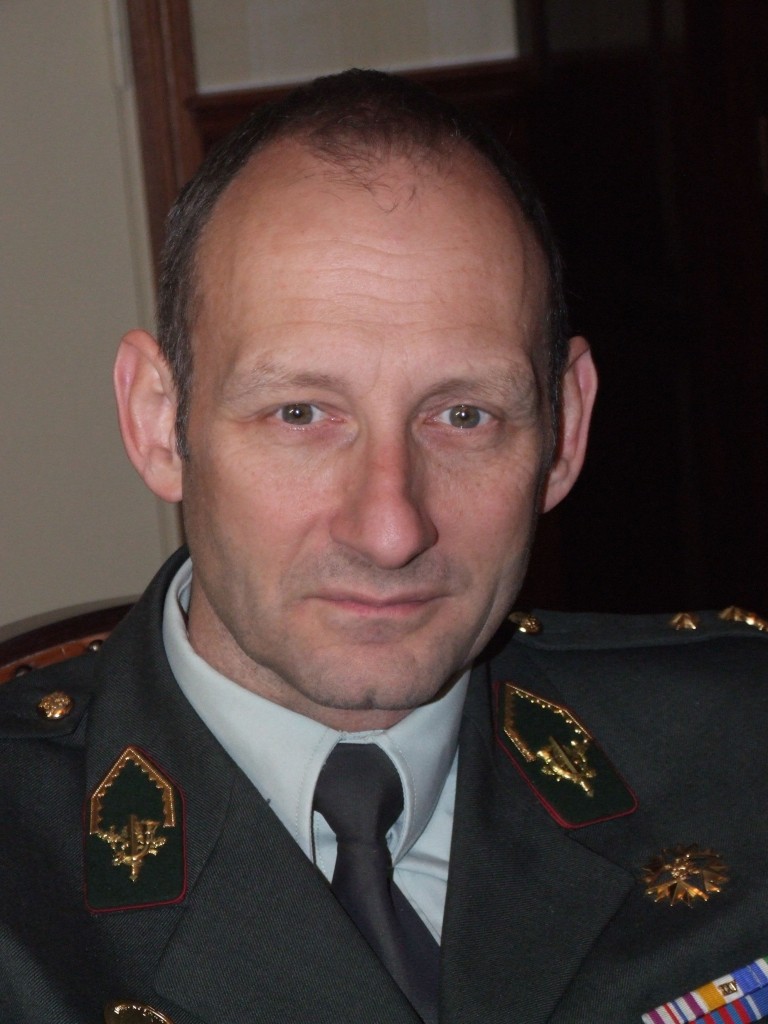
Interview With Dutch Major General Mart de Kruif, Former Commander, Regional Command South

Phi Beta Iota: Read every word.  Highlights include:

;1)  Every province is difference (see General Zinni's characterization of the six different Viet-Nam wars in Battle Ready)

2)  Climate and Ops Tempo, not the Taliban, are the major challenge

3)  Taliban losing, resorting more to terror against civilians

4)  NATO works–could not have done AF without NATO C4I

5)  Not a single word about civilian stabilization & reconstruction assistance, which appears to be dead in the water with AID pulling back

Our Conclusion: Having tried and failed at everything else, we are now at the cusp of the “Brass Hour” in both IQ and AF but the military is failing to do the homework needed to present a compelling case for fur a “Berlin Airlift” into both countries that overwhelms the population with what we should have used the first time around: language-qualified Muslim engineers from Indonesia and Malaysia and Turkey, along with a mini-Marshall Plan that wages peace without end.  One Tribe at a Time, Yes, But Bring Peace Goods with You….

Journal: Afghanistan & Iraq–Opportunity Knocks for an Afghan Airlift and a Six-Month Muslim-Centered Multinational Multiagency “Advise & Assist” Transition Toward Departure from Both Countries

Other References:

Continue reading “Journal: MILNET Focus on Afghanistan”

Journal: Yemen–Opening A New “Front” in the Long War

04 Inter-State Conflict, 05 Civil War, 08 Wild Cards, 09 Terrorism, 10 Security, Cultural Intelligence, Ethics, Military, Peace Intelligence
Chuck Spinney

Nicht Schwerpunkt as a Prescription for Defeat by a 1000 Cuts

Operation Barbarossa

Recent events like the Fort Hood Massacre and the bungled attempt to fire bomb the airliner bound for Detroit have focused attention on and encouraged our escalating intervention in Yemen, which has been taking place quietly, as if Iraq, Afghanistan, and Pakistan were not enough to keep our strategic planners and stretched out military forces occupied.  Our reactions to events in the  so-called Long War on Terror suggest an aimless spreading of effort throughout the Middle East and Central Asia.  This aimlessness brings to mind a comment General Hermann Balck, a highly decorated German officer in WWII, made to a small group of reformers in the Pentagon in the early 1980s.  The subject was Operation Barbarossa, or Germany's invasion of the Soviet Union in June 1941.  Balck pithily dismissed the German strategy shaping that invasion with the words: “Nicht Schwerpunkt.”  Balck was saying there was no focus or main effort to the German invasion, and without a focus, there was no way to harmonize the thousands of subordinate efforts. The result was a spreading of effort that led to eventual overextension as can be seen in the following map.

Now the Eastern Front of WWII is very different from the ridiculously misleading label of a Central Front in the Long War on Terror.  But the idea of schwerpunkt is germane to both efforts, and the US is showing all the signs of spreading and over extending its efforts which accompany a nicht schwerpunkt.

This is no small thing.  As the American strategist Colonel John Boyd showed in his famous briefing, Patterns of Conflict, the idea of a schwerpunkt is central to organizing all effective military operations.  It is far more than a simple question of concentrating forces.  According to Boyd, the idea of a  “Schwerpunkt represents a unifying medium that provides a directed way to tie initiative of many subordinate actions with superior intent as a basis to diminish friction and compress time in order to generate a favorable mismatch in time/ability to shape and adapt to unfolding circumstances.”  Now this is a very compressed statement, pregnant with information, and based on a lot of research, but it nevertheless makes it self evident that there is no comparable unifying medium in America's Long War on Terror.  Our failure to form a schwerpunkt is just as much a prescription for paralysis and defeat by a thousand cuts in a guerrilla war as it is in a mechanized conventional war between standing armies.

To see why, consider please the following three attachments:

Continue reading “Journal: Yemen–Opening A New “Front” in the Long War”

Journal: Keystone Cops on Earth and Space Data Sharing

Earth Intelligence

Wikipedia Page

UN-SPIDER (“United Nations Platform for Space-based Information for Disaster Management and Emergency Response”) aims at providing universal access to all types of space-based information and services relevant to disaster management by: being a gateway to space information for disaster management support; serving as a bridge to connect the disaster management and space communities; and being a facilitator of capacity-building and institutional strengthening

Phi Beta Iota:  As usual, everyone is doing their own thing, from the new Planetary Skin Initative to  ReliefWeb to the Global Disaster Information Network (GDIN) to Google and Wolfram Alpha.  The UN has exactly ONE document that can be used to get everyone on the same page: Review: A More Secure World–Our Shared Responsibility–Report of the Secretary-General’s High-level Panel on Threats, Challenges and Change.  What the UN needs now is a Strategic Analytic Model and a concept of operations for creating the World Brain Institute and Global Game using Open Everything as the guide for software, standards, sourecs, and spectrum.