Rickard Falkvinge: NSA on Merkle – Terrorist or Pedophile?

04 Inter-State Conflict, 07 Other Atrocities, 08 Proliferation, 08 Wild Cards, 09 Justice, 10 Security, 11 Society, Corruption, Cultural Intelligence, Government, Idiocy, IO Deeds of War, Military, Officers Call
Rickard Falkvinge
Rickard Falkvinge

So Was Angela Merkel A Terrorist Or A Pedophile?

Posted: 30 Oct 2013 04:10 AM PDT

Civil Liberties:  The news that Angela Merkel’s phone has been wiretapped by the USA exposes the biggest wiretapping lie ever – that mass surveillance is targeted at catching terrorists and pedophiles. The German Chancellor is rightfully furious, and she should be furious on behalf of her citizens, too. Mass surveillance was never about terrorists or pedophiles: it is a tool of pure and raw domination.

Angela Merkel. Photo by ILRI.

With the exposure of German Chancellor Merkel’s phone being wiretapped by the US surveillance agencies, the mass surveillance has received yet another spotlight. This is welcome as it intensifies the discussion on civil liberties and the freedoms of speech, assembly, opinion, and the press – and how these freedoms need to carry over into the online environment.

To some extent, it is sad that it takes a personal insult against a leading politicians for something as grave as a threat to democracy itself to come to light, but still, here we are. The mass surveillance has been rolled out en masse without much protest, due to leading politicians smoothing over any worries by using worse scarewords, a common tactic.

We have frequently and repeatably been told that mass surveillance and wiretapping is necessary to “catch terrorists”. Pedophiles are also mentioned from time to time. This is a complete and utter lie.

Continue reading “Rickard Falkvinge: NSA on Merkle – Terrorist or Pedophile?”

SchwartzReport: Lies & Truths That Matter

Commercial Intelligence, Cultural Intelligence, Earth Intelligence

schwartzreport newHere is a really good assessment of what is happening to the world's fisheries. It will all be pretty familiar if you read SR regularly. But it is particularly thorough, and well grounded. For the most part it is not a happy story. (See: Healing the Seas – Acknowledging the Impact of Humans on the World Ocean).

Just How Badly Are We Overfishing the Oceans?
The Washington Post

Further evidence of the effect of big corporate money using science as a disinformation tool to serve its purposes.

Leaked Documents Reveal the Secret Finances of a Pro-Industry Science Group
ANDY KROLL and JEREMY SCHULMAN – Mother Jones

Although too polemic this essay mirrors my thinking. Obamacare will be better than what proceeded it. But it is still profit based, it is an illness profit system, not a wellness based system. A single payer system that places wellness first will be much cheaper and simpler. The French have the best healthcare in the world and pay about 11.4 per cent of GNP. We are 37th, and spent about 17 per cent.

Obamacare: The Biggest Insurance Scam in History
KEVIN ZEESE and MARGARET FLOWERS – Truthout

Here is more on Schism Trend. I am doing stories on this trend because I am surprised how quickly it is developing.

Survey | 2013 American Values Survey: In Search of Libertarians in America
Public Religion Research Institute

I think it is very important to understand what this story is saying. As we approach becoming a majority minority nation, there is a certain part of the white community for whom that reality is unacceptable. This is big part of the Theocratic Right. And it is going to go into the next generation, as this report makes clear.

‘We Want to Change the World”: Inside a White Supremacist Conference Aimed at Millennials
LAUREN M. FOX – Salon


Bojan Radej: Beware (and Embrace) the Irrational

Cultural Intelligence

Bojan Radej
Bojan Radej

Beware the irrational!

Bojan Radej, Network of Balkan Evaluators & Slovenian Evaluation Society, November 2013

Everybody has heard of Pythagoreans already in early school years. These ancient Greek hippies discovered delightful geometric rules, such as the one concerning the right-angled triangle: how Ms. Hypotenuse squares with two clashed brothers from the Sides family. Their discovery led  them to a wonderful idea which has proved so impressive that many people stick to it even today. If rules of geometry really represent universal laws, and if these laws are as simple as the theorem of Pythagoras’ and as mutually consistent as geometrically obtained rules obviously are, then this implies something utterly astonishing: that our world is, in principle, as harmonious as an opera or symphony. For Pythagoreans, musical harmony was, much the same as geometry, an undeniable proof, both aesthetic and logical, that gods exist. They can also be understood, at least indirectly, through the most effective and logical way in which they organised their lowest basement, where we now so, oh so happily live – at least when we obtain all the needed knowledge of the rules of harmony.

Even though Pythagoreans presented themselves as saints of the universal harmony of skies and minds, they had been actually pretty upsetting guys. Their teaching had been annoying for many  citizens who lived their lives unblessed with higher truths. Like their vicious buddy Socrates a century later, Pythagoreans really pissed fellow citizens off a lot, so they needed to run from city to city quite regularly.

During one of such escapades, taking them across the Aegean see from mainland Greece to Sicily, a tragedy happened. It actually started with a wholly glorifying event, with the Eureka moment, when their comrade Hippasus of the Metapontum came to an important discovery. He found out, in geometry of course, that the universe is after all not harmonious at all. Simply, he showed that harmonic proportions are only part of the law of the universe. For instance, you can split an apple in 2, 3, of whatever equal parts, but you can not split it in Ö2 or π parts, simply because these two can not be defined in relational terms, so they are irrational numbers, behaving quite inharmoniously when observed in a conventional way.

Continue reading “Bojan Radej: Beware (and Embrace) the Irrational”

Jean Lievens: Wikinomic Innovation Redux – World Upside Down

Cultural Intelligence, Economics/True Cost
Jean Lievens
Jean Lievens

Hothouse innovation redux: The world “upside down”

Recently The Economist released a feature report on how innovation in emerging markets may be eclipsing innovation in North America. The report, The world turned upside down (click “Buy PDF” for a complimentary copy courtesy of BASF) reinforces the fact that globalization and disruptive innovation is no longer something that is “driven by the West and imposed on the rest.” The notion that we in the West are the harbingers of all things new and advanced and that “developing” markets are cheap sources of labor and less mature audiences for low-cost, dumbed-down versions of our products and services is false. In response to the question, “Why are countries that were until recently associated with cheap hands now becoming leaders in innovation?” The Economist answers, “The most obvious reason is that the local companies are dreaming bigger dreams.” Of course, the real answer is far more complex.

In 2007, nGenera Insight began writing about what we call “hothouse innovators”—a new breed of global enterprises in Asia, South America, and Eastern Europe that are being built under fertile conditions for accelerated growth, including: A vast pool of low-cost, and increasingly highly-skilled labor; a rapidly growing group of wage-earning domestic customers with few preexisting expectations or brand loyalties; active government involvement in the private sector; and greenfield IT infrastructures that lack legacy complexities.  By exploiting these conditions, global hothouse innovators are developing business models that allow them to move up the value chain, compete with firms in mature markets, and threaten the profit structure of incumbents in almost every industry.


The Economist article touches on all of these elements, but expands the argument by introducing additional factors worth discussing. Specifically:

Continue reading “Jean Lievens: Wikinomic Innovation Redux – World Upside Down”

Gordon Duff: Energy Used to Create and Dissipate Typhoons

Advanced Cyber/IO, Earth Intelligence, Peace Intelligence
Gordon Duff
Gordon Duff

Mysterious Energy Pulse Threatens Typhoon “Business”

By Gordon Duff, Senior Editor

This week, one typhoon and one tropical storm simply vanished while heading toward Japan.  They were abruptly turned northward, sparing Japan and then simply vanished.

The MSM has responded with a news blackout.  There are no explanations.
YouTube – Veterans Today –

Days before, the events were predicted in an article on Veterans Today, citing plans by a defense group to use a Tesla based energy system to disrupt the storms.

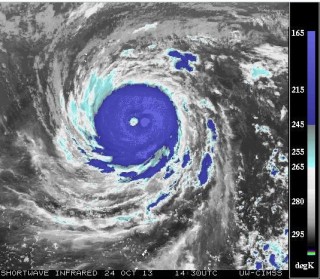
Majestic Super Typhoon LEKIMA. SW-IR satellite image recorded at 14:30UTC on October 24, 2013. Temperature of the patch located to the right of the typhoon’s eye measures about 150ºK (< minus 123ºC) making it the coldest place on or near planet Earth. Image sourced from: CIMSS/SSEC/WISC.

The website announced in advance when they were beginning operations and reported results as things transpired.

As to whether they were successful or that the two storms mysteriously disappeared, a freak of nature, will never be proven.

The group announced they are willing and able to cause another mysterious freak of nature when needed.

Stephen E. Arnold: Forking Google – The Future is Samsung?

Advanced Cyber/IO, Commercial Intelligence, Design, Ethics, Innovation
Stephen E. Arnold
Stephen E. Arnold

Forking Google: The Future of Fone Flaps

I read “Samsung Is Pulling Another Amazon on Android, But This Is Even Bigger.” I liked the write up. It acknowledges in a semi-nice way that Google is either smarter than everyone else or Google is less smart than everyone thinks.

The idea is that open source Android is working like a Petri dish. Instead of growing little Googles, the Petri dish harbors a big Amazon and may soon give birth to a bigger Samsung. Here’s the point I noted:

As much as Google likes and touts that Android is open, that freedom may come with the cost of some control over the platform. Amazon may have started the first truly successful “fork” of Android, but Samsung is going after the whole place setting. Samsung kicked off its first Developers Conference on Monday and based on the keynote message, I wouldn’t be too happy if I were Google.

The point is that Android is supposed to be Google’s open source mobile platform. Others can use it, but Android is Google’s idea.

With iPhones too expensive for most mobile users and Microsoft mobile not getting the buzz Redmond hoped, Android is the mobile platform with legs it seems. Amazon and Samsung have figured this out. The companies have been moving forward with Android that has been reworked to make it less Googlely than Google may have hoped.

Amazon is a lesser problem for Google. Samsung, however, seems to be a bigger potential problem.

But my view is that the larger challenge will be from innovators in other countries who surf on Android. When I was in China, I learned about a number of mobile phones running Android that performed some interesting tricks. One taxi driver had a line of four mobile devices in his taxi. Each mobile had four SIMs. Each SIM connected to a different service providing information about pick ups.

I asked the taxi driver if the phones were running Google Android. The answer was, “I don’t know. There are cheap and do more than a high dollar, upper class phone. These are the future, not Apple or Google.”

Is the taxi driver correct? My view is that Google’s Android is not just fragmented. Android is enabling innovators to go in directions that may prove difficult for Google to control. Samsung may be the near term challenge for Google. Looking out over a longer time line, there may be a different set of challenges created by an open source mobile operating system, new manufacturing options, and a burgeoning demand for mobile devices that are delivering fresh, high-value functionality.

Sure the four phones put on a light show when orders came in. My smart phone has one SIM and was woefully out of step with the Chinese taxi driver’s needs. Google has to think about Android as free and open source software that may spawn some antibiotic resistant competitors.

Stephen E Arnold, October 29, 2013

noble gold