2012 Robert Steele: Addressing the Seven Sins of Foreign Policy — Why Defense, Not State, Is the Linch Pin for Global Engagement

03 Economy, 10 Security, 11 Society, Advanced Cyber/IO, DoD, Ethics, Future-Oriented, Government, Methods & Process, Military, Officers Call, Peace Intelligence, Reform, Strategy, Threats

Short Persistent URL: http://tinyurl.com/Kerry-Flournoy
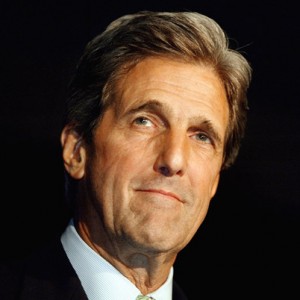
John Kerry

I wrote this with John Kerry and Michele Flourney in mind, but regardless of who is eventually made Secretary of Defense, the core concept remains: the center of gravity for massive change in the US Government and in the nature of how the US Government ineracts with the rest of the world, lies within the Department of Defense, not the Department of State.

John Kerry, Global Engagement, and National Integrity

It troubles me that John Kerry is resisting going to Defense when he can do a thousand times more good there instead of sitting at State being, as Madeline Albright so famously put it, a “gerbil on a wheel.”  Defense is the center of gravity for the second Obama Administration, and the one place where John Kerry can truly make a difference.  Appoint Michele Flournoy as Deputy and his obvious replacement down the road, and you have an almost instant substantive make-over of Defense.  Regardless of who ends up being confirmed, what follows is a gameplan for moving DoD away from decades of doing the wrong things righter, and toward a future of doing the right things affordably, scalably, and admirably.


Continue reading “2012 Robert Steele: Addressing the Seven Sins of Foreign Policy — Why Defense, Not State, Is the Linch Pin for Global Engagement”

Berto Jongman: Sanjana Hattotuwa – Using citizen journalism to bear witness to violence

09 Justice, 11 Society, Civil Society, Ethics, IO Deeds of Peace, Peace Intelligence
Berto Jongman

Holds individuals and groups accountable for violence.

“Bearing witness” with modern technological tools.

TED2011 Fellow Sanjana Hattotuwa passionately describes his work with Groundviews — a citizen journalism website that sheds light on Sri Lankan narratives that aren't typically covered in mainstream media.

Mini-Me: CIA Station Chief – Drone War Creating More Enemies Than We Destroy

07 Other Atrocities, 08 Wild Cards, 09 Justice, 10 Security, 11 Society, Corruption, Government, IO Deeds of War, Peace Intelligence
Who? Mini-Me?

Huh?

Drone War Creating More Enemies Than it Destroys

New American, 20 October 2012

EXTRACT:

Reuters explains that “Western diplomats in Sanaa say al Qaeda is a threat to Yemen and the rest of the world.” An argument can be made that a bigger threat to the world is the United States’ daily drone attacks that destroy our own dedication to the rule of law and serve as effective recruiting tool for those seeking revenge for the killing.

The former CIA Pakistan station chief agrees. Speaking of the rapid expansion of the drone war in Yemen, Robert Grenier told the Guardian (U.K.):

That brings you to a place where young men, who are typically armed, are in the same area and may hold these militants in a certain form of high regard. If you strike them indiscriminately you are running the risk of creating a terrific amount of popular anger. They have tribes and clans and large families. Now all of a sudden you have a big problem…. I am very concerned about the creation of a larger terrorist safe haven in Yemen.

And:

We have gone a long way down the road of creating a situation where we are creating more enemies than we are removing from the battlefield. We are already there with regards to Pakistan and Afghanistan.

Read full article with many links.

Continue reading “Mini-Me: CIA Station Chief – Drone War Creating More Enemies Than We Destroy”

Chuck Spinney: Thinking About Gaza

Civil Society, Corruption, Cultural Intelligence, Government, IO Deeds of War, Military, Peace Intelligence
Chuck Spinney

Patrick Seale reviews an important new book – Histoire de Gaza – by Professer Jean-Pierre Filiu of the Institute for Political Science in Paris.

The Need to Defuse the Gaza Time-Bomb

by Patrick Seale

Agence Global, 18 Oct 2012

One of the most urgent tasks for the international community in 2013 must surely be to lift Israel’s cruel siege of Gaza — now entering its sixth year — and end the misguided boycott of its Hamas government. There is hardly a more flagrant example of injustice in the world today than the situation of the 1.6 million inhabitants of this hugely over-crowded Strip — many of them refugees driven out of Palestine by the new Israeli state in 1947-48. They must be allowed to live a normal life — to travel, to manufacture, to trade, to educate their children — free from the constant danger of Israeli air strikes.

French scholar Jean-Pierre Filiu, a professor at the prestigious Institute of Political Science in Paris, has published an important 400-page history of Gaza, from ancient times to the disturbed present. His Histoire de Gaza (Editions Fayard, Paris, 2012) is the most comprehensive ever written and should be required reading for all those concerned with the long agony of the Palestinians in their struggle for statehood.

It is impossible in a short article to do justice to Filiu’s sweeping narrative, meticulous research and detailed findings, but it is perhaps worth pointing out that he lays blame for the as yet unresolved and indeed worsening crisis on three main actors:

  • first and foremost on Israel, concerned only with its own security and brutally indifferent to Palestinian life;
  • secondly, on Fatah and Hamas, those old rivals, still locked in a fratricidal struggle as if unaware that their national cause is slipping away before their eyes;
  • and thirdly, on the humanitarian aid provided by the international community which has kept Gaza’s population alive but has also, paradoxically, prevented Gaza’s economic development and its efforts at self-sufficiency.

Read full article.

Phi Beta Iota:  Gaza is the worst of 5,000 distinct geo-cultural communities under seige.  It represents the complete absence of ethics in Western “diplomacy.”

Berto Jongman: Emergence of Heart Intelligence YouTube (5:40)

Collective Intelligence, Cultural Intelligence, Earth Intelligence, Gift Intelligence, Peace Intelligence
Berto Jongman

The heart is the first organ to develop, and the prime regulator of the rest of the body's chemistry and function.  From the provided description:

For over 22 years, Gregg Braden has searched high mountain villages, remote monasteries and forgotten texts to uncover their timeless secrets. Combining his discoveries with the best science of today, his original research crosses the traditional boundaries of science, history, and religion offering fresh insights into ancient mysteries.

The Institute of HeartMath is an internationally recognized nonprofit research and education organization dedicated to helping people reduce stress, self-regulate emotions and build energy and resilience for healthy, happy lives. Personal coherence, also known as psychophysiological coherence, refers to the synchronization of our physical, mental and emotional systems. It can be measured by our heart-rhythm patterns: The more balanced and smooth they are, the more in sync, or coherent, we are.

Personal coherence, also known as psychophysiological coherence, refers to the synchronization of our physical, mental and emotional systems. It can be measured by our heart-rhythm patterns: The more balanced and smooth they are, the more in sync, or coherent, we are.

Global coherence refers to the mental, physical, emotional and spiritual well-being of the greater community of human beings, while acting in concert with their own hearts, each other and nation to nation in harmony with our living planet. HeartMath believes coherence on a grand scale is highly achievable when large numbers of people focus their heart intelligence on a common goal.

http://www.heartmath.org   .   www.greggbraden.com

Chuck Spinney – Cogent Analysis pf Arab Spring Seven Key Challenges Not Available from CIA or Department of State – Plus Personal Appeal for Contributions to Keep CounterPunch Going

05 Iran, 08 Wild Cards, Civil Society, Cultural Intelligence, Ethics, Government, IO Deeds of Peace, Knowledge, Military, Peace Intelligence
Chuck Spinney

Jeffrey St Claire, the editor at Counterpunch has given me permission to distribute the attached essay, “The Arab Spring at the Crossroads,” by  Esam Al-Amin.  It was published in the subscription edition of Counterpunch and is not available at the CP website.  Al-Amin, who I do not know, has written a very informative summary of the crosscurrents now shaping the Arab world.  This is a subject of very great importance to the welfare of all Americans.  I urge you to read it carefully.

In addition to being informative, Al-Amin's essay is a prime example of the quality of the information now available in what the mainstream media likes to call the alternative press.  This brings me to my second reason for writing this blaster.  Counterpunch is having a rare fundraising drive and I am taking what for me is an unprecedented action of urging you to contribute.  I think it is important to support alternative news/opinion outlets like Antiwar.com, Truthout, Alternet, and especially, since I am biased, Counterpunch. (Truth in advertising: I counted the late editor Alex Cockburn and still count his co-editor Jeffrey St Claire as friends.)

So, I urge you read the essay below — you can determine whether or not you think it stands on its own merits.  If you feel this is the kind of info worth paying a little for, I encourage you to think about purchasing a subscription or a gift sub for a friend or relative or sending a small tax-deductible donation to  CP's secure sever.  The Counterpunchers promise they won’t contact you to shake you down for more money or sell your name to any lists–not Karl Rove’s and especially not MoveOn’s. To contribute by phone you can call Becky or Deva toll free at: 1-800-840-3683

Chuck Spinney

Please Contribute to CounterPunch.  Printable Document:  Esam Al-Amin on Arab Spring Seven Challenges (9 Page Doc)

The Arab Spring at the Crossroads

Seven Key Challenges

By Esam Al-Amin

CounterPunch Volume 19 Number 17, >October 1-15, 2012, published October 2, 2012

Ever since Napoléon Bonaparte invaded Egypt in 1798, the relationship between the West and the Arab-Muslim East has been contentious and convoluted. Although this military leader of the first French Republic conquered Egypt for strategic reasons in his rivalry with the British and the Ottomans, the Muslim Arabs of the region – later dubbed “the Middle East” by an American naval officer – felt vulnerable, exposed, and weak.

Continue reading “Chuck Spinney – Cogent Analysis pf Arab Spring Seven Key Challenges Not Available from CIA or Department of State – Plus Personal Appeal for Contributions to Keep CounterPunch Going”

Berto Jongman: Director-General of Red Cross on War and Non-War in the Future

Cultural Intelligence, Peace Intelligence
Berto Jongman

Being watched in Europe.

Director-General of the International Committee of the Red Cross (ICRC), Yves Daccord explains how war has shaped the image of our heroes but warns of the risks as modern technology makes warfare anonymous and hidden.

Phi Beta Iota:  Provides an excellent focus on war as a cultural force, changing relations between generations, between men and women.  Concludes that technology and anonymnity are making war possible for any individual to launch and continue, and consequently also making war a concept that must be eliminated as an option at all levels.  Ignores the financial reality that war is a business and business is good.  Strives to suggest that eliminating the us versus them divide is an essential first step.

noble gold