By Gordon Duff and Press TV
—
”Real or not, Netanyahu feels Israel has been abandoned by the US. Some Americans, I am certainly one of these, Hagel is one also as is Chairman of the JCOS, Martin Dempsey, see Israel as interfering in domestic affairs, American elections and an irresponsible “actor” in the Middle East.”
—
Senator Chuck Hagel (ret), a republican from Nebraska, is expected to be nominated by President Obama to the vital post of Secretary of Defense, taking the place of Leon Panetta.
Hagel is the only GOP senator to have stood up to the Israel/AIPAC lobby, the only senator to question sanctions against Iran and a rare and independent voice that is needed to bring Pentagon “adventurism” to an end.
However, Hagel is now under attack and stands accused of “anti-Semitism,” this time by infamous neocon Bill Kristol.
Herewith is a stunning series of reports by Gareth Porter, one of the very best investigative journalists in America. Not only does he show how King David created the myth of his success and became naked in the process, he puts the failures of the surges in Iraq and Afghanistan into a definitive perspective. But perhaps most importantly, at least to my thinking, Gareth also expose the emptiness of real lesson learned by the US military from its failure in Vietnam … namely how protect the institution from criticism by manipulating and controlling the narrative of failing wars and a breakdown of leadership by capturing the thinking and imagination of the press. This manipulation was evident in the uncritical coverage of the First Gulf War, but the superficial appearance of success in those wars masked the rot embedded (pun intended) in the “lesson learned.” Thanks to Gareth, it is now clear to anyone who makes an effort to study this report.
The Petraeus Legacy: Conscious and Unconscious Falsehoods
David Petraeus always demonstrated political agility in his management of the “war of perceptions” in Iraq and Iran, gravitating to story lines that would create an image of success even though the larger picture still looked uncertain, if not unfavorable.
But in Afghanistan, the Petraeus strategy did have the same effect as it had in Iraq. He was never able to show that the Taliban insurgency had been brought under control. As Lt. Col. Danny Davis, who returned from his second tour in Afghanistan in late 2011 after having traveled more than 9,000 miles around the country, reported in an 84-page assessment, the level of Taliban attacks in 2011 was still at or above the 2009 levels that had prompted US officials to fear that the war was being lost.
Davis charged that Petraeus' March 2011 report to Congress was “misleading, significantly skewed or completely inaccurate.” Davis presented a classified version of his report to a bipartisan group of Senators and House members that cited dozens of classified documents in support of his charge. And in a telling reflection of Petraeus' failure of to make a credible case, The New York Times covered Davis' critique in a front page story in January 2012. The only question about his attack on Petraeus' claims was whether Petraeus was knowingly lying or saying what he chose to believe.
The record of Petraeus' command in Afghanistan – especially the case of the Taliban impostor – suggests that his public posture on the progress of his command combined claims he knew were untrue with some that he actually believed were true. His need to maintain the image he had so artfully created had led him to believe increasingly his own myth.
A report was released earlier this week by the Washington, D.C.-based Center for Strategic and Budgetary assessments that offers some useful observations on how well the United States has learned to effectively utilize PMSC. Sadly, it appears the U.S. has not yet absorbed the lessons it has learned at dear cost during the past decade, meaning it has used its contracting weapon badly.
They found that:
only a meager body of research exists on how U.S. resources in the form of wartime contracts can be used most effectively to rebuild a war-torn economy. Consequently, if the United States embarks on another attempt at nation building, it may again be found ill prepared without a more concerted research effort into the economic reconstruction aspects of warfare, often referred to as expeditionary economics. Despite the U.S. military's long history of engaging in reconstruction, expeditionary economics remains relatively less understood than other aspects of war.
Put more simply, after thousands of American lives lost and at least a couple of trillion dollars, we deserve more at this point than a Dummies Guide to Contingency Contracting.
In their report “Contracting Under Fire: Lessons Learned in Wartime Contracting and Expeditionary Economics,” senior fellow Todd Harrison and research assistant John Meyers assess the U.S. Expeditionary Economics effort employing four case studies: Iraq's State-Owned Enterprises, Local-First Programs, the National Solidarity Program and Commander's Emergency Response Programs.
NightWatch Special Comment: A Summary Evaluation of the National Intelligence Council's report Global Trends 2010. Last week NightWatch promised to review the earliest Global Trends report it could find. The first report was published in 1997 and was entitled, Global Trends 2010.
NightWatch has been spending a lot of time just trying to understand the prolix and vague political science jargon of 1997, not to mention the meanings of judgments or predictions written in that language.
The language is imprecise, centered on the word “agendas” which is used repeatedly without definition. Every nation's agenda was to have been changed by 2010, the report asserts. It never explains to what that metaphor refers.
Ambassador Dubbs was killed in Afghanistan in 1979, not 1988. Thus there has been no improvement in US crisis management responses for rescuing a US ambassador in trouble between 1979 and 2012.
Summary: Today GI Wilson writes about the great game of the 21st century — the US government vs. our 4GW foes. Once called “low intensity war”, our foes have taught us the ability of sustained 4GW produces only a series of expensive defeats for foreign armies (no matter how powerful). A slow bleeding, until we either adapt or give up.
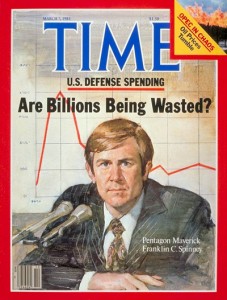
The recent article, “7 Absurd Ways the Military Wastes Taxpayer Dollars” by Laura Gottesdiene at Salon shines a bright light on military waste and the smarmy behavior of general officers. This smarmy behavior is just the tip of a national security iceberg. The personal foibles of these general officers are symptoms of a much deeper problem. In the wake of 9-11 we are witnessing the costly ineffectiveness our Titanic government bureaucracies. Today, a report by the Independent Accountability Review Board on Benghazi slammed senior level leadership and management laying bare national security miscalculations and incompetence. (Chicago Tribune)
What our national security apparatchiks are missing is that we live in a world where we are seeing sub-national “bad actors” use 4th generation warfare (4GW), which embodies low-tech tactics, techniques procedures (TTPs) together with insurrection, sabotage, espionage, and terrorism, to subvert nation-states. In effect, 4GW has emerged to challenge the established international system. While 4GW is not new, as some critics would have you believe, 4GW has emerged over several decades as the dominant style of warfare in the first part of the 21st Century.
The United States Government (USG) has not adapted to this change. Driven by conventional mentality and bureaucratic inertia, the Military Industrial Congressional Complex (MICC) and the US military has responded to the 4th generation warfare (4GW) threats with a conventional techno strategy of fielding high cost acquisition programs that created the MICC in the first place during the Cold War. The acquisition-programmatic approach to strategy led to a welter of highly complex programs and associated complex organizational relationships that force-fits the fighting man into a technological strait-jacket.
Phi Beta Iota: No holds the US Government accountable for high crimes and misdemeanors — including being terribly irresponsible about everything that the government is supposed to be doing in the public interest. There is absolutely no question about the urgency of cutting the Pentagon budget in half (as well as reducing by at least 50% the number of flag officers and senior executives), but at the same time, we need intelligence with integrity in order to create a 450-ship Navy, a long-haul Air Force, and an air-liftable Army that would allow us, over ten years, to close most of our military bases overseas and bring our troops — and their purchasing power — home. One initiative we have put forward is that of the Open Source Agency (OSA). Another that we have alluded to but never been explicit about has to do with the Office of Management and Budget (OMB). Imagine the President establishing the OSA as a Whole of Government decision-support capabilities (with Congressional jurisdictions getting the same Open Source Intelligence (OSINT) that their Executive agencies are receiving) AND appointing a kick-ass Deputy Director for Management of OMB, with the authority to slash and burn up to 15% a year of any agencies budget, with an additional 10% subject to Presidential concurrence on the specifics. Now THAT is transformational.
In truth, the public may well just be sick of hearing stories about “lone gunmen.” Of all possible horrors, this one, even more than the Benghazi killings, is loaded with political implication, not just “gun control,” but a clear attack on the security of every American family.
Today, Michael Harris, former Republican candidate for governor of Arizona and GOP campaign finance chairman, in an internationally televised news broadcast, cited “Israeli revenge” in, what he called, “the terrorist attack in Connecticut.”
Harris cited Israeli “rage” against the US and against President Barack Obama. By “Israel,” we mean “Netanyahu.”
The mission was to teach America a lesson, knowing that “America would take the punishment, keep “quiet,” and let a ‘fall guy’ take the blame.”
Phi Beta Iota:We have no direct knowledge but agree that there is no way an autistic kid did this and then made the rifle disappear after he was suicided. Who exactly (no fewer than two others and probably three) remains to be established. With regard to Michael Harris' assertions, we would only observe that anyone who doubts the venality of Zionists (not the average Jew) need look no further than the USS Liberty. The murderous attack by Israeli forces in unmarked aircraft and patrol boats killed 34 and wounded 171 US sailors. It was covered up by order of the President at the time, and that cover-up maintained for years there-after, threatening the families of those killed and wounded by Israel with loss of benefits and pensions if they talked. We tend to doubt the Israeli connection, but we will never, ever, forget the USS Liberty as the defining perfidy in Israel's view of the USA as a shiksa that does not count.