True Cost Economics has been around for a while–Dr. Herman Daly of the University of Maryland merits much of the credit–but it now seems to be catching on.
Not quite catching on, but being discussed by individuals who already appreciate the urgency of teaching and researching true cost economics, is the need to switch from measuring inputs to measuring outputs and outcomes.
Although the US Intelligence Community has long been in need of this approach, to my great surprise I now find that some of the best minds in the university world are thinking along these lines.
In the university world this is called “assessment of learning.” That is, rather than focusing on inputs (number of hours in classes), universities are working to measure outputs — whether students are acquiring the capabilities that professors intend. Instead of learning to memorize and regurgitate, students are being asked to perform — to be a student of practice, applying knowledge in context.
In development agencies there is a gestating effort to shift from building schools to producing literate people — that means less focus on rote learning and credentialing, and more focus on memorable communication including education delivered one cell call at a time.
Note: Assessment of learning is an Epoch A approach, but a very positive development. Child-driven education is the Epoch B approach.
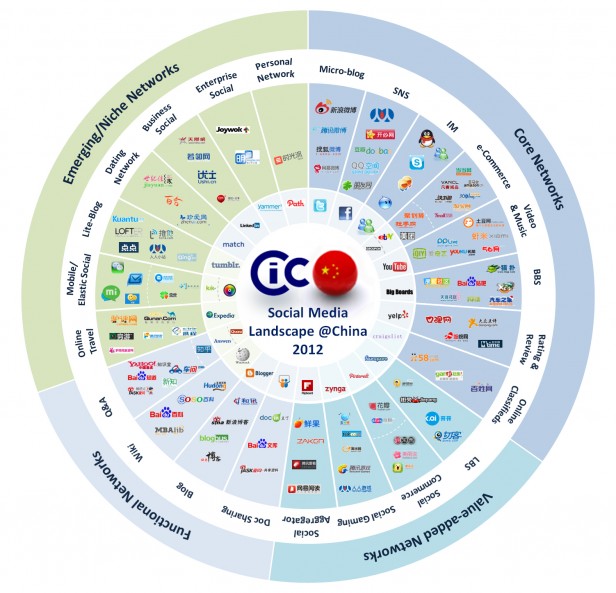
The timeline on Sina Weibo, China’s popular Twitter-like service, is filled with pithy comments about “Beijing Fashion Week,” chronicling the comings and goings and sartorial choices of the elite.
But the commenters aren’t fashionistas, and they aren’t talking about supermodels or design stars. They are referring, in not-so-secret code, to Communist Party officials.
“Beijing Fashion Week” is a thinly veiled, sarcastic commentary on the Communist Party’s annual summit, now under way in the nation’s capital. And many of the assembled are making it easy to be ridiculed by showing up in luxury garb — a far cry from the staid image they aspire to project.
Click on Image to Enlarge
. . . . . .
And all this may change in the face of a new, more stringent policy designed to clamp down on free expression where other methods have been less successful. In a move to exert greater control on citizen speech online, the government is requiring that Sina Weibo and China’s other microblogs register the real names and identification cards of users in several cities. Those who do not register this week in many major cities like Beijing will not be allowed to share or forward posts; after a period of testing, the policy will go into effect nationwide.
Level 5 : Terror has expanded to the whole population. The leaders of these societies place no limits on the means or thoroughness
with which they pursue personal or ideological goals.
Level 4 : Civil and political rights violations have expanded to large numbers of the population. Murders, disappearances, and torture are a common part of life. In spite of its generality, on this level terror affects those who interest themselves
in politics or ideas.
Level 3 : There is extensive political imprisonment, or a recent history of such imprisonment. Execution or other political murders and brutality may be common. Unlimited detention, with or without a trial, for political views is accepted.
Level 2 : There is a limited amount of imprisonment for nonviolent political activity. However, few persons are affected, torture and beatings are exceptional. Political murder is rare.
Level 1 : Countries under a secure rule of law, people are not imprisoned for their views, and torture is rare or exceptional. Political murders are extremely rare.
About 300 of Rite-Aid’s 4700 drug stores are starting to direct customers to what they want – wellness without dependence upon problematic and over-priced prescription drugs. But that practice has obviously upset Big Pharma. These white-coated ambassadors are allegedly pretending they are pharmacists and directing patients to diet supplements – heaven’s to Betsy!
At least that is what two US Senators allege in their letter to Rite-Aid, which has GNC nutrition centers inside many of its stores. A letter from the senators to Rite-Aid says they are concerned these ambassadors “could be making false and misleading claims by marketing dietary supplements as treatments for health conditions.”
Wait a minute – I thought the Dietary Supplement Health & Education Act of 1994 (DSHEA) gave the right to market dietary supplements as long as they strictly support health, not as cures, treatments or prevention for any disease. Drugs do not promote wellness, and few are an appropriate cure for anything.
A grave problem (the word grave being used in its true meaning) is that that DSHEA didn’t go far enough. Dietary supplements do in fact prevent, treat and cure diseases, many of them. The Food & Drug Administration mandates censorship of the truth. Doesn’t vitamin D prevent rickets, vitamin C prevent scurvy, vitamin B1 prevent beri beri, etc?
There is an investigation that has shed light on the poor medical support being provided at Ft. Lewis…….this may, in fact, be the result of sheer incompetence by the Army Medical Corps and the resultant hiding of the fact that soldiers are being blamed for the incompetence…..
What we probably have here is systemic lack of integrity among the senior Pentagon/White House Staff. The issue of mental problems at Ft. Lewis has been widely known yet we continue to send troops from there to combat zones…..a replay of the casual treatment of Walter Reed and the abuse of the amputees? Has the Army lost its mind, literally?
As long ago as the Gerald Ford Administration, the National Security Agency was directed to help secure non-governmental communications networks against intrusion and interception by foreign — or domestic — entities, according to a recently declassified presidential directive.
“The President is concerned about possible damage to the national security and the economy from continuing Soviet intercept of critical non-government communications, including government defense contractors and certain other key institutions in the private sector,” wrote National Security Advisor Gen. Brent Scowcroft in National Security Decision Memorandum (NSDM) 338 of September 1, 1976.
“The President further recognizes that U.S. citizens and institutions should have a reasonable expectation of privacy from foreign or domestic intercept when using the public telephone system. The President has therefore decided that communication security should be extended to government defense contractors dealing in classified or sensitive information at the earliest possible time. He has also directed that planning be undertaken to meet the longer-term need to protect other key institutions in the private sector, and, ultimately, to provide a reasonable expectation of privacy for all users of public telecommunications.”
The directive ordered that “in confirmed threat areas,” existing communications networks involving classified information should be transitioned from microwave circuits to secure cable “as soon as possible.” A broader plan to protect non-governmental communications was also to be prepared.
“The President further directs the Director of the Office of Telecommunications Policy, with the participation and assistance of DOD and NSA, to prepare a detailed Action Plan setting forth the actions and schedule milestones necessary to achieve a wide degree of protection for private sector microwave communications. The Plan should identify needed policy and regulatory decisions, describe in detail the roles of industry and government, including management and funding considerations, and integrate the schedule for these actions with the technical development milestones.”
“The Action Plan should be based on the fundamental objective of protecting the privacy of all users of public telecommunications, as well as satisfying specific needs of the government,” the directive stated.
The 1976 directive was originally marked TOP SECRET / SENSITIVE (XGDS), where XGDS stood for “exempt from general declassification schedule.” It was declassified on September 13, 2011. The document had been requested through the mandatory declassification review process by Dr. John Laprise of Northwestern University.
The directive prefigures an ongoing controversy over the proper role, and the actual extent, of National Security Agency involvement in securing public communications.
In response to a FOIA lawsuit brought by the Electronic Privacy Information Center, the NSA said (and a court affirmed) that it could “neither confirm or deny” a relationship between the Agency and Google. NSA has also refused to release the 2008 National Security Presidential Directive 54, which reportedly tasks the Agency with certain cybersecurity functions.
Phi Beta Iota: This would be an excellent case study for the retrospective court martial, conviction, and demotion by two grades in retirement (affects pension) of every NSA director since then, with special attention to those serving after the alarm was sounded again in 1994. NSA today does not have the public interest in mind and could care less about presidential directives. It exists to create millionaires among NSA senior executives jumping to sweetheart “soft landings.” NSA and the Cyber-Command are an ideal candidate for the first joint GSA-OMB deep audit of secret spending since 2001.
Robert Steele has for some time been saying that “The truth at any cost lowers all others costs.” He has also been focusing on the importance of intelligence with integrity. Among all governments, only Iceland appears to be serious about dealing with the financial crisis as it should be dealt with: as a criminal conspiracy enabled by all of the parties in both public and private sectors who sacrificed their integrity and betrayed the public trust.
Corporations operate under public charters. It is difficult to police the corporations when the governments have themselves become criminalized, but the tide is turning — the public is beginning to recognize that governments lack integrity and intelligence and cannot be trusted — in their present form — to manage the public interest.
When Goldman Sachs goes out of business the healing can begin. Slamming PWC is a good start.
The resolution committee of the failed Icelandic bank Old Landsbanki has subpoenaed the international auditing firm PriceWaterhouseCoopers, accusing the company of creating wrong annual accounts which misled the markets. The committee’s damages claim runs to hundreds of millions of krónur.


 Level 5 : Terror has expanded to the whole population. The leaders of these societies place no limits on the means or thoroughness
 Level 4 : Civil and political rights violations have expanded to large numbers of the population. Murders, disappearances, and torture are a common part of life. In spite of its generality, on this level terror affects those who interest themselves
 Level 3 : There is extensive political imprisonment, or a recent history of such imprisonment. Execution or other political murders and brutality may be common. Unlimited detention, with or without a trial, for political views is accepted.
 Level 2 : There is a limited amount of imprisonment for nonviolent political activity. However, few persons are affected, torture and beatings are exceptional. Political murder is rare.
 Level 1 : Countries under a secure rule of law, people are not imprisoned for their views, and torture is rare or exceptional. Political murders are extremely rare.