Rickard Falkvinge: More People Were Paid To Exploit Heartbleed For The NSA Than To Fix It

Corruption, Government, Military
Rickard Falkvinge
Rickard Falkvinge

More People Were Paid To Exploit Heartbleed For The NSA Than To Fix It

Infrastructure – Zacqary Adam Green: Unsurprisingly, it turns out that the NSA knew about the Heartbleed bug since shortly after it was added to OpenSSL. While thousands of salaried NSA personnel search for bugs like these to exploit, OpenSSL has only four part-time volunteers maintaining it. Of course this was going to happen.
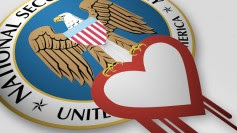
nsa heartbleedThe idea behind open source software is that “given enough eyeballs, all bugs are shallow.” This only works if there actually are enough eyeballs. Code audits can only happen if there are people with the will, expertise, and time to do so. Rusty Foster pointed out the problem with OpenSSL:

The project’s code is more than fifteen years old, and it has a reputation for being dense, as well as difficult to maintain and to improve. Since the bug was revealed, other programmers have had harsh criticisms for what they regard as a mistake that could easily have been avoided.…

Unlike a rusting highway bridge, digital infrastructure does not betray the effects of age. And, unlike roads and bridges, large portions of the software infrastructure of the Internet are built and maintained by volunteers, who get little reward when their code works well but are blamed, and sometimes savagely derided, when it fails. To some degree, this is beginning to change: venture-capital firms have made substantial investments in code-infrastructure projects, like GitHub and the Node Package Manager. But money and support still tend to flow to the newest and sexiest projects, while boring but essential elements like OpenSSL limp along as volunteer efforts.

This point is only compounded by the NSA news. As it turns out, a great deal of funding was going towards meticulously auditing OpenSSL. The problem is that the NSA keeps the results of these audits to themselves. No bugs are fixed. No patches are committed. Critical flaws are kept under wraps so that they can be used to siphon more data and break into more computers.


Continue reading “Rickard Falkvinge: More People Were Paid To Exploit Heartbleed For The NSA Than To Fix It”

Veterans Today: US Produced Sarin Gas for Syrian Rebels, in Georgia (the Country Next to Russia)

03 Environmental Degradation, 04 Inter-State Conflict, 05 Civil War, 06 Genocide, 07 Other Atrocities, 08 Proliferation, 09 Terrorism, DoD, Earth Intelligence, Government, Idiocy, Military, Peace Intelligence

veterans todayUS Produced Sarin Gas Used in Syria

Jeffrey K. Silverman

Veterans Today, 8 April 2014

Jeffrey K. Silverman, 22 years resident of the former Soviet Union, since October 1991, resides in Tbilisi Georgia worked with Radio Free Europe, crime, corruption and terrorism report. USAR, 100th Division Training, Fort Knox and Blue Grass Army Chemical Weapons Depot, both Kentucky bases: decorated veteran, 19D, Calvary Scout. Jeffrey has a track record in breaking through language barriers and bureaucracies to gather information under unconventional circumstances.

EXTRACT

Journalists Jeffrey Silverman and Lika Moshiashvili are credited with having discovered the secret and illegal operations taking place in the US-controlled Central Reference Laboratory (CPHRL) in the Tbilisi suburb the Alekseevka Settlement.”As soon as this scary information was made known to the public, Georgia & World contacted Tbilisi based American journalist and researcher Jeffrey Silverman.

. . . . . . .

A number of labs, strewn across Eastern Europe, are linked like an umbilicial cord to the Biological Weapons Proliferation Prevention (BWPP) programme and various projects within it. This programme provides a cover for what is most likely an offensive programme. If the strains they are investigating turn out to be antibiotic resistant, this implies they are conducting ongoing research into special organisms that can eat bacteria and attack infections that are antibiotic resistant, which can be quickly accessed.  Whoever has the capacity to release these controls the bioweapons battlefield.

Read full article/interview.

Mini-Me: Carnegie Calls for Military to Hunt Corruption – Are They Proposing a Coup d’Etat in the USA?

Corruption, Government, Idiocy, Ineptitude, Military
Who?  Mini-Me?
Who? Mini-Me?

Huh?

The Military Must Hunt Corruption, Not Just Terrorists

Sarah Chayes

Senior Associate  Democracy and Rule of Law Program South Asia Program, Carnegie Endowment for International Peace

Defense One, 6 April 2014

As popular uprisings keep toppling governments like bowling pins, the latest round has morphed into a great power face-off — with Russia and the West glowering at each other across a divided Ukraine. Thailand, a key United States military friend in Southeast Asia, could be next on the list. Thousands of protests rock Chinese provinces each month, worrying President Xi Jinping’s still-green administration. The Egyptian and Syrian revolutions have spun off into bloody and widening strife, while extremist insurgencies in Afghanistan, Nigeria and the Philippines stubbornly challenge state stability.

What links these far-flung events, most of them high on the U.S. list of security priorities? Corruption. Not garden-variety corruption, the kind that exists everywhere. Acute and systemic corruption has taken hold in these countries. And it is driving indignant populations, who are networked and communicating as never before, to extremes. Around the world, pervasive corruption drives a list of other security risks too, such as terrorist facilitation; traffic in weapons or drugs; nuclear proliferation; theft of intellectual property; fractured financial systems; and governments that are enmeshed with transnational criminal superpowers. And yet, U.S. military and intelligence officials seem blind to both the character and the security implications of this type of corruption. Like an odorless gas, it fuels all these dangers without attracting much policy response inside or outside of Foggy Bottom.

It’s time to start paying attention. For, if military and civilian strategists agree on anything these days, it’s the need to reduce U.S. reliance on military responses to overseas crises. But to get there, containing military spending or constraining our forces’ missions won’t be enough. For starters, U.S. national security leaders urgently need a better grasp of the factors that build these crises. Then they must design and implement more precise and effective interactions with those factors upstream, before crises develop.

Acute corruption, in other words, can no longer be seen as just a nuisance or a “values issue” to be handed off for technical programming to the U.S. Agency for International Development. Even less should it be considered a factor of stability, as some maintain. Corruption is a problem that must be mainstreamed into national security decision-making. For military leaders, that means tasking intelligence collectors and analysts with new questions. It means better tailoring the terms of military assistance and the tenor of military-to-military relationships. And it means changing the ways that forward-deployed units gain access to territory and partner with locals once there.

Read full article.

Continue reading “Mini-Me: Carnegie Calls for Military to Hunt Corruption – Are They Proposing a Coup d'Etat in the USA?”

Berto Jongman: Frederick Kagan on Why US Has Failed to Defeat Al Qaeda

01 Poverty, 02 Infectious Disease, 03 Environmental Degradation, 04 Inter-State Conflict, 05 Civil War, 06 Genocide, 07 Other Atrocities, 08 Proliferation, 09 Terrorism, 10 Transnational Crime, Corruption, Government, Military, Peace Intelligence
Berto Jongman
Berto Jongman

Missing the Target: Why the US Has Not Defeated al Qaeda

Frederick W. Kagan, TESTIMONY

American Enterprise Institute, 8 April 2014

All conditions are set for a series of significant terrorist attacks against the US and its allies over the next few years. But that's not the worst news. Conditions are also set for state collapse in Iraq, Syria, Lebanon, Yemen, and possibly Jordan. Saudi Arabia, facing a complex succession soon, is likely to acquire nuclear weapons shortly, if it has not already done so. Turkey and Egypt confront major crises. Almost all of Northern and Equatorial Africa is violent, unstable, and facing a growing al Qaeda threat. And Vladimir Putin's assault on Ukraine is likely to empower al Qaeda-aligned jihadists in Crimea and in Russia itself. That eventuality is, of course, less worrisome than the prospect of conventional and partisan war on the European continent, likely threatening NATO allies. The international order and global stability are collapsing in a way we have not seen since the 1930s. There is little prospect of this trend reversing of its own accord, and managing it will require massive efforts by the US and its allies over a generation or more.

This distressing context is essential for considering the al Qaeda threat today. On the one hand, it makes that threat look small. The long – term effects of global chaos and conflict among hundreds of millions of people across Europe, Africa, and the Middle East on US security, interests, and way of life are surely greater than any damage al Qaeda is likely to do to us in the immediate future. Yet the two threats feed each other powerfully. Disorder and conflict in the Muslim world breed support for al Qaeda, which is starting to look like the strong horse in Iraq and even in Syria. Al Qaeda groups and their allies, on the other hand, powerfully contribute to the collapse of state structures and the emergence of horrific violence and Hobbesian chaos wherever they operate. They are benefiting greatly from the regional sectarian war they intentionally triggered (the destruction of the Samarra Mosque in 2006 was only the most spectacular of a long series of efforts by al Qaeda in Iraq to goad Iraq’s Shi’a into sectarian conflict , for which some Shi’a militants, to be sure, were already preparing) — and have been continuing to fuel.

Al Qaeda is like a virulent pathogen that opportunistically attacks bodies weakened by internal strife and poor governance, but that further weakens those bodies and infects others that would not otherwise have been susceptible to the disease. The problem of al Qaeda cannot be separated from the other crises of our age, nor can it be quarantined or rendered harmless through targeted therapies that ignore the larger problems.

Yet that is precisely how the Obama administration has been trying to deal with al Qaeda.

PDF (6 Pages): 20140408 Kagan on Why US Has Not Defeated Al Qaeda

Continue reading “Berto Jongman: Frederick Kagan on Why US Has Failed to Defeat Al Qaeda”

Chris Hedge: The Crucible of Iraq – Best Book from Worst War

04 Inter-State Conflict, 05 Civil War, 07 Other Atrocities, 08 Wild Cards, 11 Society, Corruption, Cultural Intelligence, Government, Idiocy, Military, Officers Call, Peace Intelligence
Chris Hedges
Chris Hedges

The Crucible of Iraq

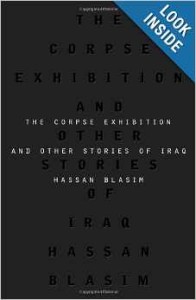
The Corpse Exhibition: And Other Stories of Iraq, by Hassan Blasim, is the most important book to come out of the Iraq War. Blasim, whom I met with last week in Princeton, N.J., has a faultless eye for revealing detail, a ribald black humor and a psychological brilliance that makes every story in his book a depth charge. In this collection of short stories he explores through fiction the culture of violence unleashed under the bloody dictatorship of Saddam Hussein and exacerbated by an American occupation that has destroyed the damaged social cohesion and civil life that survived Saddam's regime. His prose, courtesy of a brilliant translation by  Jonathan Wright, is lyrical, taut, and riveting.

Amazon Page
Amazon Page

Militarism and violence are diseases. It does not matter under what guise they appear. Renegade jihadists, Shiite death squads, Sunni militias, Saddam's Baathists and secret police, Kurdish Peshmerga rebels, al-Qaida cells, gangs of kidnappers and the U.S. Army 101st Airborne are all infected with the same virus. And it is a virus Blasim fearlessly inspects. By the end of this short-story collection the reader grasps, in a way no soldier's memoir or journalistic account from Iraq can explicate, the crucible of war and the unmitigated horror of violence itself. The book is a masterpiece.

“When I was 6, during my first year at school, the Iran-Iraq War erupted,” Blasim told me in a mixture of English and Arabic. “We were living in Kirkuk. We were taught in school to draw tanks or the face of Ayatollah Khomeini as the enemy. The city of Kirkuk was beautiful. There were flowers everywhere. But we were never taught the names of the flowers. Even today I do not know the names of these flowers. I tried to learn their names as an adult.”

“There was a culture of violence that predated the occupation,” he said…

Continue reading “Chris Hedge: The Crucible of Iraq – Best Book from Worst War”

4th Media: Latin America Chooses Russian Weapons Systems — De-Americanization Proceeds Apace

Ethics, Military

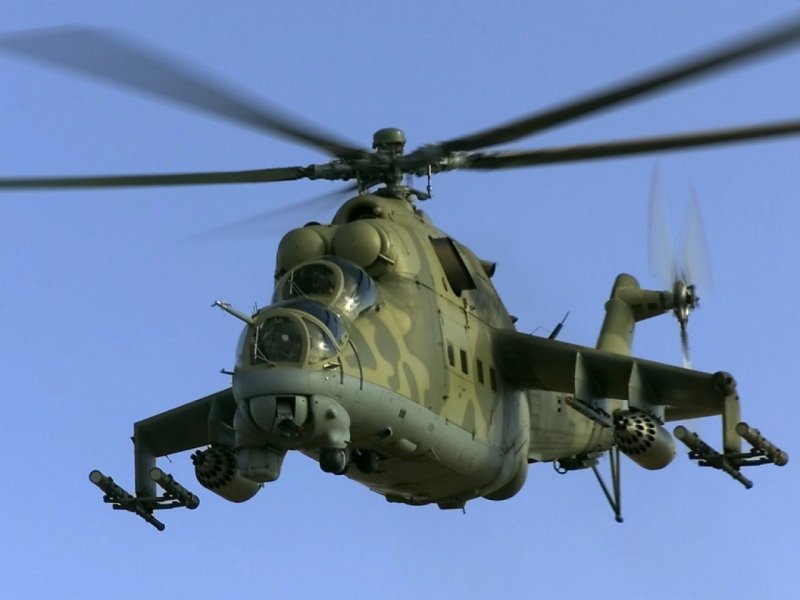
4th media croppedLatin America Chooses Russia-Made Weapons

Nil Nikandrov

Click on Image to Enlarge

Latin American experts know it well – Russia-made weapons are known for quality. Rosoboronexport (the state intermediary agency for Russia’s exports/imports of defense-related products, technologies and services) has rich experience of doing deals in the Western Hemisphere – from Mexico to Chile. Its efforts have not gone down the drain.

The times, when Latin American military were under strict control of the Pentagon, are long gone. The tanks and fixed- and rotary-wing aircraft deals with former clients of US military-industrial complex have become everyday life matters…

More often Latin Americans choose Russian producers because, unlike US companies, they never attach political conditions. FIDAE-2014, the International Air and Space Fair, took place on March 25 – 28, 2014, in Santiago de Chile. It became another step on the way of expanding Russia’s presence on Latin American arms market… The joint Russian exposition presented products of ten Rostekh companies including Russian Helicopters, SPA Bazalt, High-Accuracy Complexes and United Shipbuilding Corporation.

Continue reading “4th Media: Latin America Chooses Russian Weapons Systems — De-Americanization Proceeds Apace”

Berto Jongman: Symour Hersh on Obama’s Wrong Red Line, CIA’s Illegal Rat Line and The Benghazi-Turkey-Syria Cluster

Ethics, Government, Idiocy, Military, Peace Intelligence
Berto Jongman
Berto Jongman

The Red Line and the Rat Line

Seymour M. Hersh on Obama, Erdoğan and the Syrian rebels

In 2011 Barack Obama led an allied military intervention in Libya without consulting the US Congress. Last August, after the sarin attack on the Damascus suburb of Ghouta, he was ready to launch an allied air strike, this time to punish the Syrian government for allegedly crossing the ‘red line’ he had set in 2012 on the use of chemical weapons. Then with less than two days to go before the planned strike, he announced that he would seek congressional approval for the intervention. The strike was postponed as Congress prepared for hearings, and subsequently cancelled when Obama accepted Assad’s offer to relinquish his chemical arsenal in a deal brokered by Russia. Why did Obama delay and then relent on Syria when he was not shy about rushing into Libya? The answer lies in a clash between those in the administration who were committed to enforcing the red line, and military leaders who thought that going to war was both unjustified and potentially disastrous.

London Review of Books — long, detailed, important article.

noble gold