I chose to focus my dissertation research on the impact of information and communication technologies (ICTs) during elections in repressive states. Why? Because the contentious relationship between state and society during elections is accentuated and the stakes are generally higher than periods in-between elections. To be sure, elections provide momentary opportunities for democratic change. Moreover, the impact of ICTs on competitive events such as contentious elections may be more observable than the impact on state-society relations during the regular calendar year. In other words, the use of ICTs during election periods may shed some light on whether said technologies empower coercive regimes at the expense of civil society or vice versa.
Full Blog with Three Major Graphics Below the Line
Phi Beta Iota: This is an extraordinary document, 997 pages in length, going back deeply into history and including contextual history for Texas, big oil, and US corruption generally. It would benefit from visualization.
Republicans in state legislatures across the country have spent the past year mounting an all-out assault on voting rights, pushing a slew of voter ID and redistricting measures that are widely expected to dilute the power of minority and low-income voters in next November's elections. Now that effort has come to Capitol Hill, where the House* will vote Thursday on a GOP-backed bill to eviscerate the Election Assistance Commission (EAC)—the last line of defense against fraud and tampering in electronic voting systems around the country.
Adam Chandler, the Goldblog deputy-editor-for-monitoring-Iran-obsessively-even-though-Goldblog-himself-also-monitors-Iran-obsessively, pointed out to me the other day that perhaps the West has already begun the attack on Iran's nuclear facilities, that perhaps we ought to reframe this issue a bit. The attacks he mentioned are not the usual sub-rosa, eyebrow-raising tech and computer virus sort of attacks, but outright physical attacks. This is more a semantic issue, I suppose (and yes, I realize the Iranian regime is virulently anti-semantic), but operations against Iran are seeming to move away from the pure Mossad-in-the-70s-style attacks to straight-up military confrontations. I don't know if this is a sign of escalation or desperation or both, though it seems fair to say that less subtlety on the part of Israel, the U.S. and whoever else is doing this suggests that the previous tactics were deemed insufficient.
Following a (perhaps not-so-mysterious) explosion on a military base last month that took with it the life of Gen. Hassan Tehrani Moghaddam–one of the Iranian missile program's most distinguished OGs–comes news of a second explosion in Isfahan this past Monday, which according to sources “struck the uranium enrichment facility there, despite denials by Tehran.”
Of course, accurate news out of Tehran is hard to come by, but if you want to take this a step further, one might consider Tuesday's (perhaps not-so-spontaneous) storming of the British embassy by Iranian “students” to be quite an effective smokescreen in keeping news of this second explosion from making serious waves. If you've had a lot of coffee, it's also worthy to note that on Monday evening, following the explosion in Iran, four missiles fired from southern Lebanon struck Israel–the first such incident in over two years.
I'm not entirely convinced, but it's not unreasonable to group these recent explosions with the Stuxnet virus of last summer that haywired an uranium enrichment facility in Natanz; last October's explosion at a Shahab missile factory; the killing of three Iranian nuclear scientists in the past two years, last November's attempted assassination of Fereydoun Abbasi-Davan–a senior official in the nuclear program — and rumblings of a second supervirus deployed this month as proof that the West's war on Iran's nuclear program is getting less covert by the minute.
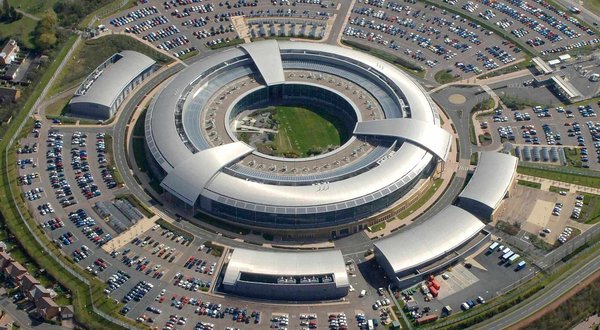
My experience with GCHQ was that they were able to conduct better processing and anaysis than NSA at consideribly less cost. I remember one particularly difficult puzzle that I was trying to work out using the latest contactor designed programs (vapor ware) and getting nowhere. An analyst (and friend) at GCHQ managed to solve the puzzle using the back of an envelope and a stub pencil (which I accused him of stealing from his boss). Another GCHQ associate explained to me that when you don't have the money for a lot of bells and whistles you have to actually think your way through problems. GCHQ serves as an example that effective Signals Intelligence (SIGINT) does not have to depend on a massive budget and expensive computer systems. As John Boyd pointed out its the brain that wins battles.
But judging by the response to the spy agency’s puzzle, the government faces an uphill struggle, partly because in the community of hackers, government itself is uncool, if not the enemy. One hacker going by the name Ady who entered a comment on the BBC’s Web site urged the agency to “stick to employing upper-class twits from Oxford and Cambridge.” Hackers, called “hobbyists” in the post, know that “governments are not really the sort of people you want to get involved with,” Ady said.
For every square meter of land along the Western front from the Channel coast to the Swiss border it is estimated that a ton of explosives fell during WW1 (the “Iron Harvest“)
Belgian UXO (unexploded ordnance) experts estimate there are 450 million pieces of UXO in Belgium alone. At Verdun in France the estimate is that 12 million pieces of UXO remain.
630 French UXO personnel have been killed since WWII working on this stuff. Currently in France the UXO specialists recover about 900 tons per year, with 30 tons of that being chemical munitions (mustard gas shells, phosgene shells, etc.), and they estimate there's enough work there to keep them busy for another 900 years.
The Pentagon plans to set up a $300 million hub in Bethesda for the federal government’s intelligence-gathering agencies on a 40-acre site vacated in September by the National Geospatial-Intelligence Agency.
Phi Beta Iota: Military Construction (MILCON) has been out of control since the Iraq War was declared by Dick Cheney and company. For a “community” (more like a goat fest) that provides “at best” 4% of what the President needs, this is a no-brainer–it should be shut down.