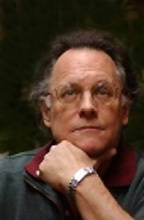
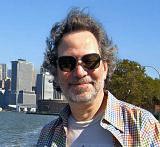
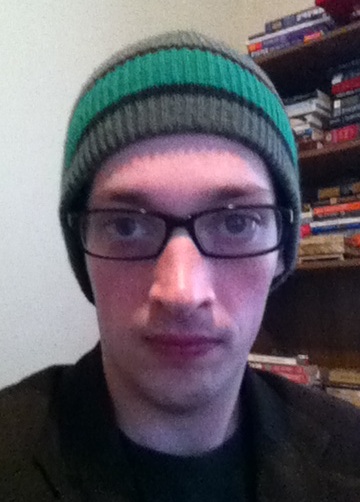
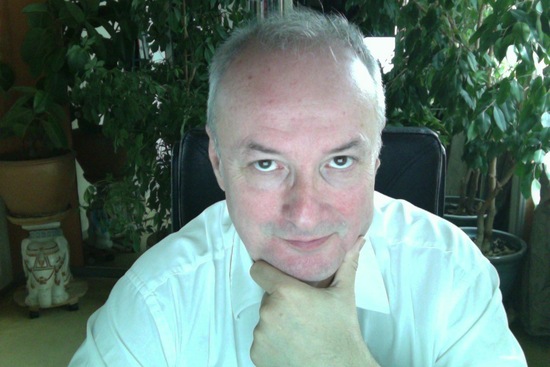
This, wedded to the surveillance state is going to have a huge effect on society. It will become very difficult to evade arrest as the two technologies develop, and that will have an impact on people's behavior. This is a game changer. Click through to see the reconstructions and photos of the actual people. Amazing.
As the United States imposes sanctions on Russia and moves to do likewise to Venezuela, it’s essential to keep in mind which country it is that’s the most destructive and dangerous in the world today. When such questions have been posed in international polls in recent decades, the answer overwhelmingly is the United States. Not Iran, North Korea, Syria, Cuba, Venezuela, Russia or any of the many other nations the ruling class and corporate media here regularly demonize, but the United States.
The US copyright lobby has long argued against open source software – now Indonesia's in the firing line for encouraging the idea in government departments
As if all that wasn't enough, here's another brick to add to the teetering tower of news, courtesy of Andres Guadamuz, a lecturer in law at the University of Edinburgh.
Guadamuz has done some digging and discovered that an influential lobby group is asking the US government to basically consider open source as the equivalent of piracy – or even worse.
There's never been a shortage of doomsday scenarios. From the dreaded Mayan Apocalypse of 2012 (remember that?) to the havoc wreaked in the movie “The Day After Tomorrow,” people have been predicting the end of civilization for as long as there has been a civilization.
The trouble is, they're sometimes correct: The Roman Empire fell spectacularly, as did the Mayan civilization, the Han Dynasty of China, India's Gupta Empire and dozens of other once-mighty kingdoms.
But how, exactly, do powerful empires collapse, and why? Researchers now believe they've found an answer, one that has troubling implications for today — because we're clearly on the road to ruin. [11 Failed Doomsday Predictions]
Interview with activist and economic pioneer Wayne Walton. Wayne is an entrepreneur and founder of Mountain Hours: a community-based, usury-free, alternative currency. Much of his activism takes place in his native Summit County, Colorado where he is currently working toward restoring human sovereignty through monetary reform. More information about Wayne, Mountain Hour Money, and Jubilee Shares can be found at http://mtnhours.com/ as well as http://start.hourmoney.net/
“The real question to me is not whether private banks should be allowed to create money through the lending process, but whether – and to what extent – there should be private banking at all. Nationalized banking, at least the nationalization of big banking, should be considered, in my opinion.”
A few days ago, we published a podcast-interview with Ben Dyson, of Positive Money. After sharing it on Facebook, Dmytri Kleiner suggested the following article, written by Peter Cooper and originally published in heteconomist.com, which criticises some of Positive Money’s proposals. Aside from his suggestion to stop playing nice with private banking altogether (which I agree with), Cooper states, “The biggest problem is the notion of an undemocratic, independent committee determining the government’s capacity to create new money”. Conversely, Positive Money argues that “… the MCC (Monetary Creation Committee) is a democratically accountable transparent public body with the remit to work in the public interest.”
Now, to me, “democratically accountable” isn’t the same thing as democratically elected, even if it arguably is, by proxy. Nor do I think that representative democracy is all that democratic, but I understand Positive Money’s choice to keep their narrative within mainstream ideology, even if a lot of it is quite subversive. They’re certainly doing a good job of opening Pandora’s box in exposing money creation, and it’s my hope that this will serve as a gateway drug to the work of Silvio Gesell or Charles Eisenstein, among others.
We’ve long known that life isn’t fair and that the world’s wealth is unevenly distributed. But the latest factoid from Oxfam on global poverty and inequality is breathtaking. In a new report, the nonprofit reports that just 85 people—the richest of the world’s rich—hold as much wealth as the poorest 3.5 billion. That’s half the world’s population.
In other words, the top 0.00000001 percent are worth as much as the bottom 50 percent combined. The top 1 percent, meanwhile, control nearly half the world’s wealth, or 65 times as much as the world’s less-fortunate half.