Bank of England officials told currency traders it wasn’t improper to share impending customer orders with counterparts at other firms, a practice at the heart of a widening probe into alleged market manipulation, according to a person who has seen notes turned over to regulators.
***
Traders representing some of the world’s biggest banks told officials at the meeting that they shared information about aggregate orders before currency benchmarks were set, three people with knowledge of the discussion said. The officials said there wasn’t a policy on such communications and that banks should make their own rules, according to the people.
The blade hasn't fallen yet, but Defense Secretary Chuck Hagel raised the ax Monday when he offered a sneak peek of the Pentagon's planned budget for next year.
The Pentagon is asking Congress for $496 billion, $45 billion less than it originally expected. Tucked inside that budget trimming are a host of winners—programs and priorities that the department kept safe from cuts—and losers who will not be spared.
Nothing in Hagel's plan, however, is definite. Congress still controls the purse strings, and the Pentagon's fiscal 2015 request will undoubtedly be changed as members and defense lobbyists use their pull to protect their priorities—and try to shovel the spending pain to someone else.
But it could be harder to get off the chopping block than to stay off of it. Here's what got a head start Monday and what got left behind.
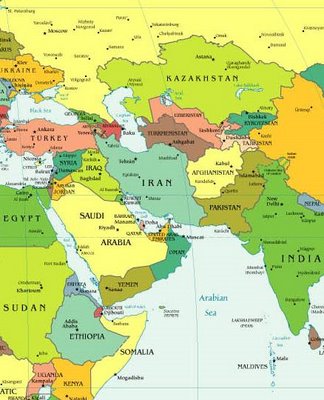
Pakistan – Saudi Arabia: The initial features of a bilateral strategic security and defense agreement between Pakistan and Saudi Arabia have been agreed upon, according to unconfirmed sources.
Under the agreement, Pakistan reportedly will provide all possible support to the Saudi army for defense of Saudi soil in any case of foreign aggression. Rumors in Pakistan report that two Pakistan Army divisions will be designated for deployment to Saudi Arabia on short notice.
As to arms sales, Saudi Arabia is interested in purchasing from Pakistan 50 JF-Thunder 17 and 20 other modern aircraft and 80 Al Khalid tanks – all built in Pakistan. Saudi Arabia also has expressed interest in purchasing light tactical weapons and missile technology.
Saudi Arabia reportedly will invest in Pakistan's defense industries and will use its influence to facilitate the sale of Pakistani defense products, tools, equipment and technical skills in the markets of the Middle East.
Saudi Arabia reportedly intends to seek technical assistance from China and Pakistan for establishing a modern aviation industry in Saudi Arabia. Pakistani aeronautical engineers, technicians and other staff will work jointly with Saudis and Chinese technicians and advisors.
Comment: No officials have confirmed the agreement, but the Pakistani defense media have been buzzing for weeks about it. If the reports of a strategic defense agreement are even partly accurate, then Iran now must represent a close second to India as the “enemy” in Pakistani strategic military planning. That might be good news for stability in South Asia, at least.
The famed American whistle-blower discusses US national security, and those who expose its overreach.
Sadie Luetmer
Al Jazeera, 24 February 2014
Huntingdon, United States – In 1971, US military analyst Daniel Ellsberg leaked thousands of pages of a top-secret study on the Vietnam War to the American press. The Pentagon Papers, as the leak would come to be called, revealed previously shrouded layers of deception on the part of the US executive branch regarding decades of military involvement in Indochina.
The famed whistle-blower has since remained active politically, and is a vocal supporter of WikiLeaks and other government challengers such as Chelsea (formerly Bradley) Manning and Edward Snowden. US Army Private Manning leaked classified documents to WikiLeaks in 2010, and was convicted in 2013 of violating the Espionage Act.
Daniel Ellsberg
Snowden, a former National Security Agency contractor, released classified documents to journalists Glenn Greenwald and Laura Poitras in 2013, and is currently residing in Russia.
Citing a wide array of historical and contemporary American intelligence programmes and policies, Ellsberg advocates critical consideration of the privacy needs of a free press and an active citizenry.
Nearing 83 years old, Ellsberg's political energy shows no sign of atrophy. He spoke to Al Jazeera after giving a speech at Juniata College in Huntingdon, Pennsylvania.
Al Jazeera: For a lot of Americans it seems obvious that national security requires secrecy, but you have described some of the dangers of “secrecy culture”. Why is secrecy culture problematic?
Daniel Ellsberg: “Well I certainly don't take the point of view that no secrecy is justified, or that national security never required secrecy. For example, in the Second World War, the time and place of the Normandy invasion was a very well kept secret, and moreover secured by lies as well as secrecy. It's an interesting example, by the way – which people often bring up – because, of course, the necessary secrecy for that date and place expired rather rapidly in the course of June 1944. And yet, my guess is that there still are thousands of pages, perhaps more, tens or hundreds of thousands, that are still classified from that period. I could be wrong, by this time maybe it's all been declassified; but it could have all been declassified certainly by 1946-47, and was not until many years later, if ever.
“Most of the documentation still called classified by this country, and I'm talking now about billions and billions of pages, most of that has long ago lost any justification for being held secret from the American people. The need is generally measured more in weeks, months, or a year or two, and yet it remains classified indefinitely. Why?
“Really, if you want to know the answer to that, my best guess as someone who worked inside the system, is that they never know what part of that may become embarrassing at some point in the future. What prediction will turn out to look absurd? Not merely wrong, but discreditable. What action may appear as part of the programme that all in all is unconstitutional, or illegal? What policy will appear to have been not only unsuccessful, but undertaken for unjustifiable,self-interested motives? It's very hard to predict that, so simply keep it all secret, if possible, forever.”
“Since 15 of the 19 alleged suicide terrorist were from Saudi Arabia and none were from Iraq, would it not have made more sense to have invaded Saudi Arabia instead of Iraq?”
Veterans Today, 23 February 2014
It has now become clear that a major cover-up has been imposed on the Saudi connection to the Israeli/CIA “false flag” attack of 9/11, where the Saudis put up the patsies.
There were traitors inside the US Air Force at NORAD who assisted the Neo-Cons in the Department of Defense and the CIA in the execution of the atrocities of 9/11.
DENVER — The Colorado Community Rights Network (COCRN) has submitted to the state for review and comment the language for a Community Rights Constitutional Amendment to be placed on the 2014 ballot. The significance of the proposed state constitutional amendment was explained by COCRN member, Cliff Willmeng:
‘Communities throughout Colorado and across the country are finding that, in the face of corporate exploitation, they don’t have full authority, due to state preemption, to protect public health, safety and welfare, economic and environmental sustainability, property value, and overall quality of life. To do so without repeated challenges from corporate lawyers and our own state requires changes to our structure of law. The Community Rights Amendment would codify into law the right to local self-government, enabling local governments to define fundamental rights and prohibit activities that violate those rights.”
After seven years of litigation, two trips to a federal appeals court and $3.8 million worth of lawyer time, the public has finally learned why a wheelchair-bound Stanford University scholar was cuffed, detained and denied a flight from San Francisco to Hawaii: FBI human error.
FBI agent Kevin Kelley was investigating Muslims in the San Francisco Bay Area in 2004 when he checked the wrong box on a terrorism form, erroneously placing Rahinah Ibrahim on the no-fly list.
What happened next was the real shame. Instead of admitting to the error, high-ranking President Barack Obama administration officials spent years covering it up. Attorney General Eric Holder, Director of National Intelligence James Clapper, and a litany of other government officials claimed repeatedly that disclosing the reason Ibrahim was detained, or even acknowledging that she’d been placed on a watch list, would cause serious damage to the U.S. national security.
Again and again they asserted the so-called “state secrets privilege” to block the 48-year-old woman’s lawsuit, which sought only to clear her name.