Berto Jongman: Eric Garland on 20th Century Myths Driving US Intervention

Ethics, Lessons, Officers Call
Berto Jongman
Berto Jongman

Myth 1 : America has to act.

Myth 2 : America's actions are benevolent.

Myth 3 : America can win wars.

The 20th century myths driving US intervention

The logic behind a possible US strike in Syria is anachronistic, writes author.

Eric Garland

Al Jazeera, 15 September 2013

In the past few weeks, I have fielded phone calls from exasperated young colleagues in Washington DC. As strategic thinkers, they are flabbergasted that the same cohort of leaders could possibly present a casus belli for Syria that is so risk-blind and mindless, lacking any evidence of a longer-term vision. More than once I have heard the phrase, ” How can it be that people with such authority could possibly still think this way after the last twelve years?”

Even if you aren't a young American policy analyst in DC, you might be equally bewildered how the United States could be considering yet another intervention in the Middle East with limited moral justification, flimsy legal cover, and no clear strategic endgame. There is a logic here to the proposals of Kerry, Power, McCain, Graham and company – but that logic is driven by the myths from another age. To understand the mentality of the current crop of US leaders as they claim the right to enter the Syrian civil war on behalf of morality, look to the myths that drive people who grew up in another time.

The tenacious 20th century myths of today's leaders

Continue reading “Berto Jongman: Eric Garland on 20th Century Myths Driving US Intervention”

Chuck Spinney: Bill Polk Primer on Syria & Chemical Weapons

03 Environmental Degradation, 04 Inter-State Conflict, 05 Civil War, 05 Iran, 06 Russia, 07 Other Atrocities, 08 Proliferation, 08 Wild Cards, 09 Terrorism, 10 Security, 10 Transnational Crime, 11 Society, Civil Society, Cultural Intelligence, Ethics, Extraterrestial Intelligence, Government, Military, Officers Call, Strategy
Chuck Spinney
Chuck Spinney

My friend Bill Polk, a well-known historian with extensive experience in the Middle East and Central Asia and author of many books on these areas, has written a backgrounder on how to make sense out of the Syrian chemical weapons issue.  He has given me permission to distribute it.  Herewith is his most interesting primer on the Syrian chemical weapons issue.

Chuck Spinney

Reflections on the Syrian Chemical Weapons Issue and Beyond

William R. Polk

September 15, 2013

1.The Variety of Weapons and Their characteristics
2 A Short History of Chemical Weapons
3 The Russian Intervention
4 Why the Syrians Have Accepted the Russian Proposal
5. The Prospects for Ridding The Area of Weapons of Mass Destruction
6 The Possibility of Ending the Civil War
7 Who Are the Insurgents and What do they Want?
8 Predictable Results of a Collapse of the Syrian State

Full essay below the line.

Continue reading “Chuck Spinney: Bill Polk Primer on Syria & Chemical Weapons”

Berto Jongman: Twitter and the Transformation of Democracy

Collective Intelligence, Ethics, Idiocy, IO Impotency
Berto Jongman
Berto Jongman

Twitter and the transformation of democracy

The social networking service has the power to control the expression of public opinion in political debate

The Observer

The news that Twitter has taken the first steps towards a stock marketflotation has triggered a predictable storm of speculation about the valuation of the company. How much is a corporation with 200 million monthly users actually worth? How does it compare with Facebook, with its billion users?

The answer is: nobody knows. But that doesn't matter because it's not the important question. Although Twitter and Facebook are categorised as social networking services, in fact they are as different as chalk and cheese. And, of the two, Twitter is more important in one respect: its impact on the arena in which societies discuss their political issues.

Read full article.

Phi Beta Iota:  Not so fast, Cantinflas!  Twitter is stupid….Kum Ba Ya on steroids, which is to say, lots and lots of people holding each others hands digitally, but all largely unintelligent in the decision-support sense of the word.  Yes, Twitter has the ability to harness collective intelligence, but when that collective intelligence is drugged up, dumbed down, clueless on true cost economics, and largely devoid of ethical holistic understanding of systems dynamics, cause and effect, and so forth, Twitter has to be considered the equivalent of a billion drunk teen-agers all trying to drive the same car via a shared joy-stick.  Without an honest Wikipedia and an honest Google (just to be explicit, both corrupt to the bone), Twitter is noise.

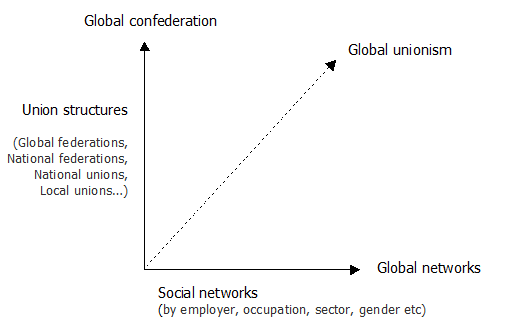
Graphic: Global Unions (versus Global Networks or Global Confederations)

Advanced Cyber/IO, Collective Intelligence, Cultural Intelligence, Ethics
Click on Image to Enlarge

Source

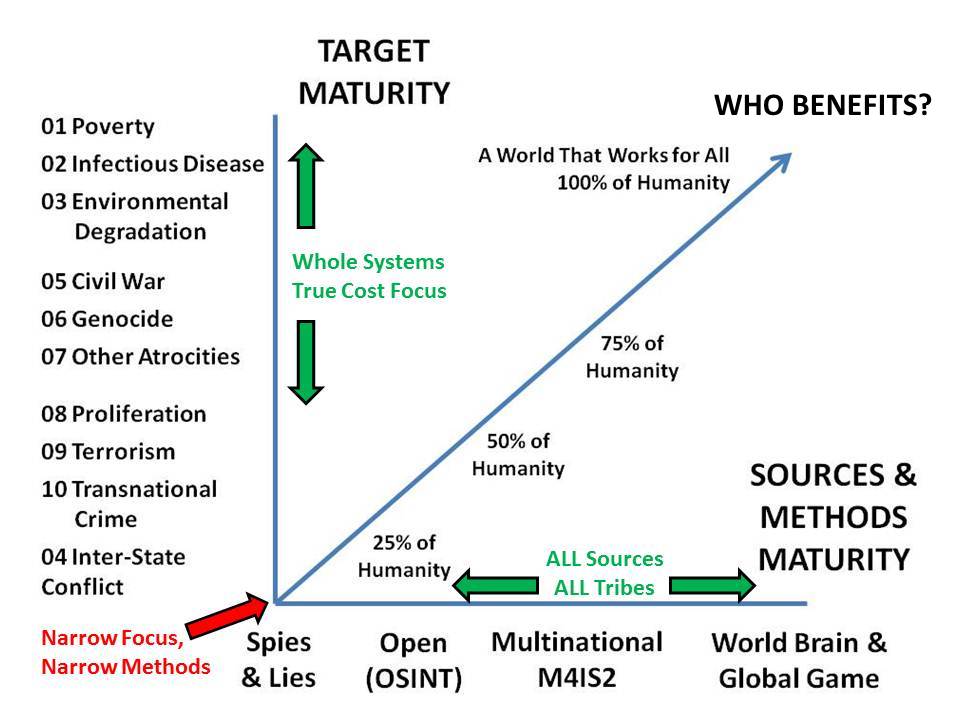
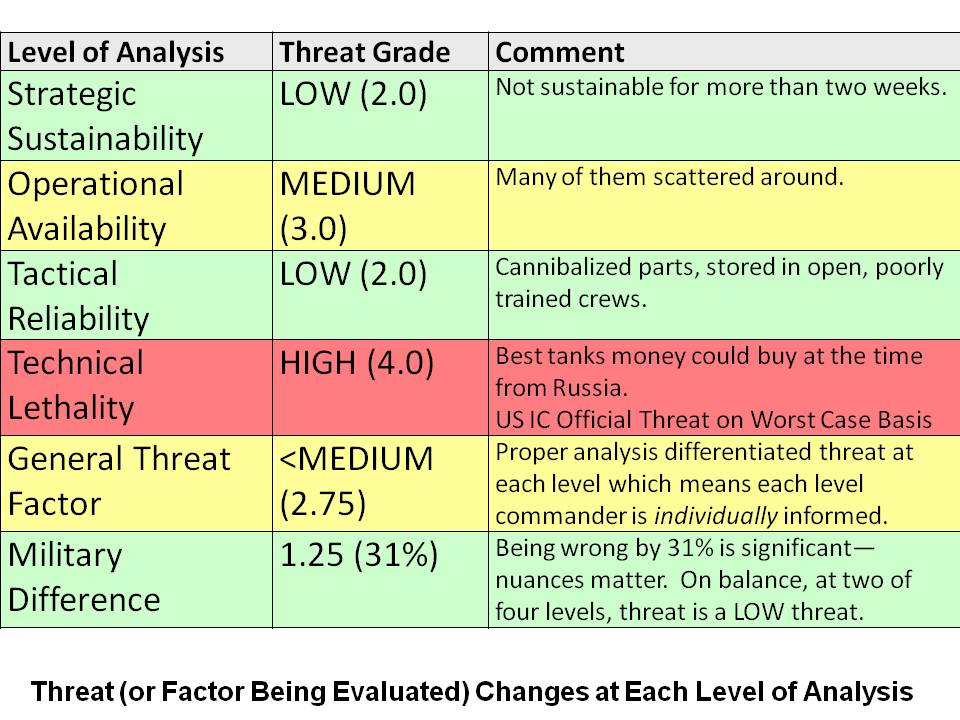
Phi Beta Iota:  This simple graphic has enormous implications for the evolving craft of intelligence (decision-support).  When considered in relation to absolute scale limits on the depletion of non-renewable resources, and the absolute valuation of diversity of life forms, it recasts how “truth” should be considered in the context of the whole, distinguishing between truth for the whole versus truth for the individual and truth for the nation-centric collective.  This is a variation of the discovery made by Robert Steele when he co-founded the Marine Corps Intelligence Center and led the study on planning and programming factors for expeditionary operations in the third world: the threat changes depending on the level of analysis.  This degree of sophistication and accomplished holistic reasoning is not yet present in any intelligence community that we know of.

See Also:

Click on Image to Enlarge

Source: 2012 PREPRINT: The Evolving Craft of Intelligence 3.5

Click on Image to Enlarge

Source: Graphic: Threat Level Changes Depending on the Level of Analysis

Berto Jongman Et Al: NSA & Digital Malfeasance

Ethics, IO Impotency
Berto Jongman
Berto Jongman

Cloud Services Cannot Be Trusted

Data Brokers — Opening the Kimono

Digital Islam – Digital Jihad

How NSA Puts All of Us (and US Commerce & Technology) At Risk

NSA Not Behind the Diginotar Hack

NSA Undermining Internet Security

Stewardship of the Internet

USG (NIST) Warns Against Using USG (NSA) Weakened Encryption

US Standards Agency Strongly Suggests Dropping Its Own Encryption Standard

Berto Jongman Et Al: Syria Round-Up 7.4

08 Wild Cards, Ethics
Berto Jongman
Berto Jongman

NEW IN BOLD

4th Media:  AP Sources: CIA Delivering Light Weapons to Syria

4th Media: Preempting The Next Round of Lies Against Syria

Berto Jongman: 10,000 Foreign Fighters in Syria

Berto Jongman: Agreement on Destruction of Syrian CW

Berto Jongman: Brown Moses on Chemical Munitions

Berto Jongman: Developments on the Ground in Syria

Berto Jongman: FBI files reveal al-Qaeda leader invited to visit Pentagon (Text +Video)

Continue reading “Berto Jongman Et Al: Syria Round-Up 7.4”

Steven Aftergood: POLICY RESPONSE TO INTELLIGENCE REVELATIONS LAGS

Ethics, Government
Steven Aftergood
Steven Aftergood

POLICY RESPONSE TO INTELLIGENCE REVELATIONS LAGS

The end of the government's fiscal year 2013 is just weeks away, but an intelligence authorization bill for fiscal year 2014 is nowhere in sight.  In past years, the House and Senate Intelligence Committees typically reported intelligence bills in late spring or early summer for House-Senate conference and floor action later in the year.  But this year, nothing.

On its homepage, the Senate Intelligence Committee website cites the Committee's report on the fiscal year 2012 intelligence bill under the heading “recent action.”  But that report was issued in August 2011.  (The Committee website also offers a current compilation of YouTube videos that appear to reflect the use of chemical weapons in Syria.)

Though 2013 has become the most momentous year for intelligence policy in a generation, the Senate Intelligence Committee has not held any public hearings since a March threat briefing, and none at all on surveillance policy.  Americans seeking insight into the meaning of current intelligence controversies must look elsewhere.

Continue reading “Steven Aftergood: POLICY RESPONSE TO INTELLIGENCE REVELATIONS LAGS”