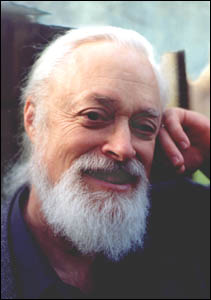
Tom Atlee: Six Faces of Wholeness

Advanced Cyber/IO, Blog Wisdom, Collaboration Zones
Tom Atlee

Six faces of wholeness

I offer here a framework for understanding what I might call “big” wholeness – a sensibility I have about wholeness that I can never articulate but which continually demands that I try. This framework attempts to embrace the manifestations of that inarticulable “wholeness” that I find myself sensing into and out of as my work emerges or as I evaluate each new idea, initiative, possibility, etc., that comes to my attention as I do my work.

In this model I am calling the overall categories of such manifestations “faces of wholeness”, as that is the way they present themselves – in the same sense that many mystical traditions see every person, thing, or phenomenon as “a face of God”. Beneath each overall category, I list “facets” or ways that wholeness manifests itself as parts or aspects of that larger face of wholeness.

Many faces and facets overlap, contextualize, include, and can even colonize some or all of the others. When I say “colonize”, I mean that certain holistic advocates may assert that a favorite face or facet is what wholeness is all about and that the other faces and facets are at best subsidiary phenomena. This is why I call wholeness that manifests through ALL the faces and facets “big wholeness”.

One of the future tasks in making this framework useful is to identify important applications of each face and facet. I sense that most if not all of people's efforts to make the world better – from art to politics, from education to medicine, from religion to science – are (or at least originally were) grounded in one or another aspect of wholeness. My co-intelligence work is definitely driven by a sense of wholeness and its potent, even sacred value.

So I offer this framework in my belief that the more we can understand about the nature of wholeness, the more able we will be in our work for the world. I especially hope it will help us co-create a world that works, as William McDonough says, for the children of all species for all time.

Of course, this framework is, itself, an example of the kind of wholeness it talks about. That is, it is only one tentative effort to weave diverse phenomena into a coherent whole which is inherently limited and will undoubtedly evolve. So feel free to do with it what you will.

Now here are the faces that I see so far:
Continue reading “Tom Atlee: Six Faces of Wholeness”

Patrick Meier: Geofeedia Next Generation Crisis Mapping Technology

Advanced Cyber/IO, Collective Intelligence, Communities of Practice, Earth Intelligence, Geospatial, Hacking, Mobile, Policies
Patrick Meier

My colleague Jeannine Lemaire from the Core Team of the Standby Volunteer Task Force (SBTF) recently pointed me to Geofeedia, which may very well be the next generation in crisis mapping technology. So I spent over an hour talking with GeoFeedia's CEO, Phil Harris, to learn more about the platform and discuss potential applications for humanitarian response. The short version: I'm impressed; not just with the technology itself and potential, but also by Phil's deep intuition and genuine interest in building a platform that enables others to scale positive social impact.

Situational awareness is absolutely key to emergency response, hence the rise of crisis mapping. The challenge? Processing and geo-referencing Big Data from social media sources to produce live maps has largely been a manual (and arduous) task for many in the humanitarian space. In fact, a number of humanitarian colleagues I've spoken to recently have complained that the manual labor required to create (and maintain) live maps is precisely why they aren't able to launch their own crisis maps. I know this is also true of several international media organizations.

There have been several attempts at creating automated live maps. Take Havaria and Global Incidents Map, for example. But neither of these provide the customi-zability necessary for users to apply the platforms in meaningful ways. Enter Geofeedia. Lets take the recent earthquake and 800 aftershocks in Emilia, Italy. Simply type in the place name (or an exact address) and hit enter. Geofeedia automatically parses Twitter, YouTube, Flickr, Picasa and Instagram for the latest updates in that area and populates the map with this content. The algorithm pulls in data that is already geo-tagged and designated as public.

Read full article with many screenshots.

Mini-Me: Pentagon Plan X versus Skywiper/Flame

Advanced Cyber/IO, IO Impotency
Who? Mini-Me?

Huh?

Pentagon Plan X

The Pentagon is turning to the private sector, universities and even computer game companies as part of an ambitious effort to develop technologies to improve its cyberwarfare capabilities, launch effective attacks and withstand the likely retaliation.

The previously unreported effort, which its authors have dubbed Plan X, marks a new phase in the nation’s fledgling military operations in cyberspace, which have focused more on protecting the Defense Department’s own computer systems than on disrupting or destroying those of enemies.

Plan X is a project of the Defense Advanced Research Projects Agency, a Pentagon agency that focuses on experimental efforts and has a key role in harnessing computing power to help the military wage war more effectively.

Read full story.

and in related news….

Skywiper/Flame Analytics

See Also:

Owl: Major Cyber-Virus Across Middle East – Probably Israeli

Worm: The First Digital World War

Tom Atlee: Dialogue and Deliberation Resource Center

Advanced Cyber/IO, Civil Society, Collective Intelligence
Tom Atlee

The Greatest Dialogue and Deliberation Resource Center

Dear friends,

Many of you already know about the National Coalition for Dialogue and Deliberation (NCDD).  But I'll bet most of you have not checked out NCDD's incredible (as in unbelievably gigantic and useful) online Resource Center.  It is my own first stop when I'm looking for a process or resource having anything to do with powerful conversations.  People often ask me for stories about community conversations, and I send them to the NCDD Resource Center.  There are materials there for beginners and experts, practitioners and activists, journalists and artists, mediators, anarchists, business consultants… you name it!  It is as democratic and useful as a library or a sidewalk – everybody is welcome.  It is totally free and always expanding.  Anyone interested in any aspect of making a difference with conversations can get familiar with it – and have fun exploring.  I think it is one of the most amazing “secrets” of the dialogue and deliberation movement.

I'll stop raving about it now to give you a few minutes to check it out.  Below is a writeup to get you started.  Have fun!

Coheartedly,
Tom

========

NCDD's Resource Center –
http://ncdd.org/rc

The National Coalition for Dialogue & Deliberation (NCDD) has been cataloguing resources about and for dialogue and deliberation since 2002.  At http://ncdd.org/rc, you can access more than 2,600 discussion guides, assessment tools, case studies, public engagement programs and organizations, articles, books, videos, and more.

Dialogue and deliberation are innovative processes that bring people together across divides to discuss, decide, and collaborate on today's toughest issues.  NCDD's Resource Center was designed to connect you with the information, guidance, theory, and examples you need to engage people effectively.

You can use the search field, categories and tags, or additional sidebar navigation options to hone in. We especially recommend you use the “I’m Looking For…” sidebar box that lets you cross-search categories and tags. Use the site map at http://ncdd.org/rc/contents to see a full list of all the categories and tags, or just look over the most recently added resources at http://ncdd.org/rc/resources.  Do you know of a great resource on dialogue, deliberation, or public engagement that should be added to NCDD's Resource Center?  Use the form at http://ncdd.org/rc/add to submit your favorites!
Continue reading “Tom Atlee: Dialogue and Deliberation Resource Center”

Patrick Meier: State of the Art in Digital Disease Detection & Mapping

Advanced Cyber/IO, Earth Intelligence, Knowledge
Patrick Meier

State of the Art in Digital Disease Detection

Larry Brilliant's TED Talk back in 2006 played an important role in catalyzing my own personal interest in humanitarian technology. Larry spoke about the use of natural language processing and computational linguistics for the early detection and early response to epidemics. So it was with tremendous honor and deep gratitude that I delivered the first keynote presentation at Harvard University's Digital Disease Detection (DDD) conference earlier this year.

Larry Brilliant

The field of digital disease detection has remained way ahead of the curve since 2006 in terms of leveraging natural language processing, computational linguistics and now crowdsourcing for the purposes of early detection of critical events. I thus highly, highly recommend watching the videos of the DDD Ignite Talks and panel presentations, which are all available here. Topics include “Participatory Surveillance,” “Monitoring Rumors,” “Twitter and Disease Detection,” “Search Query Surveillance,” “Open Source Surveillance,” “Mobile Disease Detection,” etc. The presentation on BioCaster is also well worth watching. I blogged about BioCaster here over three years ago and the platform is as impressive as ever.

These public health experts are really operating at the cutting-edge and their insights are proving important to the broader humanitarian technology community. To be sure, the potential added value of cross-fertilization between fields is tremendous. Just take this example of a public health data mining platform (HealthMap) being used by Syrian activists to detect evidence of killings and human rights violations.

Owl: Major Cyber-Virus Across Middle East – Probably Israeli

Advanced Cyber/IO
Who? Who?

A new, potent, highly complex but large (20 gigs!) Stuxnet-like virus is on the loose – a number of comments after the article here makes a very good case that this one is from the Israeli government:

‘Flame' cyberespionage worm discovered on thousands of machines across Middle East

The UN's International Telecommunications Union and Kaspersky Labs revealed today that it has discovered Flame, a new trojan rivaling Stuxnet. Codenamed “Worm.Win32.Flame,” the malware is currently being researched and it is described as “one of the most complex threats ever discovered.” It is believed to be active across thousands of computers in the Middle East, primarily in Iran and Israel, as well as on some machines in North Africa. Researchers believe that the trojan's primary function is cyberespionage: once Flame infects a computer, it is equipped to record audio from connected or built-in microphones, monitor nearby Bluetooth devices, take screenshots, and save data from documents and emails. All of this data, apparently stolen as part of a targeted attack, is constantly sent up to command and control servers. Flame “has no major similarities with Stuxnet” or its malware family member Duqu, and is believed to be created and controlled by a separate group. The newly-discovered worm does share some aspects with Stuxnet and Duqu, however. Most disappointingly, Flame takes advantage of the same printer spooling hole and autorun.inf infection methods exploited by Stuxnet. According to Kaspersky Lab's reports, it's believed that Flame achieves its initial infection from users who are victims of phishing attacks, and then once it has made it onto a computer it can be spread over local area networks or via USB flash drives with other machines. The bad news is that it's confirmed that the worm has spread over local area networks to fully-patched Windows 7 systems…

Howard Rheingold: Meta-Cognition

Advanced Cyber/IO, Civil Society, Collective Intelligence, Ethics
Howard Rheingold

Metacognition — awareness of one's attention and thinking process — is increasingly a 21st century necessity. — Howard

Metacognition — I Know (or Don't Know) that I Know

At New York University, Sir Henry Wellcome Postdoctoral Fellow Dr Steve Fleming is exploring the neural basis of metacognition: how we think about thinking, and how we assess the accuracy of our decisions, judgements and other aspects of our mental performance.

Metacognition is an important-sounding word for a very everyday process. We ‘metacognise' whenever we reflect upon our thinking process and knowledge.

It's something we do on a moment-to-moment basis, according to Dr Steve Fleming at New York University. “We reflect on our thoughts, feelings, judgements and decisions, assessing their accuracy and validity all day long,” he says.

This kind of introspection is crucial for making good decisions. Do I really want that bar of chocolate? Do I want to go out tonight? Will I enjoy myself? Am I aiming at the right target? Is my aim accurate? Will I hit it? How sure am I that I'm right? Is that really the correct answer?

If we don't ask ourselves these questions as a kind of faint, ongoing, almost intuitive commentary in the back of our minds, we're not going to progress very smoothly through life.

Read full article.

Phi Beta Iota:  The role of ethics and philosophy in channeling and integrating knowledge is not sufficiently appreciated at this time.  Apart from being ignorant in the whole, we also lack integrity in the whole.

noble gold