Inside Iran — Young, Impoverished, & Restless

05 Iran, Advanced Cyber/IO, Autonomous Internet, Civil Society, Cultural Intelligence, Government, IO Impotency, Peace Intelligence
Click on Image to Enlarge

From a senior engineer of Iranian descent often in Iran:

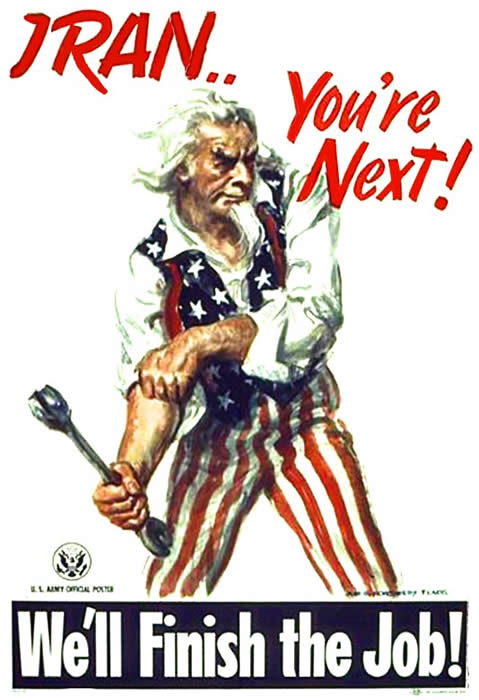
The view from within Iran is that, “help us get rid of this regime”, people are even willing to welcome an all out air assault if it ends up with an eventual regime change , move to secularize, and early stages of democracy.

I do not see an attack on Iran in the coming year. However if there is ever a good time to attack the regime with air strikes this is it. The  removal of the  subsidies by the government  every day common goods which accrued about 3 months ago which has now resulted in a major price increase on common good is just hitting the average poke book.

The utilities have gone up over %50 and in some cases more than doubled.

The number of factories closing down and the businesses going out of business which results in major layoffs is on the rise. The oil exports are decreasing and more oil wells are being shut down due to technical problems.

The majority of people have lost hope of meaningful reform.

Continue reading “Inside Iran — Young, Impoverished, & Restless”

Genghis Khan to Communism to Public Capitalism

Advanced Cyber/IO, Collaboration Zones, Communities of Practice, Counter-Oppression/Counter-Dictatorship Practices, Ethics, InfoOps (IO), Key Players, Methods & Process, Officers Call, Policies, Real Time, Strategy, Threats
John Robb

JOURNAL: The Economic Juggernaut of Genghis Kahn

Global Guerrillas

Some fun thinking for Wednesday…

Here are some of the economic reforms that turned the horde of Genghis Kahn into a steamroller than flattened most of the world's kingdoms/empires.*  He:

  1. Delayed gratification.  He banned the sacking of the enemy's camp/city until all of the fleeing soldiers, baggage, etc. were rounded up.  This radically increased the loot accumulated and ensured it could be shared among all of the participants (he confliscated the wealth of those men that cheated by looting early).
  2. Systematically shared the loot based on contribution and merit.  He disregarded title or status and systematically rewarded loot to everyone in the horde that earned it (the traditional approach was to let a few take it all — sound familiar?).  Of course, that fairness pissed off the nobility since they were used to backroom dealing and hereditary rights.  However, the benefits of this system, were far greater than the costs.  To wit:  He cemented the loyalty of the men and was able to attract thousands to his banner for every noble lost.
  3. Protected those that make sacrifices.  For men killed in the campaign, he paid their share of loot to their widows/orphans posthumously.

*of course, the first unsaid lesson is:  attack the places with the most loot.

The economic strategy of Genghis Kahn works well against any corrupt, top-heavy system (loot rich targets that are defended by nobility + serfs).  Sounds somewhat similar to today's global economic formula.  Of course, it's also important to view this simple but effective strategy as something apart from the figure that used it. For example, a decent/moral decentralized system that replicates this merit based approach could reproduce some of the success Ghengis had against the feudal holdings and petty tyrannies of today's marketplace.

Phi Beta Iota: Brother John raises the spectre of honorable leadership with integrity….that means no rule by secrecy, no earmarks, no back office deals.  Ronald Reagan (thank you Peggy Noonan) had it right: the US Congress [and Executive] is no better than the Soviet Politburo.  ALL “top down” elite systems have failed for lack of integrity (holistic informed analysis).  Populism failed as well–bottom up mobs are no better than corrupt elites for different reasons.  The combination of open information and honest crowds is ripe with potential.  The leaders that enable and empower the public, while revealing the “true cost” of predatory capitalism, virtual colonialism, and unilateral militarism, will go down in history as the Epoch B Founding Fathers.

BRICS Revolt on IMF–Tipping Point?

Advanced Cyber/IO, Communities of Practice, Cultural Intelligence, Earth Intelligence, Ethics

BRICS' open revolt against European grip on IMF

Narayan Lakshman

The Hindu, 26 May 2011

Paris: The International Monetary Fund's Executive Directors from the BRICS economies have openly revolted against the prospect of the Fund's Managing Director role reverting to a European, deepening the woes of an organisation that was recently rocked to its very core by the resignation of Dominique Strauss-Kahn as its chief following sexual assault allegations.

Read rest of article….

Phi Beta Iota: The BRICS [Brazil, Russia, India, China, South Africa] are now powerful enough to route around the West, but have not yet created a coherent multinational information sharing and sense-making capability such that they can confront the West in real-time with every lie to the public.  When that happens, and it will happen within five years, we anticipate a complete shift in power to the south and the east.  A near term test could be the illegal military actions against the Libyan leader, government, and capital.  The era of “because we say so is coming to an end.”  The era of direct assaults on NATO soil of “rear-area” launching pads and support facilities is here now.

See Also:

From BRIC to BRICS–Sanya Declaration

New Concept: Holding Experts Accountable

03 Environmental Degradation, 07 Other Atrocities, 11 Society, Academia, Advanced Cyber/IO, Civil Society, Earth Intelligence, Ethics

(AP) – 25 May 2011

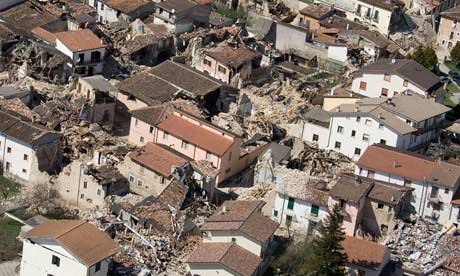
ROME (AP) — Seven scientists and other experts were indicted on manslaughter charges Wednesday for allegedly failing to sufficiently warn residents before a devastating earthquake that killed more than 300 people in central Italy in 2009.

Read rest of article…

Growing Demands for Participatory Democracy

08 Wild Cards, Advanced Cyber/IO, Civil Society, Counter-Oppression/Counter-Dictatorship Practices, Cultural Intelligence, Ethics, Government, InfoOps (IO), Methods & Process, Policies
Michel Bauwens

Constructing, living, and demanding Participatory Democracy in the #spanishrevolution Camps

Michel Bauwens, 23rd May 2011

We, the unemployed, the underpaid, the subcontracted, the precarious, the young … demand a change towards a future with dignity. We are fed up of reforms, of being laid off, of the banks which have caused the crisis hardening our mortgages or taking away our houses, of laws limiting our freedom in the interest of the powerful. We blame the political and economic powers of our sad situation and we call for a turn.’

Read long post including list of demands and original manifesto.

The Role of Facebook in Disaster Response

Advanced Cyber/IO, IO Multinational, IO Sense-Making, IO Technologies
Patrick Meier

The Role of Facebook in Disaster Response

Posted on May 22, 2011 by Patrick Meier|

I recently met up with Facebook colleagues Simon Axten and Matt Perault to discuss the role that they and their platform might play in disaster response. So I thought I’d share some thoughts that come up during the conversation seeing as I’ve been thinking about this topic with a number of other colleagues for a while. I’m also very interested to hear any ideas and suggestions that iRevolution readers may have on this.

There’s no doubt that Facebook can—and already does—play an important role in disaster response. In Haiti, my colleague Rob Munro used Facebook to recruit hundreds of Creole speaking volunteers to translate tens of thousands of text messages into English as part of Mission 4636. When an earthquake struck New Zealand earlier this year, thousands of students organized their response via a Facebook group and also used the platform’s check-in’s feature to alert others in their social network that they were alright.

But how else might Facebook be used? Continue reading “The Role of Facebook in Disaster Response”

noble gold