Chuck Spinney: The Afgan Misadventure in One Paragraph

03 Economy, 04 Inter-State Conflict, 05 Civil War, 07 Other Atrocities, 08 Wild Cards, 10 Security, 11 Society, Budgets & Funding, Corruption, Cultural Intelligence, Government, IO Deeds of War, IO Impotency, Military, Officers Call, Power Behind-the-Scenes/Special Interests, Secrecy & Politics of Secrecy, Strategy, Waste (materials, food, etc)
Chuck Spinney

First, the paragraph:

“The enterprise has proved to be a model of how not to go about such things, breaking all the rules of grand strategy: getting in without having any idea of how to get out; almost wilful misdiagnosis of the challenges; changing objectives, and no coherent or consistent plan; mission creep on an heroic scale; disunity of political and military command, also on an heroic scale; diversion of attention and resources [to Iraq] at a critical stage in the adventure; poor choice of local allies, who rapidly became more of a problem than a solution; unwillingness to co-opt the neighbours into the project, and thus address the mission-critical problem of external sanctuary and support; military advice, long on institutional self-interest, but woefully short on serious objective analysis of the problems of pacifying a broken country with largely non-existent institutions of government and security; weak political leadership, notably in subjecting to proper scrutiny militarily heavy approaches, and in explaining to the increasingly, and now decisively, sceptical domestic press and public the benefits of expending so much treasure and blood.”

Sir Sherard Cowper-Coles
British ambassador in Kabul and as special envoy to Afghanistan and Pakistan

The Afghan misadventure

By Lionel Barber, Financial Times, 22/07/11

Phi Beta Iota:  A full reading of “The Afghan misadventure” by Lionel Barber is highly recommended.  The ends with several lessons not understood in Washington, and a marvelous description of NATO as a “tethered goat.”  He also recommends these three books:

Please respect FT.com's ts&cs and copyright policy which allow you to: share links; copy content for personal use; & redistribute limited extracts. Email ftsales.support@ft.com to buy additional rights or use this link to reference the article – http://www.ft.com/cms/s/2/0feac042-b395-11e0-b56c-00144feabdc0.html#ixzz1SxSELLAY

Cables From Kabul: The Inside Story of the West’s Afghanistan Campaign, by Sherard Cowper-Coles, Harper Press, 352 pages

The Wars of Afghanistan: Messianic Terrorism, Tribal Conflicts and the Failures of Great Powers, by Peter Tomsen, PublicAffairs, 912 pages

Dead Men Risen: The Welsh Guards and the Real Story of Britain’s War in Afghanistan, by Toby Harnden, Quercus, 640 pages

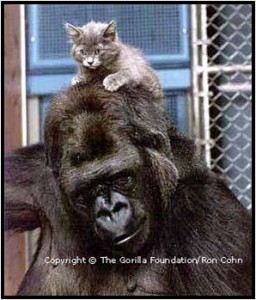
Koko: Hospitals Riskier than Flying…

07 Health, 07 Other Atrocities, 11 Society, Articles & Chapters, Commerce, Commercial Intelligence, Corruption, IO Impotency
Koko the Reflexive

Hospital stays are riskier than flying, says WHO

CTV News.ca  Staff

Date: Friday Jul. 22, 2011 12

EXTRACT

According to Sir Liam Donaldson, the WHO's newly-appointed Envoy for Patient Safety, the chances of dying from a medical error in a hospital anywhere in the world is about 1 in 300. That compares with the risk of dying in a plane crash,  of about 1 in 10 million passengers.

Read full article…

Phi Beta Iota:  this story encapsulates much of what is wrong with modern society, from fog facts (knowns that are not known by most) to corruption.  When combined with the documentation on 50% of every health dollar being waste, and the larger challenge of incoherent uniniformed policy across all ten threats and all twelve core policy domains.

See Also:

Graphic: Information Pathologies

Graphic: Intelligence Maturity Scale


John Robb: US Legal Rot in Soviet-Style Collapse

09 Justice, Blog Wisdom, Commercial Intelligence, Corruption, Cultural Intelligence, Government, IO Impotency, Law Enforcement
John Robb

JOURNAL: Legal Decay in a Soviet Style Collapse

Here's a question I got recently:  What happens to the legal system when the US suffers a Soviet style collapse?  Answer:  It will rapidly decay.

Here's a simple formula for this (it works for both legal systems and government bureaucracies):

Low legitimacy + slashed operating budgets = rampant corruption

Regardless of any decay in the legal system, business will still be conducted.  Small disputes will be resolved through the existing system, with graft tipping the scales or speeding the outcome.  Large disputes involving substantial wealth transfer will be something else entirely.  These disputes will be resolved through the ability of one party or the other to apply the threat of (or actual) violence to the negotiation process.

These pressures won't only be the result of counterparties that have access or control the large mafias/gangs/militias (or corporate militaries) that will spring up during economic collapse (far larger than we've seen the US to date).  Threats will also be mounted by government/defense/security officials that use their government sanctioned command of violence (police, SWAT, military units, etc.) as a means to personal enrichement.

This has pretty intersting implications for those GG readers that have large amounts of wealth in the current system.  You might not be able to retain it or move it or transact with it in a collapse scenario w/o putting your life (and those around you) at mortal risk.

NOTE:  We've already seen a taste of what's to come with the financial crisis of 2008.  In sum: it was the biggest financial crisis to date, full of fraud and deception across the board, and almost nobody was punished for it.  In fact, most were rewarded for their malfeasence with generous government bailouts and huge bonuses.

Chuck Spinney: From Bad to Worse in Afghanistan

03 Economy, 04 Inter-State Conflict, 05 Civil War, 07 Other Atrocities, 08 Wild Cards, 10 Security, 11 Society, Corruption, Government, IO Impotency, Military, Peace Intelligence
Chuck Spinney

From bad to worse in Afghanistan

Peter Eichstaedt

McClatchy News – 20/07/11

KABUL, AFGHANISTAN The assassination of President Hamid Karzai’s half brother, Ahmed Wali Karzai, along with the recent attack on the Intercontinental Hotel in the heart of the capital in Kabul, underscore the increasingly fragile security situation in Afghanistan.

Both events occurred soon after U.S. President Barack Obama announced his intention to begin withdrawing 30,000 “surge” troops beginning this month, with a goal of removing all American forces by the end of 2014.

With the death of Osama bin Laden and claims that his terror network had been crippled in Afghanistan, the president suggested the United States and its international partners had done all they could in the country.

Afghans would have to assume responsibility for security in Afghanistan, the president said.

The hotel attack, however, immediately raised questions about the Afghan military’s capabilities, with eight terrorists successfully overwhelming one of the most secure places in the capital. It was only after NATO helicopters were called in after an all-night firefight that the siege was brought to an end.

While many complain the assault laid bare the weakness of Afghanistan’s security forces, with some guards reportedly fleeing after the first shots were fired, others note that their response was about as good as could have been expected, given the Afghan forces’ level of equipment and training.

What the attack on the hotel did show was the pervasive presence of the Taliban and their growing alliance with other anti-government forces all across the country.

These insurgents in recent months have steadily ratcheted up the size, frequency and effectiveness of these attacks, while showing an alarming ability to penetrate seemingly impenetrable places.

Recent events included the wholesale escape of nearly 500 Talban captives from a prison in the southern province of Kandahar; the dramatic attack on the defence ministry headquarters in Kabul; and the suicide attack on a high-level military meeting in the northern Takhar province that killed one of Afghanistan’s best commanders and injured a NATO general.

Indeed, the list seems to grow daily.

Read full article….

Koko: List of Toxic US States

03 Environmental Degradation, 05 Energy, 07 Health, 07 Other Atrocities, Analysis, Commerce, Corporations, Corruption, Government, IO Impotency, Media Reports
Koko the Reflexive

FOR IMMEDIATE RELEASE

Press contact: Suzanne Struglinski, NRDC, 202-289-2387 or sstruglinski@nrdc.org

If you are not a member of the press, please write to us at nrdcinfo@nrdc.org or see our contact page

Ohio, Pennsylvania and Florida Lead List of “Toxic 20” States with Most Toxic Air Pollution from Power Plants

Worst States: OH, PA, FL, KY, MD, IN, MI, WV, GA, NC, SC, AL, TX, VA, TN, MO, IL, WI, NH, IA
WASHINGTON (July 20, 2011) — Residents of Ohio, Pennsylvania and Florida live in states with the most toxic air pollution from coal- and oil-fired power plants, according to an analysis by the Natural Resources Defense Council.

The study used publicly-available data in the Environmental Protection Agency’s Toxics Release Inventory (TRI). The analysis, entitled “Toxic Power: How Power Plants Contaminate Our Air and States” was jointly released today by NRDC and Physicians for Social Responsibility (PSR).

Among the key findings:

  • Nearly half of all the toxic air pollution reported from industrial sources in the United States comes from coal- and oil-fired power plants.
  • Power plants are the single largest industrial source of toxic air pollution in 28 states and the District of Columbia.

Read full statement….

Koko Observes (in American Sign Language):  The above is an excellent example of isolated concern that is going nowhere–never mind the blatant corruption of Congress.  If it were combined with a 360 degree toxicity survey showing food poisoning, toxic chemicals in everyday materials, and so on, this would be a great deal more useful.  If all of that were integrated into a true cost global game (or in this case, national game), there would be a compellingly useful basis for public outrage one district at a time.

Marcus Aurelius: Whiz Kids Gettings Out, CIA Armed Camps and Prisons Outside War Powers Act….

Commerce, Commercial Intelligence, Corruption, Cultural Intelligence, Government, Hacking, IO Impotency
Marcus Aurelius

Whizz kids deserting the spy world as threat of attacks increases

GCHQ is losing “whizz kid” specialists to Google, Microsoft, and Amazon because they can triple their pay, the head of the agency has warned.

Duncan Gardham

 The Telegraph, 20 July 2011

Read full story….

The CIA's Secret Sites in Somalia

The Nation, 1-8 August 2011

EXTRACT

As part of its expanding counterterrorism program in Somalia, the CIA also uses a secret prison buried in the basement of Somalia’s National Security Agency (NSA) headquarters, where prisoners suspected of being Shabab members or of having links to the group are held. Some of the prisoners have been snatched off the streets of Kenya and rendered by plane to Mogadishu. While the underground prison is officially run by the Somali NSA, US intelligence personnel pay the salaries of intelligence agents and also directly interrogate prisoners. The existence of both facilities and the CIA role was uncovered by The Nation during an extensive on-the-ground investigation in Mogadishu.

Read full story….

Phi Beta Iota:  Contributing Editor DefDog also recommended these two stories.

noble gold