Broadband Telefony Near-Zero Cost

Advanced Cyber/IO, Autonomous Internet, Collective Intelligence, InfoOps (IO), Mobile

Nokia & Microsoft: White Space Phone?

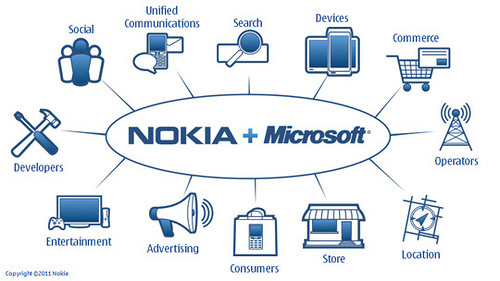
When Nokia announced that it will drop Symbian for Microsoft’s Windows Mobile, many in the industry were taken by surprise. Now, according to industry insiders, the strategy is becoming clear: Nokia will use Microsoft’s patented “white spaces” radio, enabling wireless devices to use television frequencies.
Click on Image to Enlarge

The two firms have apparently been working on a software defined radio platform for several years. Now the companies are preparing a world-wide rollout of a system that may short circuit the world’s largest carriers.
Microsoft and Nokia are expected to utilize small, WiFi-like access points, expected to cost $250-$500 dollars, rather than cell towers that can cost $250,000. Local access points, using unused television frequencies, penetrate indoors better and can have a range similar to PCS cellular radios – approximately 1-3 miles.

Multiple 6 MHz wide channels will be automatically ganged together in this new system, delivering an effective 2-12 Mbps for end users. Using TD-based LTE or WiMAX radios, with a software defined front end, the Nokia/Microsoft access points connect to the internet directly — like WiFi access points. The phones use VoIP software, similar to Skype, jointly developed by Nokia and Microsoft.

According to some industry observers, the impact of white space phones on today’s two trillion dollar telecommunications industry may be significant. White space phones will not need today’s infrastructure and licensed spectrum. They will not be dependent on phone companies.

The initial thrust for the whitespace phone system is expected to be in the developing world. The joint venture is expected to announce several test markets, including the Seattle area this summer and will test a Visa-enabled SIM card, enabling contactless payments.

Read more….

Safety copy below the line.  Tip of the Hat to Sepp Hasslberger.

Continue reading “Broadband Telefony Near-Zero Cost”

Nattering Nabobs on Libya–Never Mind Ethics

02 Diplomacy, 03 Economy, 04 Inter-State Conflict, 05 Civil War, 07 Other Atrocities, 10 Security, 11 Society, Commerce, Corruption, Counter-Oppression/Counter-Dictatorship Practices, Cultural Intelligence, Government, IO Impotency, Military, Power Behind-the-Scenes/Special Interests
Who, Me?

This how the influencers are influenced to justify to the “prol's that rule of law properly means nothing. All in place before Obama sent in Special ops and claimed that there were no boots on the ground.

Reasonable cop/barbaric cop.

Declare victory and get on with ousting Gaddafi

By Mark Malloch-Brown

Financial Times, March 31 2011 15:12

It is not just Libya that now risks long-term division. Telltale signs of fragmentation in the international community’s approach are opening up. Not for the first time Muammer Gaddafi may be on the verge of securing a public relations coup against his western opponents. Now we must declare humanitarian victory, and regroup.

Tuesday’s London conference was a confused affair. The Germans and the Italians touted a ceasefire and exile for Colonel Gaddafi. Others, notably Saudi Arabia and the African Union, stayed away. The US and the UK, meanwhile, insisted the military job was not done, with David Cameron, the UK prime minister, noting on Wednesday that UN Security Council resolution 1973 might give the allies a legal basis to arm the Libyan opposition.

Read more….

America's Libyan Revenge

Andrew Roberts, 03/30/2011

The Daily Beast

Forget U.N. resolutions! After decades of Gaddafi's deadly attacks and his support for terrorist groups across the world, America has every right to seek revenge, says Andrew Roberts.

In all the discussion of where, if anywhere, American strategic interests lie in regard to Libya, one very obvious motivation for U.S. action seems to be being ignored: Vengeance. Yet the certain knowledge that the West will eventually take revenge for terrorist crimes committed even as long ago as the 1970s and 1980s is itself a vital strategic interest. Rogue states must always know that there is no such thing as a statute of limitations on murder, and that even after four decades, the slate has not been wiped clean.

Read more….

Continue reading “Nattering Nabobs on Libya–Never Mind Ethics”

U.S. Intelligence Community as Land of Make Believe

Blog Wisdom
Richard Wright

To the Editor:

The Intelligence Community Group at LinkedIn is full of smart folks whose thinking either supports or complements the long-standing views of the Phi Beta Iota collective.  Specifically, there is a general feeling that the U.S. Intelligence System is really morally and systematically broken.  RW

The U.S. Intelligence Community as the Land of Make Believe

Integrity: undeviating adherence to a code of behavior; honesty

Chuck Spinney has a good point in criticizing the big five institutions (CIA, DIA, NGA, NSA and NRO) of the U.S. IC for allowing intelligence findings to be corrupted by political influences. [PBI: Lack of Integrity = Being on Wrong Side of History]  These five institutions and the ODNI constitute the U.S. Intelligence System from which most national intelligence is derived. Yet, it seems to me, that corruption is only part of the story.  The corruption that Spinney speaks so eloquently of really is symptomatic of what Robert Steele Vivas has repeatedly identified as a lack of integrity by the senior management staffs of big five and of the system itself. This combination of corruption and lack of integrity has produced a pretty nearly complete collapse of U.S. intelligence capability.

Continue reading “U.S. Intelligence Community as Land of Make Believe”

Intelligent Design: Will It Make a Beautiful (Safe) Ruin?

08 Proliferation, 11 Society, Earth Intelligence
Who, Me?

This struck me as “speaking poetry to power.”

Idle Chatter: The Power of Ruins
Nuclear power plants are an uncanny presence in the built environment.

By Morgan Meis, The Smart Set

“Will it make a beautiful ruin?” That was the question Basil Spence asked about the nuclear power station he was designing in Trawsfynydd, Wales. This was back in the 1960s, but it was forward looking. Spence, an architect (he designed the famous Coventry Cathedral in England), was aware of one simple fact: Nuclear power plants are functional for a relatively short period of time before they are put out of commission and replaced by newer, safer designs and technology. The abandoned plant is filled with radioactivity that makes it unusable for anything for a long time. A cathedral is designed with the idea that it should stand, and function, for a very long time — perhaps beyond time. A nuclear power plant is designed with the knowledge that it must become a ruin, and rather quickly. It is born to die, and then to sit as a corpse, a testimony to the strange and unsettling function it once had.

Read more…

See Also:

A Nuclear Ruin is Being Born (Atlantic Monthly) with one photo

Nuclear Ruins (Rosh Ruins) with stark photos

Stalk a Nuclear Ruin (WIRED)

Zero Killer: An Alternate History of Nuclear Ruin (Comic Attack) serious fiction & cartoons

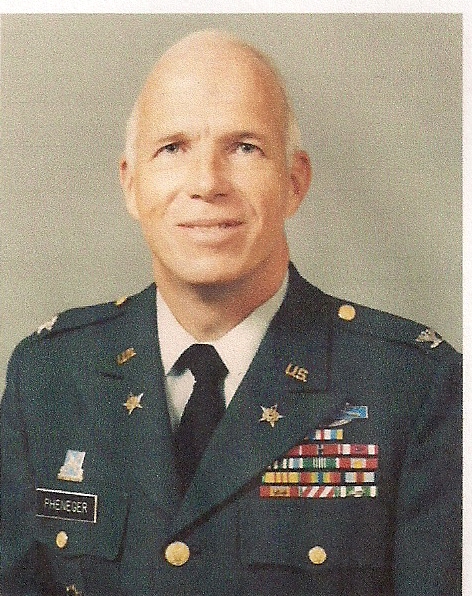
Who’s Who in Collective Intelligence: Mike Pheneger

Alpha M-P, Collective Intelligence

Col Mike Pheneger, USA (1988)

Col Mike Pheneger, U.S. Army (Ret.), U.S. Special Operations Command

OSS '95:  Col Mike Pheneger, USA (Ret.), former J-2 U.S. Special Operations Command, for his paradigm-shattering unclassified exposures of our lack of tactical military maps for 90% of the world, and our enormous over-investment in duplicative and contradictory orders of battle.

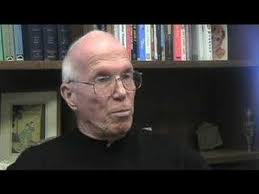
Col Mike Pheneger, USA (Ret) (2011)

Colonel Pheneger spent 30 years on active duty as a US Army Intelligence Officer retiring in 1993. He had overseas assignments in Germany, Vietnam, Korea, Panama, and the Middle East. Key assignments include: Commander, US Army Intelligence School (Fort Devens – then part of the National Security Agency’s Cryptologic Training System); Director of Intelligence, US Special Operations Command (MacDill AFB); Deputy Director of Intelligence, US Central Command (MacDill AFB); Commander, 470th MI Group (Panama); G2, Second Infantry Division (Korea), and Director of Operations, 66th MI Brigade (Germany). As Director of Intelligence for USSOCOM, Colonel Pheneger campaigned to end duplicative intelligence production to expand our focus on neglected third-world and low intensity conflict situations that were more likely to require the deployment of US forces.  He holds an M.P.A. from Shippensburg University in Pennsylvania, a B.S from Bowling Green State University, and is a graduate of the Command & Staff Course, US Naval War College, and the US Army War College.  After military retirement he developed training programs for adult professionals for the University of South Florida’s Professional and Workforce Development Division. He teaches courses on the Bill of Rights, The Constitution, Terrorism and Geo-Politics for learning-in-retirement programs in Tampa and Sarasota.  He received the Open Source Solutions’ Golden Candle Award in 1995.

Colonel Pheneger is President of the American Civil Liberties Union of Florida. He previously served on the ACLU’s National Board and National Executive Committee.  He speaks frequently on issues involving Civil Liberties and National Security and the ethical and constitutional aspects of intelligence collection and operations. He has spoken widely on the USA Patriot Act, torture, Guantanamo, and warrantless wiretapping and has submitted declarations in federal court proceedings supporting the ACLU’s requests for documents under the Freedom of Information Act.  He served as an expert witness in a case to enjoin the Tampa Sports Authority from conducting pat-down searches as a condition of attending NFL football games.

noble gold