Journal: Bank of America into Receivership?

03 Economy, 07 Other Atrocities, 10 Transnational Crime, Commerce, Commercial Intelligence, Corporations, Corruption, Money, Banks & Concentrated Wealth

‘FORECLOSE ON THE FRAUDSTERS'
White Collar Crime Expert Calls For FDIC To Take Control Of Bank Of America

Full Story Online

Charging that the ongoing foreclosure fraud epidemic is the work of precisely the same unrepentant bank officers whose fraudulent mortgage schemes crashed the financial system in the first place, two leading critics of the financial industry are calling on the FDIC to put some of the nation's biggest banks into receivership — starting with the Bank of America — and make them clean house.

William K. Black, a former regulator and white-collar crime expert who cracked down on massive fraud during the savings and loan scandal of the 1980s, and his fellow economics professor at the University of Missouri-Kansas City, L. Randall Wray, write in the Huffington Post that it's time to “foreclose on the foreclosure fraudsters”. They write:

Read on….

Journal: Paradigm & Integrity Revolution in Medicine

02 Infectious Disease, 07 Health, Academia, Civil Society, Collective Intelligence, Commerce, Commercial Intelligence, Earth Intelligence, Government

Jon Lebkowsky Home

Science, lies, evidence, knowledge

In so many fields, owing to the Internet-driven democratization of knowledge, we learn that that the power associated with hoarded knowledge has been abused, and the position of leadership – the priesthood – associated with the acquisition of knowledge has been leveraged to manipulate and deceive. “Everything you know is wrong!”

David Freedman has a great article in the Atlantic about medical deception, called “Lies, Damned Lies, and Medical Science,” which focuses on Dr. John Ioanniddis’ dedication to exposing bad science in medicine.

He’s what’s known as a meta-researcher, and he’s become one of the world’s foremost experts on the credibility of medical research. He and his team have shown, again and again, and in many different ways, that much of what biomedical researchers conclude in published studies—conclusions that doctors keep in mind when they prescribe antibiotics or blood-pressure medication, or when they advise us to consume more fiber or less meat, or when they recommend surgery for heart disease or back pain—is misleading, exaggerated, and often flat-out wrong. He charges that as much as 90 percent of the published medical information that doctors rely on is flawed. His work has been widely accepted by the medical community; it has been published in the field’s top journals, where it is heavily cited; and he is a big draw at conferences. Given this exposure, and the fact that his work broadly targets everyone else’s work in medicine, as well as everything that physicians do and all the health advice we get, Ioannidis may be one of the most influential scientists alive. Yet for all his influence, he worries that the field of medical research is so pervasively flawed, and so riddled with conflicts of interest, that it might be chronically resistant to change—or even to publicly admitting that there’s a problem.

At e-Patients.net, Peter Frishauf writes a response to the Atlantic article, called “Fixing those Damn Lies.” How do we fix them? The Atlantic piece discusses Ioannidis’ suggestions to change the culture of medical research, and reset expectations. It’s okay to be wrong in science – in fact, it’s almost a requirement. The scientific method is about testing and proving hypotheses – proving can be “proving wrong” as well as “proving right.” Either way, you’re learning, and extending science.

Frishauf also mentions how medicine and science should embrace the Internet “and figure out a way to better incorporate patient self-reported and retrospective data in trials,” which is one goal of participatory medicine. He also suggests “giving up on tenure-tied-to-the-peer-reviewed-literature, and embracing a moderated form of pre and post-publication peer review,” something that came up in discussion when I spoke at the Central Texas World Future Society Tuesday evening. (More about this in an earlier e-Patients.net post by Frishauf.)

Knowledge is not a citadel or ivory tower, but a network that we could all be working, challenging, and improving.

Journal: US as Dishonest Broker in Middle East

08 Wild Cards, Cultural Intelligence, Government, Peace Intelligence
Chuck Spinney Recommends...
The author is Jewish, an Israeli of Iraqi descent.

US: The dishonest broker

Despite high expectation for Barack Obama, the US president has not convinced Israel to cease settlement construction.

Avi Shlaim, Al Jazeera, 21 Oct 2010 12:46 GMT

Avi Shlaim is a professor of international relations at the University of Oxford and the author of Israel and Palestine: Reappraisals, Revisions, Refutations (Verso, 2009). This article first appeared on the University of Oxford, Department of Politics and International Relations Blog

The Israeli-Palestinian conflict has been both a major concern of American diplomacy since 1967 and the arena of persistent failure.

There are many reasons for America’s failure to broker a peace deal between Israel and the Palestinians but the most fundamental one is that it is a dishonest broker. As a result of its palpable partiality towards Israel, America has lost all credibility in the eyes not only of the Palestinians but of the wider Arab and Muslim worlds.

The so-called peace process has been all process and no peace. Peace talks that go nowhere slowly provide Israel with just the cover it needs to pursue its expansionist agenda on the West Bank.

Read rest of article….

Worth a Look: Books on Toil in the Shadows

Worth A Look
Amazon Page

Sarah Ford's two-fisted journey from a London council flat to the WRENS (Royal Navy) to her undercover action with the Special Air Service in Northern Ireland is an amazing odyssey, and her narrative keeps the pages turning. This is one tough broad, brought up on the mean streets of London, and her poignant struggle to escape the despair and poverty of the bottom rungs of British society and lead a productive life is truly inspiring.

What is really amazing about this coming-of-age story, however, is the unusual direction it sudenly takes, leading her away from the Royal Navy and into the shadowy world of the SAS, where she risks her life almost daily in the deadly rowhouses of Northern Ireland. This is an angle on “The Troubles” you don't see much of. Highly recommended.

Amazon Page

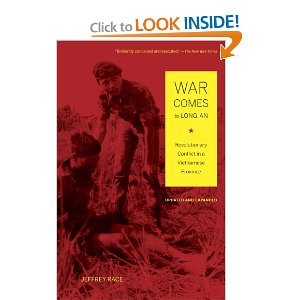
One book that has stood the test of time is Jeffrey Race's War Comes to Long An: Revolutionary Conflict in a Vietnamese Province, which was re-released this year with new forewords and an analytical conclusion by the author. First published in 1972, the book remains a seminal read for academics and policymakers concerned with these ever-evolving
inter-related subjects, as well as for those more specifically interested in the Vietnam War.

Outside the academy the book has long received strong recognition across the political spectrum. Not only is it a mainstay in the curriculum of all senior service schools for the US military and leading US universities that train future diplomats, but even the most scathing critic of modern US foreign policy, Noam Chomsky, once wrote that it was the “best account of the origins of the insurgency” in South Vietnam.  Full Review by Jason Johnson.

Amazon Page

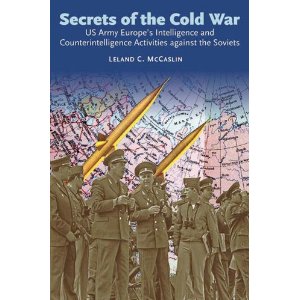
Secrets of the Cold War' focuses on a dark period of a silent war and offers a new perspective on the struggle between the superpowers of the world told in the words of those who were there. The author, formerly an expert in counterintelligence in US Army Europe, weaves together exciting true accounts of allies collecting enemy information in the East and fighting spies and terrorist in the West. Amassing Soviet military information by Allied agents in the East is at the forefront! Learn the bizarre method a British agent uses to obtain the muzzle size of a Russian tank as he risks his life jumping on a moving train in East Germany. A French officer drives into a Soviet tank column and escapes undiscovered by cunning methods. In West Germany, terrorist attacks and spies are rampant. Communists shoot a rocket propelled grenade into a General's occupied limo and terrorists kidnap another General. From the espionage files, an American soldier is nearly recruited in a downtown bar to be a spy and a First Sergeant is lured by sex to be an unknowing participant in spying. Behind-the-lines images are historic and intriguing. See photographs of a French officer and a Soviet officer relaxing in the East German woods in a temporary unofficial peace; ‘James Bond' type cars with their light tricks and their ability to leave their Stasi shadows ‘wheel spinning' in the snow will amaze readers.  Read More….

NIGHTWATCH Extract: China Using Rare Earth Elements (REE) to Test Economic & Technical Pressure Options

02 China, 03 Economy, 10 Security, Commerce, Commercial Intelligence, Earth Intelligence, Government, Military

China and Rare Earth Elements: China's new Five-Year Program will fail to bring any rapid change in export quotas for rare earth elements (REE), Chinese Ambassador to the World Trade Organization Sun Zhenyu said, Reuters reported. He also said China's REE reserves were depleting quickly and that Beijing must conserve them. According to Sun, China's reserves have fallen from 33 percent of the world's total in 1996 to 30 percent presently, and that they will last only for another 15-20 years. He urged other nations to begin developing their own REE reserves.

China-Japan: Japan's stockpile of rare earth elements (REE), if China does not restart REE exporting, could empty by March or April 2011, said Yoshikatsu Nakayama, Japanese vice-minister of the economy, trade and industry, Agence France-Presse reported on 21 October.

China-Germany: German companies have been told by Chinese officials to increase their investments in China if they wish to continue to receive rare earth elements (REE) and two other elements China mines, tungsten and antimony, The New York Times reported on 21 October, citing a spokeswoman for the German engineering federation.

On 21 October, unidentified German industry officials said that Chinese customs officials were for the fourth day blocking the final paperwork approval necessary for REE to be exported to Germany. The officials said China is still exporting REE that had paperwork approved before 18 October.

NIGHTWATCH Comment: The Chinese appear to be using rare earth elements exports for testing economic pressure tactics against potential rivals or adversaries. Rare earth elements are used in many high technology applications.

NIGHTWATCH KGS Home

Phi Beta Iota: This is what happens when government becomes irresponsible, divorced from reality, without a strategic analytic model, and so ideologically insane as to make a lobbyist for Goldman Sachs the National Security Advisor.  This all started in the 1970's, it is not new, but now it is close to a fatal sucking chest wound for the Republic.

See Also:

Election 2008 Chapter: The Substance of Governance

noble gold