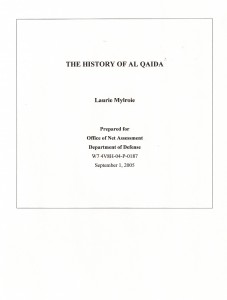
Phi Beta Iota: This document, in three parts (over 300 pages, Part I is the Executive Summary and front matter) is dated 1 September 2005 and was prepared for the Office of Net Assessment in the Department of Defense (US). It has not gotten the visibility it merits. It is very unusual for a living person to have a Wikipedia page, regardless of whether one agrees with the author on varied points, this marks her as a person of influence whose views must be considered.
Home to well over one-fifth of the population, South Asia continues to be a hotbed of conflict and upheaval. Human rights abuses, the war in Afghanistan, and climate change all present critical challenges to the region and to U.S. foreign policy. In our new focus, FPIF contributors examine current obstacles and future solutions in South Asia.
U.S. military strategy in Afghanistan is built on two coups, one in Kabul and the other in Islamabad, writes Shibil Siddiqi in Obama's Surge and Pakistan.
The AfPak Train Wreck: Conn Hallinan says that the president's goals in escalating the war in Afghanistan are deeply flawed. Just ask the Russians.
Adil Shamoo, in Nation-Building in Afghanistan, writes that the United States can learn from the mistakes made in Iraq to craft a new approach for that country.
Robert Naiman, in ‘Legitimacy' in Afghanistan, points out that escalation has just brought more death and destruction. More escalation could close off opportunities for a political solution.
Much of the Afghanistan debate has been centered in the U.S. But what do Afghans think? Gabriela Campos interviews Mariam Nawabi in Underlying Causes of Security in Afghanistan.
Here are two opposing views on how to win in Afghanistan:
1. An Air Force general's view from the Top Down
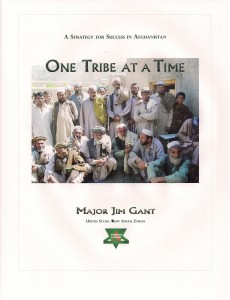
2. Army Special Forces major's view from the bottom up
SOF Major Strategy for AF
My comment: While I think the major is far closer to reality than the general, I would argue that the Pentagon, which is run by generals, does not have a clue how to go about executing the major's strategy, if they chose to do so — and they won't. But that might not matter, because, paradoxically, I think the major's excellent appreciation of the Afghan conundrum illustrates indirectly why we need to get out of Afghanistan asap.
There are at least two reasons why this is so:
First, the military has no clue how to execute the kind of strategy advocated by the major. That is why General McChrystal asked for a large increase in conventional troops. The surge just approved by the President shows (a) that the military is completely wedded to an approach that uses a large US footprint, centralized command and control, and a reliance on heavy firepower, like the AF general's predilection for bombing; and (b) the politicians are wedded to the concept that strengthening an already corrupt centralized Afghan gov't and Afghan national army and national police forces will “win the hearts and minds” of the rural population.
Note that the weakest parts of the major's excellent analysis occur when he tries to reconcile support of the Afghan central government and Afghan national army with his decentralized tribal strategy — they can not be reconciled except through tribal mediation processes that start a village level jirgas and slowly work upwards to “national” level loya jirga. But that traditional approach would result in a repudiation of the central gov't as it is now constituted.
Second. I am not sure there will ever be enough time to make his strategy work on a war-winning scale. As the major makes clear, we are struggling to deal with a culture that is based on profoundly important concepts of honor and revenge. Planners in Washington and Kabul are trying to shape the cultural DNA of a rural tribal society that is the product of a 3000 years of cultural evolution. This culture may seem primitive to strategists in Washington trying to export the our way of life (not the major, who clearly understands that strategy must be shaped by the mores of the Afghan culture), but this tribal culture is in fact a highly evolved in a complex relationship to its environment. The problem as I see it is that too much water has gone over the dam since we foolishly began trying to cynically manipulate the value systems of this tribal culture by inflating the Islamic crazies in late 1970s (with goal of making it more likely that Sov's would invade and enmesh the Sovs in their Vietnam-like quagmire).
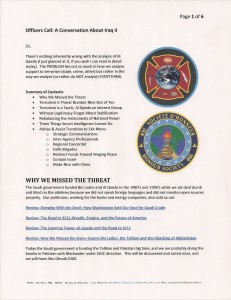
There's nothing inherently wrong with the analysis of Al Qaeda (I just glanced at it, if you wish I can read in detail today). The PROBLEM lies not so much in how we analyze support to terrorism (state, crime, other) but rather in the way we analyze (or rather do NOT analyze) EVERYTHING.
Here's what I have thrown together for you, in six pages with links.