Berto Jongman: Foreign Policy Exclusive: CIA Files Prove USA Helped Sadaam Hussein Attack Iran with Chemical Weapons

04 Inter-State Conflict, 05 Civil War, 05 Iran, 07 Other Atrocities, 08 Proliferation, 08 Wild Cards, Corruption, DoD, Government, Idiocy, Military, Officers Call, Peace Intelligence
Berto Jongman
Berto Jongman

Hypocrisy?

Exclusive: CIA Files Prove America Helped Saddam as He Gassed Iran

The U.S. knew Hussein was launching some of the worst chemical attacks in history — and still gave him a hand.

The U.S. government may be considering military action in response to chemical strikes near Damascus. But a generation ago, America's military and intelligence communities knew about and did nothing to stop a series of nerve gas attacks far more devastating than anything Syria has seen, Foreign Policy has learned.
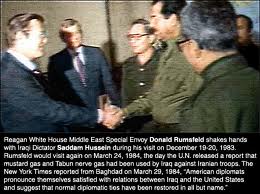
Source: https://www.indybay.org/newsitems/2003/03/11/15814941.php

In 1988, during the waning days of Iraq's war with Iran, the United States learned through satellite imagery that Iran was about to gain a major strategic advantage by exploiting a hole in Iraqi defenses. U.S. intelligence officials conveyed the location of the Iranian troops to Iraq, fully aware that Hussein's military would attack with chemical weapons, including sarin, a lethal nerve agent.

The intelligence included imagery and maps about Iranian troop movements, as well as the locations of Iranian logistics facilities and details about Iranian air defenses. The Iraqis used mustard gas and sarin prior to four major offensives in early 1988 that relied on U.S. satellite imagery, maps, and other intelligence. These attacks helped to tilt the war in Iraq's favor and bring Iran to the negotiating table, and they ensured that the Reagan administration's long-standing policy of securing an Iraqi victory would succeed. But they were also the last in a series of chemical strikes stretching back several years that the Reagan administration knew about and didn't disclose.

U.S. officials have long denied acquiescing to Iraqi chemical attacks, insisting that Hussein's government never announced he was going to use the weapons. But retired Air Force Col. Rick Francona, who was a military attaché in Baghdad during the 1988 strikes, paints a different picture.

“The Iraqis never told us that they intended to use nerve gas. They didn't have to. We already knew,” he told Foreign Policy.

Read full article (four screens, more links).

Milt Bearden: HIST 1 Oct 2009 TESTIMONY to SFRC “The War in Afghanistan, The Regional Effects”

08 Wild Cards, Lessons
Milt Bearden
Milt Bearden

PREPARED STATEMENT TO THE

SENATE FOREIGN RELATIONS COMMITTEE

BY Milton A. Bearden

October 1, 2009

The War in Afghanistan, The Regional Effects

Mr. Chairman, Senator Lugar, and Members of the Committee: I thank you for the opportunity to appear before you today to discuss U.S. strategy in Afghanistan and the possible effects on Pakistan of our future policies there.

U.S. Involvement, Eighth Year or 30th Year?

The search for a successful outcome in Afghanistan and neighboring Pakistan requires an understanding of how we arrived at this critical point in our Afghan undertaking, as well as new thinking on how we might proceed.  I have been involved in the region since the mid-1980s, when I was ordered to Pakistan by CIA director Bill Casey to manage America’s covert assistance to the Afghan resistance in their war against the occupation forces of the Soviet Union. I have remained active in Afghan and Pakistan matters in the intervening years, assisting in 2008, on the negotiations on legislation concerning Reconstruction Opportunity Zones in Pakistan and Afghanistan. More recently, I have been active in support of the United States Government’s efforts to stabilize Afghanistan through development and business stability operations.

As we discuss future policy options, we should bear in mind that America is not beginning its 9th year of involvement in Afghanistan; it is, rather, closing in on thirty years of intermittent association with a regional conflict that began with the Soviet Union’s 1979, invasion of Afghanistan. It is a history of three decades of action, neglect, and reaction that have had profound effects on American security and on Afghanistan, Pakistan and the other important players in the region.

Continue reading “Milt Bearden: HIST 1 Oct 2009 TESTIMONY to SFRC “The War in Afghanistan, The Regional Effects””

Mini-Me: Afghanistan in Transition – Regional Water Authority Emergent Centered In, Of, By, and Through Afghanistan

05 Iran, 08 Wild Cards, 12 Water
Who?  Mini-Me?
Who? Mini-Me?

Huh?

2013-08-26 Pakistan, Afghanistan mull over power project on Kunar River

ISLAMABAD: Pakistan and Afghanistan are moving towards joint management of common rivers starting with construction of a 1,500MW hydropower project on Kunar River — a major tributary of Kabul River contributing almost 13 million acres feet (MAF) annually to Pakistan.

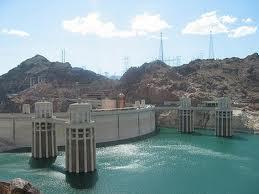
iran dam2013-08-21  Iran, Afghanistan, Tajikistan hold trilateral meeting on water, energy

DUSHANBE (NNI): Officials of water and energy sector from Iran, Afghanistan and Tajikistan held a trilateral meeting on the sidelines of an international conference on water cooperation on Wednesday.

During the meeting, Alireza Daemi, director of Water Catchment Department of the Iranian Energy Ministry and water and energy ministers of Afghanistan and Tajikistan emphasized the necessity of cooperation in implementing joint energy projects.

The construction process of Tajikistans Sangtoudeh-II power plant which will be completed by yearend with joint investment of Iran and Tajikistan was also discussed.

Continue reading “Mini-Me: Afghanistan in Transition – Regional Water Authority Emergent Centered In, Of, By, and Through Afghanistan”

Marcus Aurelius: Appraisal of Syrian Intervention Options and Costs + Syria Anti-War Meta-RECAP

04 Inter-State Conflict, 05 Civil War, 07 Other Atrocities, 08 Wild Cards, IO Deeds of War
Marcus Aurelius
Marcus Aurelius

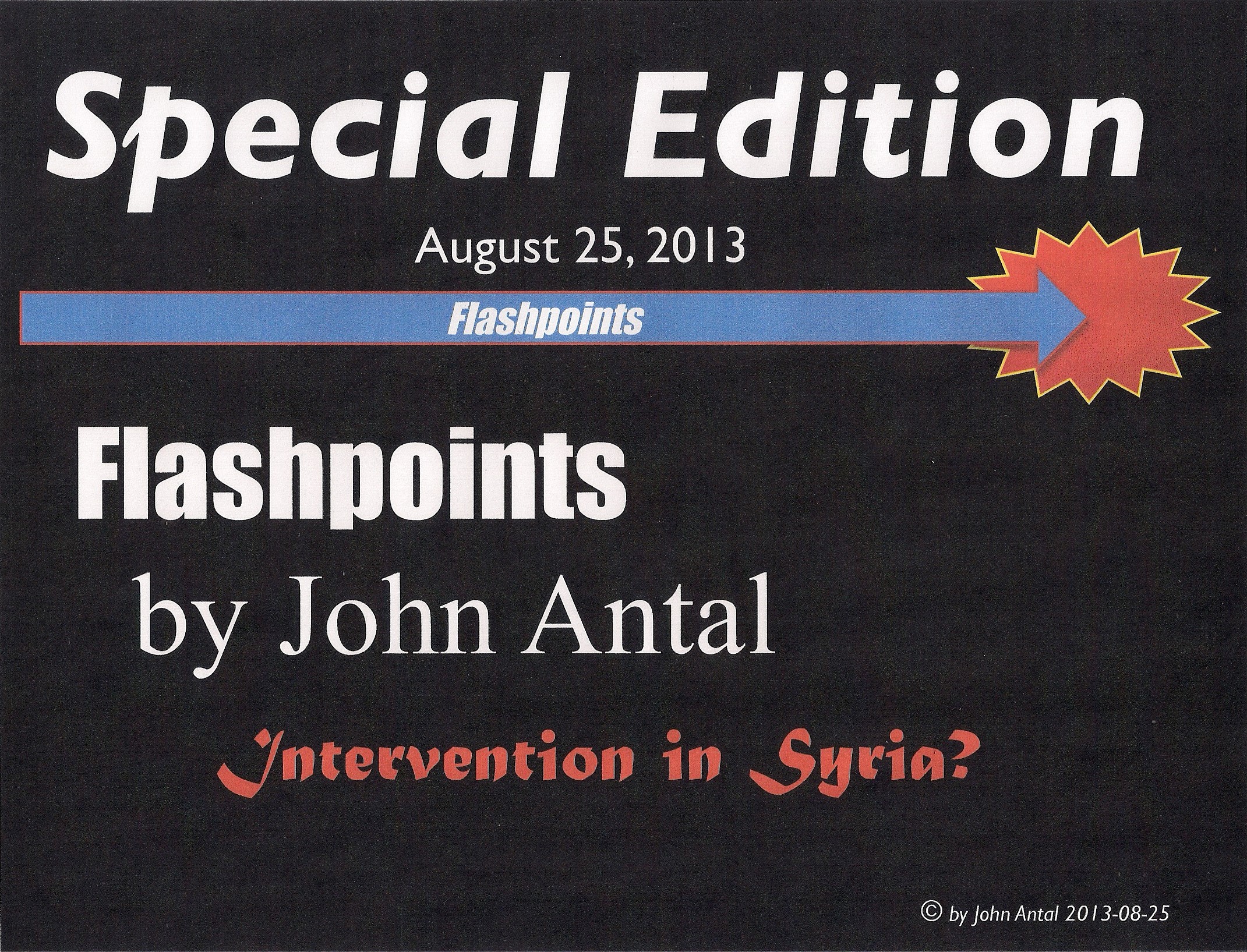
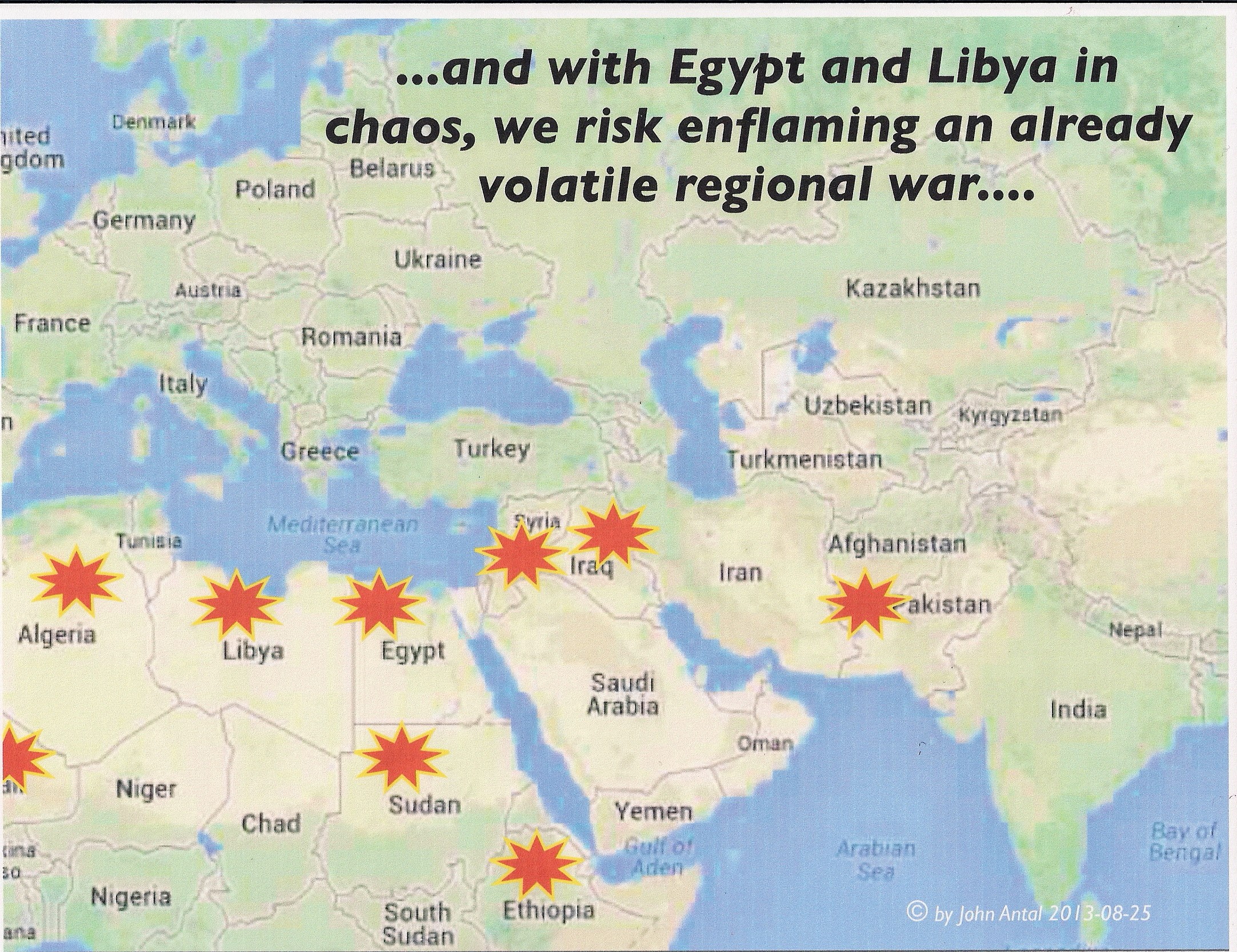
PDF (35): 2013-08-25 Intervention in Syria

Phi Beta Iota:  Below the line is a comprehensive index to posts on Syria by 4th Media, Berto Jongman, Chuck Spinney, David Swanson, DefDog, Franklin Lamp, Gordon Duff, Graphics, John Maguire, Kevin Barrett, Marcus Aurelius, Mini-Me, Neal Rauhauser, NIGHTWATCH, Owl, Paul Craig Roberts, Review, Stuart Littlewood, and Vladimir Putin.

Click on Image to Enlarge
Amazon Page
Amazon Page

Continue reading “Marcus Aurelius: Appraisal of Syrian Intervention Options and Costs + Syria Anti-War Meta-RECAP”

General and Ambassador Karl Eikenberry on the Persistent Failure of US Understanding in Afghanistan

02 Diplomacy, 03 Economy, 08 Wild Cards, 09 Justice, 10 Security, 11 Society, Corruption, Director of National Intelligence et al (IC), DoD, Government, Idiocy, Ineptitude, IO Deeds of War, Lessons, Military, Officers Call, Peace Intelligence
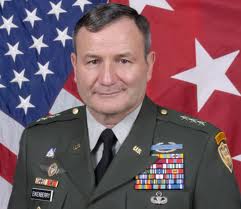
Karl W. Eikenberry
Karl W. Eikenberry

使用谷歌翻译在下一列的顶部。

गूगल अगले स्तंभ के शीर्ष पर अनुवाद का प्रयोग करें.

Google sonraki sütunun üstünde Çevir kullanın.

Используйте Google Translate на вершине соседней колонке.

گوگل اگلے کالم میں سب سے اوپر ترجمہ کا استعمال کریں.

Emphasis below added by Milt Bearden, former CIA chief in Pakistan also responsible for the field aspects of the CIA's covert support against Soviet forces in Afghanistan.

Foreign Affairs, September/October 2013

ESSAY

The Limits of Counterinsurgency Doctrine in Afghanistan
The Other Side of the COIN

Karl W. Eikenberry

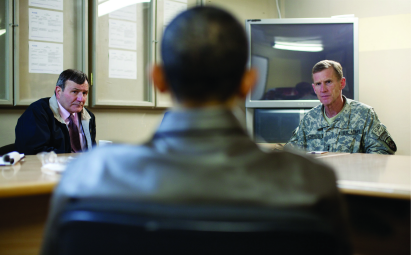
Eikenberry, Obama, and General Stanley McChrystal in Afghanistan, March 2010. (Pete Souza / White House)

KARL W. EIKENBERRY is William J. Perry Fellow in International Security at the Center for International Security and Cooperation at the Freeman Spogli Institute for International Studies at Stanford University. He served as Commanding General of the Combined Forces Command–Afghanistan from 2005 to 2007 and as U.S. Ambassador to Afghanistan from 2009 to 2011.

Since 9/11, two consecutive U.S. administrations have labored mightily to help Afghanistan create a state inhospitable to terrorist organizations with transnational aspirations and capabilities. The goal has been clear enough, but its attainment has proved vexing. Officials have struggled to define the necessary attributes of a stable post-Taliban Afghan state and to agree on the best means for achieving them. This is not surprising. The U.S. intervention required improvisation in a distant, mountainous land with de jure, but not de facto, sovereignty; a traumatized and divided population; and staggering political, economic, and social problems. Achieving even minimal strategic objectives in such a context was never going to be quick, easy, or cheap.

Of the various strategies that the United States has employed in Afghanistan over the past dozen years, the 2009 troop surge was by far the most ambitious and expensive. Counterinsurgency (COIN) doctrine was at the heart of the Afghan surge. Rediscovered by the U.S. military during the wars in Afghanistan and Iraq, counterinsurgency was updated and codified in 2006 in Field Manual 3-24, jointly published by the U.S. Army and the Marines. The revised
doctrine placed high confidence in the infallibility of military leadership at all levels of engagement (from privates to generals) with the indigenous population throughout the conflict zone. Military doctrine provides guidelines that inform how armed forces contribute to campaigns, operations, and battles. Contingent on context, military doctrine is
meant to be suggestive, not prescriptive.

Broadly stated, modern COIN doctrine stresses the need to protect civilian populations, eliminate insurgent leaders and infrastructure, and help establish a legitimate and accountable host-nation government able to deliver essential human services. Field Manual 3-24 also makes clear the extensive length and expense of COIN campaigns:  “Insurgencies are protracted by nature. Thus, COIN operations always demand considerable expenditures of time and resources.

Continue reading “General and Ambassador Karl Eikenberry on the Persistent Failure of US Understanding in Afghanistan”

Milt Bearden: HIST 9 April 2009 Obama’s War

08 Wild Cards
Milt Bearden
Milt Bearden

使用谷歌翻译在下一列的顶部。

गूगल अगले स्तंभ के शीर्ष पर अनुवाद का प्रयोग करें.

Google sonraki sütunun üstünde Çevir kullanın.

Используйте Google Translate на вершине соседней колонке.

گوگل اگلے کالم میں سب سے اوپر ترجمہ کا استعمال کریں.

Foreign Affairs, April 9, 2009

POSTSCRIPT

Obama's War
Redefining Victory in Afghanistan and Pakistan

Milton Bearden

MILTON BEARDEN served as CIA station chief in Pakistan from 1986 to 1989, where he was responsible for that agency's covert action program in support of the Afghan resistance to the Soviet-supported government.

Since the United States first dispatched troops to Afghanistan in October 2001, the war in Afghanistan has been an orphan of U.S. policy. But with the release last week of a revamped U.S. policy toward Afghanistan and Pakistan, the conflict has, by default, become Barack Obama's war.

In a Foreign Affairs essay [1] from November/December 2001, I chronicled the disasters that have befallen all foreign invaders of Afghanistan, from Alexander the Great to the Soviet Union. Now, more than seven years into the U.S. intervention, the Obama administration must confront many of the same problems faced by all previous
occupiers of this rugged land. How the United States manages its presence there over the next year will determine if it can break the pattern.

Continue reading “Milt Bearden: HIST 9 April 2009 Obama's War”

Milt Bearden: HIST March/April 2009 Curse of the Khyber Pass

08 Wild Cards
Milt Bearden
Milt Bearden

使用谷歌翻译在下一列的顶部。

गूगल अगले स्तंभ के शीर्ष पर अनुवाद का प्रयोग करें.

Google sonraki sütunun üstünde Çevir kullanın.

Используйте Google Translate на вершине соседней колонке.

گوگل اگلے کالم میں سب سے اوپر ترجمہ کا استعمال کریں.

National Interest, March/April 2009

Curse of the Khyber Pass

Milt Bearden

Milton Bearden is a retired CIA officer who managed the cia’s covert assistance to the Afghans from Pakistan during the Soviet occupation of Afghanistan. He also served in Hong Kong, Switzerland, Nigeria, Sudan and Germany.

As the United States settles into its . eighth year of military operations in . Afghanistan, and as plans for ramping up U.S. troop strength are under way, we might reflect on an observation made by the Chinese military sage, Sun Tzu, about twenty-five hundred years ago:

In military campaigns I have heard of awkward speed but have never seen any skill in lengthy campaigns. No country has ever profited from protracted warfare.

These words tell the tale of the string of superpowers that have found themselves drawn into a fight in the inhospitable terrain we now call Afghanistan. Their stories of easy conquest followed by unyielding rebellion are hauntingly similar, from the earliest accounts of Alexander’s Afghan campaign, when, in 329 bc, the great warrior found the struggle longer, more brutal and more costly than his battle in Persia. And through six centuries the Mughals never managed to bring the Afghans to heel, and most certainly not the Pashtuns. Of course, there were also the disastrous expeditions of Britain and the Soviet Union. Now it is up to the Obama administration to try to change the long odds in what will become America’s longest war.

Continue reading “Milt Bearden: HIST March/April 2009 Curse of the Khyber Pass”

noble gold