It always amazes me how the world's politicians and media spend most of their energy debating geopolitical prospects that are not going to happen, while ignoring major developments that are happening.
Here is a list of the most important coming non-events that we have been loudly debating and analyzing: Israel is not going to bomb Iran. The euro is not going to disappear. Outside powers are not going to engage in military action inside Syria. The upsurge of worldwide popular unrest is not going to fade away.
Meanwhile, to minimal serious coverage in the media and on the internet, the Nord Stream was inaugurated in Lubmin on Germany's Baltic Coast on Nov. 8 in the presence of Pres. Medvedev of Russia and the prime ministers of Germany, France, and the Netherlands, plus the director of Gazprom, Russia's gas exporter, and the European Union's Energy Commissioner. This is a geopolitical game-changer, unlike all the widely discussed non-events that are not going to happen.
Within human social and economic systems, pathogenic behavior is spreading. This is particularly true among powerful, successful, and wealthy people (finance, economics, politics, etc.) in the developed world. What specifically do I mean by pathogenic? An ever greater number of these people are adopting behaviors that are actively hostile to the human systems we rely upon. They actually think it is OK to put these systems at risk for personal benefit. This is very dangerous. Given the massive amounts of network, technological, and financial leverage that's currently available to these people, even a single bad actor can wreak global havoc like never before (as in, they could cause an economic collapse that's so severe that it could kill more people than every war we've ever had to date, combined).
So, why is this happening and how can we prevent it? This has been a tough section of the book I'm currently writing. Fortunately, I think I'm starting to unravel it. Here we go. In order to understand why some bad actors are willing to do grievous harm to the complex systems they rely upon, we need to visit the cutting edge of microbiology. Let's start that exploration with a look at an amazing article by Brett Finlay in the Scientific American called, “Stopping Infections: The Art of Bacteriological Warfare.”
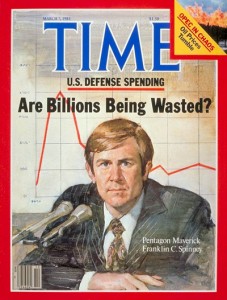
Paul Krugman recollects a point he made years ago that Chuck Spinney and Joseph Stiglitz and Martin Auerbach have been pressing home for over a decade. Absentee landlords and capital flight from the heartland. TWO sucking chest wounds.
Dean Baker raises an important point here: it’s really awfully late in the game to be saying that the important inequality issue is college graduates versus non-graduates. It’s not clear that this was ever true, and it certainly hasn’t been true for a while.
I wrote about this years ago, using Ben Bernanke’s maiden testimony as Fed chair as an entry point. As I said then, Bernanke — like many others — had made:
a fundamental misreading of what’s happening to American society. What we’re seeing isn’t the rise of a fairly broad class of knowledge workers. Instead, we’re seeing the rise of a narrow oligarchy: income and wealth are becoming increasingly concentrated in the hands of a small, privileged elite.
How can you help your community build a resilient energy system? One of the first steps is to buy back the energy system from the regional power company by condemning it and then municipalizing it (it can be run as a power co-op or as a standard company … The structure really depends on the community.). This moves provides you with the control of the local grid so that your community can:
Ensure higher levels of maintenance (tree trimming, etc.) and faster response to failure. During the two big power outages on the east coast this summer/fall, power was out for much of the region for nearly a week. In many cases, the municipal power companies get power back on to all of their customers in 1/2 the time of the big regional companies.
Cut rates and change energy mix. As a municipal company, you can select the different types of energy you will use locally.
Add advanced micro-grid features. Everything from community energy markets to local energy backup to power smoothing. Extra benefit of this approach: it will prevent the regional power company from using smart grid tech to snoop on everyone in the community by micro-analyzing energy use (which they will then resell to marketing companies or provide to the government w/o warrant for “signature” sniffing).
All of the benefits listed above will double or treble in importance as the global economy nose dives into depression over the next couple of years. So, it's better to get started early than later.
Here's a few links from the Boulder Colorado effort to condemn and municipalize it's power. A combo of bad service and a low level of renewables use prompted the effort (use whatever hooks you need to get it done, but get it done):
Citizen groups do the hard work. A technical group does the modelling and analysis for a municipal grid. They compare rates, costs, and energy mix Here's an amazingly video of a member of that team, Sam Weaver.
Homer software. The software you need to model a municipal grid from rate analysis to energy mix. The numbers.
NOTE: Great article in the NYTimes today on how the big regional companies are so focused on acquisitions, regulatory gaming, and extractative finance; they are delivering terrible service.
NOTE: Great pushback in the comments on how tough it is to do this. Basically, crony capitalism (revolving door, bribes, etc.) + regulatory capture (same mindset) + gov't granted monopoly = lots of opposition.
he Military – Industrial – Congressional Complex (MICC) is in panic city over what promises to be cosmetic cutbacks in the growth of the defense budget. The courtiers in Versailles on the Potomac, like the obedient editors of the Washington Post, are dutifully pumping out baloney about how dangerous it will be to cut the defense budget. The fact that the Pentagon cannot even account for all the money it receives is unimportant; after all, cutbacks in social security and medicare will pony up enough money to keep the MICC's party going, while the so-called deficit hawks impose austerity economics on the people (in the name of reducing federal debt — think of this as ‘not letting them eat cake') so the Federal Reserve can continue propping up the toxic private debt of the insolvent financial sector. And besides the Post needs the advertisement money from Boeing, Lockheed-Martin, and Northrup-Grumman.
My good buddy Mike Lofgren, who just retired with his sanity intact after working on Capital Hill as a Republican staffer for 28 years — no small achievement I might add — does not think much of whining in the Georgetown salons. Here's why (see CP op-ed below):
Chuck Spinney
BTW … the war between the MICC and Social Security and Medicare that is now being joined has very little to do with the so-called War on Terror — In fact, it is occurring right on schedule, if you doubt this, read this Op-Ed I wrote on this subject, in Sept 2000, one year before 9-11.
The Washington Post Boards the Pentagon Gravy Train
Over the last five years, we’ve spent money on the military – in real, inflation adjusted dollars – at a higher rate than at any other time since World War II. That includes the late 1960s, when the United States simultaneously faced a competitor with 10,000 nuclear weapons and sent a half million troops to Vietnam. The Pentagon is spending recklessly at a time of fiscal crisis when America’s debt has been downgraded for the first time since formal credit ratings began in 1917.
Yet the Washington Post has joined the hucksters of the military-industrial complex in forecasting imminent doom if one cent is cut from Pentagon budgets. Supposedly, the Defense Department has already cut $465 billion from its budget, and further cuts would be ruinous. But those $465 billion in cuts are fake, mostly paper “savings” pocketed by the president from adjustments to unrealistic past projections of the cost of the wars in Iraq and Afghanistan and from other baseline manipulations.