Tom: These days, when I check out the latest news on Washington’s global war-making, I regularly find at least one story that fits a new category in my mind that I call: What Could Possibly Go Wrong?
When you read this think of the hundreds of thousands of individuals, particularly young people and, most particularly, Black and Brown kids whose lives, and the lives of whose families, were derailed by arrest and incarceration for years or decades for tiny amounts of drugs, while this government supported dope trade was going on. You have to ask yourself: who are the real crimi! nals?
Is it any wonder that American's now see their government as the country's leading problem.
Editor's Note:The following Geopolitical Weekly originally ran in January 2013.
By George Friedman
When I wrote about the crisis of unemployment in Europe, I received a great deal of feedback. Europeans agreed that this is the core problem while Americans argued that the United States has the same problem, asserting that U.S. unemployment is twice as high as the government's official unemployment rate. My counterargument is that unemployment in the United States is not a problem in the same sense that it is in Europe because it does not pose a geopolitical threat. The United States does not face political disintegration from unemployment, whatever the number is. Europe might.
At the same time, I would agree that the United States faces a potentially significant but longer-term geopolitical problem deriving from economic trends. The threat to the United States is the persistent decline in the middle class' standard of living, a problem that is reshaping the social order that has been in place since World War II and that, if it continues, poses a threat to American power.
I don't work in the intelligence community but, IMHO, the most important issue here is logistics. Also IMHO, the fight among the drug cartels is a fight for control of the smuggling routes. Further IMHO, the long-established nexus between DTOs and terrorists suggests that it would be naive to believe that terrorists or VEOs [Violent Extremist Organizations, a more politically correct term] are not already exploiting the drug smuggling routes to move human, physical, and fiscal assets into the United States.
01 “Drugs Aren't a Foreign Policy Problem.”
02 “The Cartels Are Focused on Drugs.”
03 “But the Violence Is Unique to the Drug Trade.”
04 “At Least the Violence Is Contained to Mexico.”
05 “The Problem Is the War on Drugs. Legalization Would Help.”
06 “Decapitating the Cartels Will Render Them Powerless.”
07 “We Need to Hit Them Where It Hurts: the Wallet.”
Phi Beta Iota: A very strong piece. THINK AGAIN is a feature of the revitalized Foreign Policy offering, in which a number of conventional wisdom premises are brought together and critically challenged.
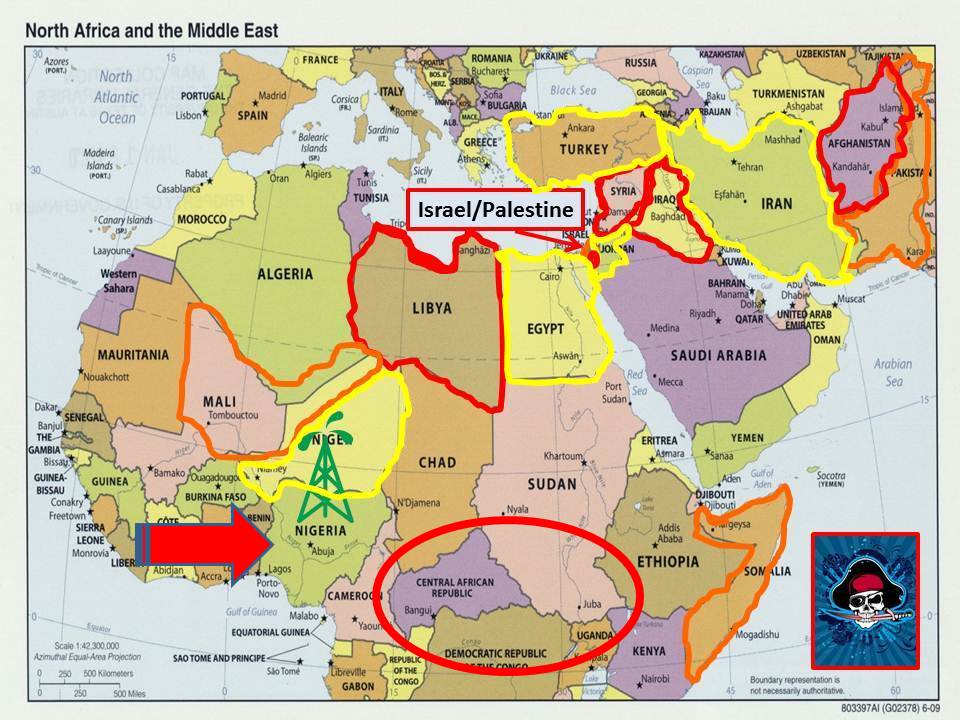
Special comment: For reasons that are not clear, many of the governments in Sub-Saharan Africa have been destabilized a year or so after the catastrophe of the Arab Spring uprisings. Countries in stress include Mauritania, Mali, Niger, Central African Republic, Nigeria, Congo Brazzaville, Congo Kinshasa, South Sudan and Somalia. These readily come to mind, but there are others, no doubt.
Sub-Saharan African has not experienced this extent of violent internal unrest since 1960.
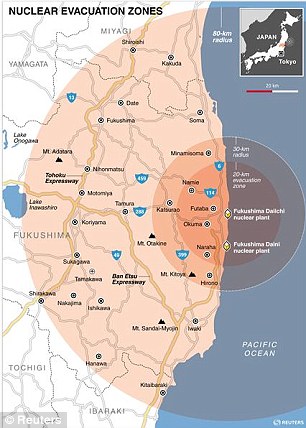
Global Research News Hour Episode 46. Conversations with Yoichi Shimatsu and Hatrick Penry
We knew the world would not be the same. Few people laughed, few people cried, most people were silent. I remembered the line from the Hindu scripture, the Bhagavad-Gita. Vishnu is trying to persuade the Prince that he should do his duty and to impress him takes on his multi-armed form and says,
Click on Image to Enlarge
“Now I am become Death, the destroyer of worlds.” I suppose we all thought that, one way or another.”
-Robert Oppenheimer, scientific director of the Manhattan Project which created the first atomic devices. [1]
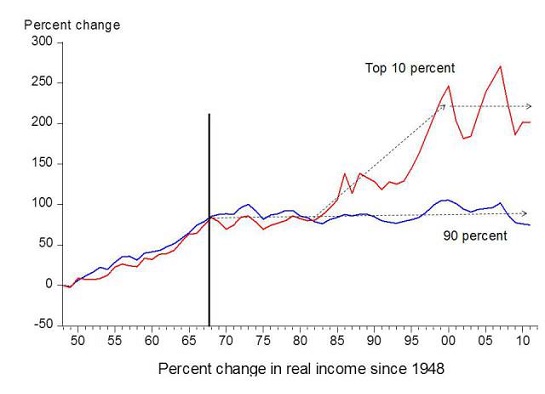
Inflating serial asset bubbles is no substitute for rising real incomes.
Why are we stuck with an economy that only generates serial credit/asset bubbles that crash with catastrophic consequences? Ths answer is actually fairly straightforward.
Click on Image to Enlarge
Let's start with the ideal conditions for an economy that depends on consumer spending.
1. Rising real income, i.e. after adjusting for inflation/currency depreciation, wages/salaries have more purchasing power every year.
2. An expanding pool of new households, i.e. young people who move away from home or graduate from college, get a job and start their own household. New households buy homes, vehicles, furniture, appliances, kitchenware, tools, etc., driving consumption far more than established households.
Neither of these conditions apply to today's economy. Income for the bottom 90% has been stagnant for forty years, and has declined 7% in real terms since 2000.

 Tomgram: Nick Turse, Secret Wars and Black Ops Blowback