Reference (2): United Nations Intelligence in Haiti

05 Civil War, 07 Other Atrocities, 08 Wild Cards, 10 Security, 10 Transnational Crime, 11 Society, Analysis, Augmented Reality, Ethics, Government, Historic Contributions, InfoOps (IO), Intelligence (government), IO Multinational, IO Sense-Making, Law Enforcement, Methods & Process, Military, Officers Call, Peace Intelligence, Real Time
Peace Operations: Seeing

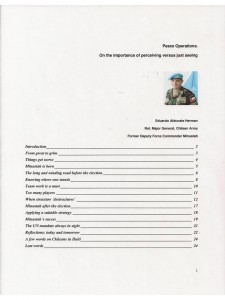
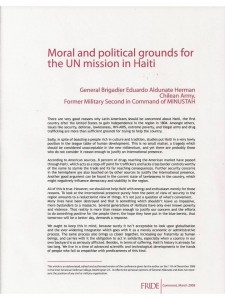
MajGen Eduardo ALDUNATE Herman, Chilean Army (Ret), served as the Deputy Force Commander of the United Nations Force in Haiti (MINUSTAH) in the earliest rounds, and was instrumental in both sponsoring the Joint Military Intelligence Analysis Center (JMAC) concept in its first modern field implementation, but also in evaluating most critically both the lack of useful intelligence from allies relying on secret sources and methods that did not “penetrate” to achieve gangs and neighborhoods; and the astonishing “one size fits all” propensity of the allies to treat every “threat” as one that could be addressed by force.


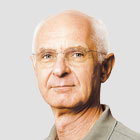
His contributions are helpful in understanding the more recent failure of allied relief operations in Haiti that again assumed that the use of armed bodies would address the problem, without making provision for real-world ground truth intelligence (CAB 21 Peace Jumpers Plus) or intelligence-driven harmonization of non-governmental assistance (Reverse TIPFID).

See Also:

Reference: Walter Dorn on UN Intelligence in Haiti

Reference: Civil Military Operations Center (CMOC)

2003 PEACEKEEPING INTELLIGENCE: Emerging Concepts for the Future

Books: Intelligence for Peace (PKI Book Two) Finalizing

Reference: Intelligence-Led Peacekeeping

Review: International Peace Observations

Search: UN intelligence peace intelligence

Journal: Human Intelligence (HUMINT) Successes

08 Wild Cards, 09 Terrorism, 10 Security, 10 Transnational Crime, Government, HUMINT, IO Multinational, IO Secrets, IO Sense-Making, Law Enforcement, Military, Peace Intelligence
Marcus Aurelius Recommends

(1) If true, probably a good idea.

(2) Appears that indiscretions abound.

Miami Herald November 6, 2010

Spy Agencies Use Ex-Captives To Infiltrate Al Qaeda

By Paisley Dodds, Associated Press

LONDON — Months after he was released from Guantánamo Bay, Abdul Rahman was back in the company of terrorist leaders along the Pakistan-Afghanistan border. But he was a double agent, providing Taliban and al Qaeda secrets to Pakistani intelligence, which then shared the tips with Western counterparts.

The ruse cost him his life, according to a former Pakistani military intelligence official, Mahmood Shah. The Taliban began to suspect him, and after multiple interrogations executed him.

The case of Rahman, which Shah recounted to The Associated Press, falls in line with a key aspect of the fight against terror — Western intelligence agencies, with help from Islamic allies, are placing moles and informants inside al Qaeda and the Taliban. The program seems to be bearing fruit, even as many infiltrators like Rahman are discovered and killed.

It was a tip from an al Qaeda militant-turned-informant that led international authorities to find explosives hidden in printer cartridges from Yemen to the United States a week ago, Yemeni security officials say. Officials say the explosives could have caused a blast as deadly as the Lockerbie bombing that killed 270 people.

Read rest of article….

Phi Beta Iota: Human Intelligence (HUMINT) done right, in the context of Open Source Intelligence (OSINT) done right, is the cheapest, fastest, and most effective means of creating intelligence (decision-support) at all levels from strategic to tactical.  After ten years of letting CIA get away with doing both badly, and ten years of the Pentagon's recovering from treating its HUMINT and CI people like shit, it appears that adults are finally back in charge.  We continue to under-budget for operational HUMINT and OSINT, and we continue to grossly over-spend on contractor vapor-ware for technical capabilities that simply do not deliver 96% of what what we need, but that is a separate issue.  It is good to see HUMINT (not OSINT) making some progress.  However, the continued absence of a strategic analytic model and honest governance means that these capabilities are not being focused on transnational crime or on white collar crime, where the most significant gains in the public interest are to be achieved.

See Also:

2010: Human Intelligence (HUMINT) Trilogy Updated
2009 DoD OSINT Leadership and Staff Briefings
Graphic: OSINT and Full-Spectrum HUMINT (Updated)
Graphic: OSINT and Lack of Processing
Graphic: Four Quadrants J-2 High Cell SMS Low
Graphic: Human Intelligence (HUMINT) 101 (Wrong Way)
Graphic: Human Intelligence (HUMINT) 102 (Right Way)

Journal: Putin to Obama–Stay in Afghanistan + RECAP

02 China, 03 India, 04 Inter-State Conflict, 05 Civil War, 06 Russia, 07 Other Atrocities, 08 Wild Cards, 09 Terrorism, 10 Security, 10 Transnational Crime, 11 Society, Analysis, Budgets & Funding, Corporations, Government, History, Intelligence (government), Methods & Process, Military, Misinformation & Propaganda, Peace Intelligence, Power Behind-the-Scenes/Special Interests, Secrecy & Politics of Secrecy, Strategy
Chuck Spinney Sounds Off....

Mikhail  Gorbachev, who has been neutralized by the succession of Russian rulers, especially Putin) has just advised President Obama to get out of Afghanistan.  Jonathan Steele suggests here (also attached below) that Obama ought to heed that advice, because Obama is in a similar albeit somewhat worse position than Gorbachev was in 1985-6.

Analogies are dangerous, because they can capture your thinking and take you off the cliff.  But here goes.

If Steele's analogy is accurate, it suggests some pregnant ramifications that are not addressed directly by Steele:  Russia (Putin and Medvedev) appear to be helping US/Nato in Afghanistan with training programs and by providing access routes for northern logistics lines of communication.  This cooperation serve both parties by improving relations in the short term, but it also helps US/Nato stay on its disastrous course in Afghanistan.  Are there other reasons why would Putin, an ardent nationalist, would what the US to remain stuck in Russia's backyard?

Russia needs help in staunching spillover of Sunni radicalism into its Moslem areas and its Central Asian sphere of influence (a variation of the original reason USSR invaded Afghanistan in 1979).  The US war on the Taliban serves that interest. So from Putin's point of view, keeping US/Nato bogged down in Afghanistan serves Russian national interests for free.

Putin, a former member of the KGB and an ardent nationalist, certainly knows the US fomented Sunni extremism in Afghanistan to sucker the Soviets into invading Afghanistan with the aimed of bogging the USSR down in its own VietNam-like quagmire (a policy proudly acknowledged by President Carter's National Security Advisor,Zbigniew Brzezinski in his notorious interview in Le Nouvel Observateur, January 1998). Putin must also know that the US/Nato engagement in Afghanistan, is (1) a huge resource drain that is weakening US economically and militarily, as well as  (2) weakening the bonds giving the US political control over its Nato allies.  From his point of view, these two outcomes would certainly improve Russia's relative power with respect to Europeans (especially Germany) and in the world, at the expense of the US.  Moreover, in Putin's eyes, these outcomes might seem to be justified as payback to the US.  After all, did not the US unleash the Islamic radicalism with its efforts to maneuver the USSR into Afghanistan in 1979 and did not the US humiliate Russia by the exploiting Russia's economic misery and military weaknesses, after Gorbachev had done the the US and the West a huge favor by precipitating collapse of the Soviet Union and ending the Cold War without bloodshed?

So, who should Obama and his advisors listen to?  Putin the nationalist and go for a short term political gain at expense of remaining stuck in the quagmire that serves Russia's interests, or Gobachev the statesman who advises Obama to bite the bullet and absorb short-term political pain to gain long term benefits of exiting a quagmire that is weakening the US economically and militarily?

Of course the war advocate could counter by saying this is based on an analogy run amok.  We are not making the gross mistakes the Soviets made in Afghanistan, and besides, it is cutting and running that weakens us.  After all, Gobachev is just an old man who refuses to see that his time has past and is struggling futilely to remain relevant.

Russia's Afghan agenda | Jonathan Steele

guardian.co.uk 10/27/10 10:00 PM Jonathan Steele

Gorbachev has valuable advice for the US on the war in Afghanistan that Putin would rather he keep to himself

The surprise in this week's reports that Russia is planning to help Nato in Afghanistan by training Afghan helicopter pilots is that people are surprised. Memories are short, it seems, for the shift in Moscow's line came as early as July last year during Barack Obama's first summit in the Kremlin.

Designed to press the “reset” button after east-west tempers flared over the war in Georgia, the meeting ended with several agreements, the most dramatic of which was Russia's nod for the US to send military supplies across Russian territory to its forces in Afghanistan. Dmitry Medvedev and Vladimir Putin wanted to give Obama a reward for taking a calmer view of Russia than George Bush, in particular for accepting Georgia's share of blame in the South Ossetian crisis and for cancelling the most provocative aspects of Bush's missile defence scheme which Moscow viewed as a threat.

Read rest of Jonathan Steele's article….

See Also (RECAP)

Continue reading “Journal: Putin to Obama–Stay in Afghanistan + RECAP”

NIGHTWATCH Extract: Somalia Anti-Piracy Update

08 Wild Cards, 10 Security, 10 Transnational Crime, Cultural Intelligence, Law Enforcement, Military, Peace Intelligence

Somalia anti-piracy patrol: Update. The Danish navy says it sank a Somali pirate boat in the Gulf of Aden. Spokesman Kenneth Nielsen said Wednesday that the command and control ship HDMS Esbern Snare intercepted a suspicious boat Tuesday, confiscated weapons and fuel, and detained six pirates. The Danes then used explosives to mine and sink the boat. The suspected pirates were later released since officials said no crime had been committed.

Earlier Wednesday, the European Union's anti-piracy force said pirates attacked but failed to hijack a French-flagged ship off the coast of Tanzania. The Danish navy ship is part of NATO's anti-piracy operation in the region.

European Union's anti-piracy force says the pirates are holding 19 ships and more than 420 hostages.

NIGHTWATCH Comment: After several years of trying, the some 40 ships on anti-piracy patrols have made scant progress against the pirates but have maintained skills.

NIGHTWATCH KGS Home

Secrecy News Headlines

10 Security, 10 Transnational Crime, Corruption, Government, IO Multinational, Law Enforcement, Methods & Process

**      ODNI ISSUES NEW SECURITY STANDARDS FOR INTEL FACILITIES

**      INFORMATION SHARING: FEAST OR FAMINE

**      POLYGRAPH TESTING AGAINST BORDER CORRUPTION

Phi Beta Iota: As long as the IC persists in sticking with the TS/SCI “all or nothing” approach to information, it will continue to fail in serving the  needs of virtually all of the current and all of the unrecognized but potentially legitimate customers for its proven sources and methods.  The Open Source Agency under diplomatic auspices, that includes both the 50 community intelligence networks managed by the National Guard as well as the Multinational Decision Support Centre with regional multinational Stations, are necessary first steps if intelligence is to be useful into the future.

Regarding the polygraph, it works and has been hugely successful within the International Commission Against Impunity in Guatemala (CICIG) and within the Government of Guatemala itself, with two major caveats: 1) polygraph results must be reported directly to the leadership by the polygraphers, we have seen polygraphs manipulated or fabricated by security managers intent on achieving specific personnel or political or budget goals; and 2)  out of area polygraphers are essential–in Central America, and we suspect in the Southwest border region as well, most local polygraphers have been employed by and well compensated by and are deathly afraid of, the narco-traffickers who know how to use the polygraph to keep their own ranks free of penetrations and betrayal from within.  A global cadre of polygraphers under deep cover is needed.

NIGHTWATCH Extract: Mexican Cartels Threaten Massacres

07 Other Atrocities, 08 Wild Cards, 10 Security, 10 Transnational Crime, Government, Law Enforcement, Military, Officers Call

Mexico: For the record. Suspected members of the Sinaloa drug trafficking cartel warned that they would kill 135 people after security forces seized 134 tons of marijuana last week in Tijuana, Baja California state, Milenio reported today, 25 October. The warning was made over a police radio frequency late on 24 October reportedly minutes after gunmen killed 13 patients at a drug rehabilitation center in Tijuana.

NIGHTWATCH KGS Home

Phi Beta Iota: This kind of indiscriminate mass murder in retaliation for what are relatively minor interdictions suggests that on the one hand, both the US and Mexican government have not only lost all control of the territory for which they are responsible for providing good order and public safety and security; but also that neither government has an effective intelligence capability to guide operations in detail.  We are reminded of how long it took to hunt down one man in Colombia, Pablo Escobar.   A MAJOR obstacle is the recalcitrance of the US secret intelligence community with $75 billion or more being applied to produce “at best” 4% of what is needed, to reinvent itself and engage in M4IS2: multinational, multiagency, multidisciplinary, multidomain information-sharing and sense-making.  The El Paso Intelligence Center (EPIC) is a massive failure precisely because it embodies all of the handicaps of the past and none of the advantages of the present.

See Also:

Review: Killing Pablo–The Hunt for the World’s Greatest Outlaw

America’s Next War: Southwest Border–Both Sides

03 Economy, 07 Other Atrocities, 08 Immigration, 08 Wild Cards, 09 Justice, 10 Security, 10 Transnational Crime, 11 Society, Government, Law Enforcement, Peace Intelligence

Phi Beta Iota: Most of the weapons being used by the cartels do NOT come from US gun shops.  They come from the Latin American militaries who have received large shipments of “older” weapons and ammunition from the US, and then turned around and sold them to the cartels.  Just as the US is indirectly funding the Taliban in Afghanistan, it is indirectly enabling the cartels with weapons.  Furthermore, to imagine that with the money they have the cartels cannot “order in” anything they wish from the Chinese, Israeli, or Russian arsenals, is naive in the extreme.  As many or more are dying violent deaths every day in this region as in Iraq or Afghanistan.  In our view, the current era of politicians (1981-date) is going to be held accountable for four major strategic blunders, all of them deliberate:

1.  Elective invasions and occupations of Afghanistan and Iraq on top of irresponsible military cuts and acquisition pathologies

2.  Willful acceptance from Bush Senior onwards of the willful destruction of the US economy for the benefit of a few led by Goldman Sachs, Citi-Bank, and Morgan

3.  Ignoring the depth and extent of the Southwest Border instability and threat to local communities

4.  Ignoring the imminent clean water crisis across the entire region as well as across America

On The Southwest Border (Photo Essay) (Latin America News Dispatch)

Posted by Molly OToole on Sep 15th, 2010

These photographs were taken on an 852-mile, 72-hour trip across the Southwest border, from San Diego, California to Arizona and back. Many citizens from the United States and Mexico have never seen the line that divides and defines their countries, marked by walls, barbed wire fences, U.S. Border Patrol checks and, increasingly, controversy.

2010 National Drug Threat Assessment: Southwest Border Smuggling and Violence

GAO: Border fence lagging, over budget, Home Security mismanaged project, report says (Washington Times, 24 October 2010)

Napolitano visits San Diego, says border is more secure from cartels (Los Angeles Times,October 18, 2010)

Time for U.S. to get serious about cartel threat (MySanAntonio, 16 October 2010)

Cartel Threat Grows, Illegal Numbers Drop (Homeland Security Today, 6 October 2010)

Pirate Lake: Mexican Bandits Terrorizing American Boaters on the Border (FOX.News, 4 October 2010)

Governor Perry Releases Statement on Border Violence (KRGV.com Texas, 2 October 2010)

SECURE BORDER INITIATIVE DHS Needs to Address Testing and Performance Limitations That Place Key Technology Program at Risk (GAO-10-158 January 2010)

Secure Border Initiative: SBInet Expenditure Plan Needs to Better Support Oversight and Accountability (GAO-07-309 February 15, 2007)

See Also:

Continue reading “America's Next War: Southwest Border–Both Sides”