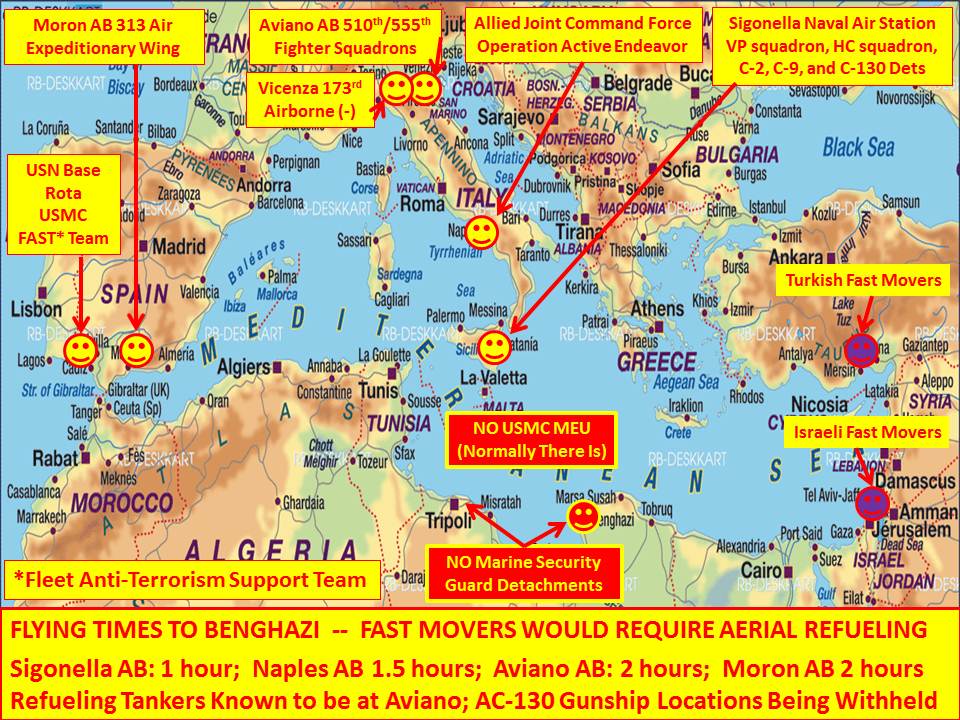
Senate Select Committee on Intelligence (SSCI) today released a declassified report on Sep 2012 attack on Consulate Benghazi. Invite your attention to SSCI press release, first below, and report's assessment of CJCS's performance as a leader, second below. Actual declassified and redacted report attached in PDF format.
Click on Image to Enlarge
NB: Key findings and recommendations, and complete downloadable PDF, below the line.
Announcement by Sam Adams Associates for Integrity in Intelligence (SAAII)
The Sam Adams Associates for Integrity in Intelligence (SAAII) have voted overwhelmingly to present the 2014 Sam Adams Award for Integrity in Intelligence to Chelsea (formerly Bradley) Manning.
The article titled Bridging the Global Information Governance Gap on IDM offers more governance advice from the findings of Recommind’s survey of US and UK companies. The survey posed questions related to information governance (IG), which is “a cross-departmental approach to optimising [sic] the value of information simultaneously associated risks and costs.” We had thought Recommind was a variant of the Autonomy type of system, we are learning new things every day. Their survey revealed that only 58% of companies in the US have an IG policy. The article quotes the global head of information governance at Recommind, Dean Gonsowski:
When you read this think of the hundreds of thousands of individuals, particularly young people and, most particularly, Black and Brown kids whose lives, and the lives of whose families, were derailed by arrest and incarceration for years or decades for tiny amounts of drugs, while this government supported dope trade was going on. You have to ask yourself: who are the real crimi! nals?
Is it any wonder that American's now see their government as the country's leading problem.
Conference organised by the Netherlands Intelligence Studies Association on 7 March 2014 at the Royal Netherlands Navy Barracks Kattenburgerstraat 7 te 1000 BA Amsterdam. Note: at the entrance identification is required (Passport, national ID-card or driver’s license).
As Michael Goodman and I tried to whimsically note in the sub-title of our edited collection on intelligence and the media – media needs intelligence and intelligence needs the media. The symbiosis of this relationship can be partly found in common expertise and practices (investigative zeal and tradecraft around weeding out hidden empirical detail), but also in the political or normative function of intelligence agencies, namely to constrain and repel certain forms of political discourse and activity deemed to be abhorrent to the majority, but more particularly which is abhorrent to the established political elites. So, at a very basic level media outlets learn much from the activities of intelligence agencies and the business they engage in. Similarly the agencies have both used mainstream media to shape debates (the Cold War and the War on Terror were notable examples), and to position adversaries in a particular way (and this might apply to every conflict since the printing press was invented). But what I want to rehearse here are the particular ways in which mainstream and parallel media sources – with a particular emphasis on the UK – have coalesced and acted within the NSA/Snowden furore, and the lessons we can learn from this.
Under Construction – Send Nominations to robert.david.steele.vivas@gmail.com
Updated 23 Jan 2014 14:58 E
Phi Beta Iota: The current literature on intelligence reform is underdeveloped and under-specified. An example of this under- or mis-specification can be seen in the treatment of 9/11. The dominant position that 9/11 was an intelligence failure is correct in principle. It was, however, a failure of counterintelligence not of warning. Ample warnings had been provided, including from 9 different nations warning the White House and the CIA in advance. George Tenet had a clear role in positioning the intelligence community away from these warnings, including ABLE DANGER. Keith Alexander seems to have shared this misplaced analytical view, along with the Acting Director of the FBI who was not able to lever influence when the actual Director resigned. 9/11 was – in effect – enabled by Dick Cheney, who ordered a national counter-terrorism exercise for “the day,” months in advance, despite the numerous and clear warnings — not to stop 9/11, but to allow it, embrace it, enhance it, and leverage it. Today's US Intelligence Community is dedicated to moving money — nothing more — and of course this is all Congress wants, with its eye on the standard 5% kick-back to sponsoring Members. It is not in any way, shape, or form committed to producing ethical evidence-based decision support applicable to national strategy, national policy, national acquisition, or national operations. Intelligence with integrity is not to be found in the US Government (good people, bad system — this is a meta-challenge). Most intelligence scholars are currently serving to bolster this system rather than to stand as critical friends to challenge and help in the reform of it.
Below the line is an integrated list from the past several years. This is everybody else. For an alternative perspective on intelligence reform, see 2014 Robert Steele on Intelligence Reform.




 ‘Social Media Intelligence (SocMint): Intelligent? No Borders? The Egg of Columbus? Raising Expectations? Risks, Challenges and Opportunities?’