
Patrick Meier: Data Protection: This Tweet Will Self-Destruct In…

Advanced Cyber/IO, Civil Society, Ethics
0Shares

Patrick Meier
Patrick Meier
The permanence of social media such as tweets presents an important challenge for data protection and privacy. This is particularly true when social media is used to communicate during crises. Indeed, social media users tend to volunteer personal identifying information during disasters that they otherwise would not share, such as phone numbers and home addresses. They typically share this sensitive information to offer help or seek assistance. What if we could limit the visibility of these messages after their initial use?

Click on Image to Enlarge

Enter TwitterSpirit and Efemr, which enable users to schedule their tweets for automatic deletion after a specified period of time using hashtags like #1m, #2h or #3d. According to Wired, using these services will (in some cases) also delete retweets. That said, tweets with #time hashtags can always be copied manually in any number of ways, so the self-destruction is not total. Nevertheless, their visibility can still be reduced by using TwitterSpirit and Efemr. Lastly, the use of these hashtags also sends a social signal that these tweets are intended to have limited temporal use.

Note: My fellow PopTech and Rockefeller Foundation Fellows and I have been thinking of related solutions, which we plan to blog about shortly. Hence my interest in Spirit & Efemr, which I stumbled upon by chance just now.
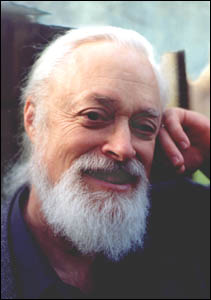
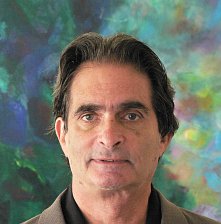
Tom Atlee: Bias warps reason. Does deliberation ameliorate that?

Cultural Intelligence
0Shares
Tom Atlee
Tom Atlee

Research shows that individuals bend facts and math to align with their existing views. But does this happen when they’re in high quality interactive deliberative forums?

A recent Salon article “Study Proves That Politics and Math Are Incompatible” reports that research led by Yale law professor Dan Kahan demonstrates that “it’s easier than we think for reasonable people to trick themselves into reaching unreasonable conclusions. Kahan and his team found that, when it comes to controversial issues, people’s ability to do math is impacted by their political beliefs.”

Researchers reported that both conservative Republicans and liberal Democrats got poor grades on mathematically interpreting data about “the effectiveness of concealed carry laws… [W]hether or not people got the question right depended on their political beliefs – and whether or not the correct answer supported their preconceived notions of gun control.” Interestingly, “The people who were normally best at mathematical reasoning… were the most susceptible to getting the politically charged question wrong.”

Continue reading “Tom Atlee: Bias warps reason. Does deliberation ameliorate that?”

Jon Rappoport: The trick beyind occult systems…

Cultural Intelligence
0Shares
Jon Rappoport
Jon Rappoport


The trick behind occult systems

www.nomorefakenews.com

It should be obvious to readers who’ve been with me for a while that I attack delusion in more than one place. Political systems, medical systems…and so-called spiritual systems.

That’s because I happen to believe in legitimate limited government, healing, and the unbounded life of the individual spiritual being.

Occult systems, which propose they have a hidden secret at the core, which will be revealed after a long and exhaustive search, are, at best, deluded, because they are concealing CONTENT.

By content, I mean information, knowledge, pattern, some facet of what already exists. This is a dead-end.

There is nothing wrong with truthful information. But….

Suppose we had a secret society called The Inner Core Flame X42. And we sold our members on the idea that, after a series of ascending initiations, they would arrive at the X, the secret of secrets.

Well, what could X be? Some nugget of information, some formula or phrase or fact or made-up fact about existence that is supposed to solve problems and enlighten consciousness.

But consciousness is dynamic. It isn’t a key looking for a lock.

Consciousness is dynamic because it creates. It creates new realities.

It isn’t primarily a container for What Is, for what already exists.

If there is a secret about consciousness, that’s it. IT CREATES.

Owl: Why Has Qatar Spent $3B on Syrian Rebels? And Saudi Arabia? And Why Does Russia Want Syria to Stick “As Is”? Natural Gas!

04 Inter-State Conflict, 05 Civil War, 05 Energy, 06 Russia, 07 Other Atrocities, 08 Proliferation, 08 Wild Cards, Commercial Intelligence, Earth Intelligence, Officers Call
0Shares

Who?  Who?
Who? Who?
“Why has the little nation of Qatar spent 3 billion dollars to support the rebels in Syria? Could it be because Qatar is the largest exporter of liquid natural gas in the world and Assad won't let them build a natural gas pipeline through Syria? Of course. Qatar wants to install a puppet regime in Syria that will allow them to build a pipeline which will enable them to sell lots and lots of natural gas to Europe. Why is Saudi Arabia spending huge amounts of money to help the rebels and why has Saudi Prince Bandar bin Sultan been “jetting from covert command centers near the Syrian front lines to the Élysée Palace in Paris and the Kremlin in Moscow, seeking to undermine the Assad regime”? Well, it turns out that Saudi Arabia intends to install their own puppet government in Syria which will allow the Saudis to control the flow of energy through the region.

On the other side, Russia very much prefers the Assad regime for a whole bunch of reasons. One of those reasons is that Assad is helping to block the flow of natural gas out of the Persian Gulf into Europe, thus ensuring higher profits for Gazprom. Now the United States is getting directly involved in the conflict. If the U.S. is successful in getting rid of the Assad regime, it will be good for either the Saudis or Qatar (and possibly for both), and it will be really bad for Russia. This is a strategic geopolitical conflict about natural resources, religion and money, and it really has nothing to do with chemical weapons at all.”

…there were two proposed routes for the pipeline. Unfortunately for Qatar, Saudi Arabia said no to the first route and Syria said no to the second route. The following is from an absolutely outstanding article in the Guardian…

Continue reading “Owl: Why Has Qatar Spent $3B on Syrian Rebels? And Saudi Arabia? And Why Does Russia Want Syria to Stick “As Is”? Natural Gas!”

Berto Jongman Et Al: Syria 3.0

03 Environmental Degradation, 04 Inter-State Conflict, 05 Civil War, 07 Other Atrocities, 08 Proliferation, 08 Wild Cards, Peace Intelligence
0Shares
Berto Jongman
Berto Jongman

Berto Jongman: Iran-Contra Redux – Prince Bandar of Saudi Arabia in the Lead…

Berto Jongman: On Obama's attack on Syria: Phil Donahue Interviews Andrew Bacevich

Berto Jongman: Syrian Electonic Army – No Link to Iran

David Swanson
David Swanson

David Swanson: 12 U.S. Intelligence Officials Tell Obama It Was Not Assad

Jon Rappoport
Jon Rappoport

Jon Rappoport: Syria: a vote of no-confidence in the President

Paul Craig Roberts
Paul Craig Roberts

Paul Craig Roberts: Greg Hunter Interviews PCR – Another Step Toward WWIII

Winslow Wheeler
Winslow Wheeler

Winslow Wheeler: Don't Be So Sure Syrian War Will Cost So Little…

Steven Aftergood: CRS Special – War in Afghanistan: Campaign Progress, Political Strategy, and Issues for Congress

04 Inter-State Conflict, 05 Civil War, 08 Wild Cards
0Shares

Steven Aftergood
Steven Aftergood
War in Afghanistan: Campaign Progress, Political Strategy, and Issues for Congress

Catherine Dale

Specialist in International Security

August 29, 2013

Summary

This is a critical time for U.S. efforts in the war in Afghanistan. In his 2013 State of the Union address, President Obama announced that the U.S. troop presence in Afghanistan would draw down by an additional 34,000 troops, to about 33,000, by February 2014, and that by the end of 2014 “our war in Afghanistan will be over.” Further decision-making regarding the U.S. force presence in Afghanistan, including after the end of NATO’s International Security Assistance Force (ISAF) mission at the end of 2014, is expected later this year. Yet while troop levels tend to steal the headlines, far more fundamentally at stake is what it would take to ensure the long-term protection of U.S. interests in Afghanistan and the region.

Continue reading “Steven Aftergood: CRS Special – War in Afghanistan: Campaign Progress, Political Strategy, and Issues for Congress”