David Swanson: How Broke Do We Have to Be To Stop Trillion Dollar Pork?

03 Economy, Corruption, Government, Idiocy
0Shares
David Swanson
David Swanson

by Lisa Savage and Janet Weil

The omnibus military spending bill known as the National Defense Authorization Act (NDAA) rolled out of the House Armed Services Committee pulling a trailer load of amendments and barreling down an increasingly potholed road. In the same week as news broke of massive school closings in Chicago and Philadelphia for lack of funding, only two members of the committee, California representatives Jackie Speier and John Garamendi, had the presence of mind to vote “no” on $637.5 billion more for drones, nukes, and missile “defense” in FY2014.

The NDAA will now make its way through a House of Representatives packed with liberals and conservatives who take massive campaign contributions from military contracting firms. Democrats will take their lead from President Obama, who proposed the $1.15 trillion annual budget that includes a whopping 56.5% military share of the discretionary spending pie.  Source: NationalPriorities.org

Despite the crisis of sequestration and claims that the U.S. is too broke to adequately fund food stamps, Head Start, or “Meals-on-wheels” for the elderly, the NDAA contains $85.8 billion for the war in Afghanistan plus another $7.7 billion for the Afghan Security Forces. These funding levels are $52.2 billion over what sequestration would supposedly require — an additional $1 billion a week.

The House Armed Services Committee also passed a “Sense of Congress” endorsement of a continued U.S. military presence in Afghanistan after 2014 as well as ongoing funding for the Afghan Security forces. Thus the U.S. “withdraws” from Afghanistan.

Why does Congress keep voting for military spending when the U.S. is supposedly so broke?

Continue reading “David Swanson: How Broke Do We Have to Be To Stop Trillion Dollar Pork?”

Vladimir Putin: Syria My Way — An Overview

04 Inter-State Conflict, 05 Civil War, 06 Russia, 08 Wild Cards, Government, Media, Military
0Shares
Vladimir Putin
Vladimir Putin

Western-Backed Insurgents suffer “Stalingrad-like Defeat” in Qasair. Syrian Army wins Decisive Victories throughout Syria

Christof Lehmann (nsnbc),- On Saturday 8. June 2013 the Syrian Arab Army has won decisive battles over western-backed insurgents in Qasair and throughout the country. In Qasair, the last pockets of resistance in al-Budweia al Sharquia were fought down and the armed forces are restoring security and are bringing relieve to the cities occupants.

Syrian armed forces won decisive battles against the insurgents throughout the country and security is being reestablished in the country with the exception of small, residual pockets. The risk of terrorist attacks, sniper attacks, car bombs and the terrorism in general remains high, while major combat operations are most likely completed. 

In a statement on Friday, Russia´s Foreign Minister Sergei Lavrov explained, that the number of remaining insurgents in Qasair was in the hundreds, rather than in the thousands, and that most of them are from European and regional countries, saying:

“Hundreds rather than thousands of gunmen are fighting the Syrian army and that those are of European nationalities and from the regions countries, which is why there is increased importance to end the crisis and create favorable conditions to hold the international conference on Syria”. 

The total number of remaining foreign fighters is estimated be different sources, between 5.000 and 10.000. On Saturday, the Syrian armed forces initiated decisive operations and restored security in most of Syria. A Syrian military source stated about Qasair, that the army is:

“going ahead with removing the debris of destruction and the barricades set up by the terrorists, while engineering units are dismantling explosives which were planted or left behind by the insurgents”.

Units of the Syrian armed forces also inflicted heavy losses to insurgents in other areas and report of large numbers of killed insurgents.

Continue reading “Vladimir Putin: Syria My Way — An Overview”

Akbar Ahmed: Drones kill three bad guys — and 30 innocents

04 Inter-State Conflict, 07 Other Atrocities, 09 Terrorism, Government, Idiocy, IO Deeds of War
0Shares
Ambassador Ahmed Akbar

Drones kill three bad guys — and 30 innocents: Akbar Ahmed

Jun 12, 2013, 12.00AM IST [ Sameer Arshad ]

The latest drone strike to hit Pakistan's tribal region came days after the country's new Prime Minister Nawaz Sharif demanded an end to such attacks. Academic Akbar Ahmed has authored The Thistle and the Drone on the dynamics of drone strikes. Speaking with Sameer Arshad, Ahmed discussed why drones are ineffective, the fall-out of using these, the US-Pakistan relationship — and how the Taliban has grown in power but could also face resistance:

What do drone strikes just before and after Nawaz Sharif's inauguration reflect about US policies towards his government?

These reflect a certain contradiction in American policy — these almost suggest a confrontation with the new PM which the US does not want.

However, Sharif is a seasoned politician. He will find a way out to maintain Pakistan's integrity while America pursues its aims. The relationship is mutually beneficial and important to both.

Are drone strikes making the world safer?

I can categorically answer that in the negative. Apart from the dubious arguments justifying drones, this is a highly ineffective method of checking violence. With every three bad guys killed, there are some 30 innocent women and children who die. And every strike feeds into anti-Americanism — after over a decade of using drones, neither have suicide bombers stopped, nor have those following them dwindled.

We need other methods of checking violence effectively.

Continue reading “Akbar Ahmed: Drones kill three bad guys — and 30 innocents”

Jean Lievens: Michael Schmidt on The Internet & Ideology — war between the parasitic and productive classes

Collective Intelligence, Commercial Intelligence, Cultural Intelligence
0Shares
Jean Lievens
Jean Lievens

Internet & Ideology

Against the Nationalist Fragmentation of Cyberspace & Against “Astroturf Activism”

The Arab Spring redrew the battle-lines between over the control of information between the statist/capitalist elites and the popular classes – raising questions of increased restriction and surveillance, and of the limits of cyber-activism. In some ways this battle is often mischaracterised as being a narrow debate between cool intellectual property technocrats and wild-eyed free-use pirates, or as being a political dispute between authoritarian regimes and free speech activists, with no wider relevance to society. But it is clear that what is at stake is the global ideology (and exploitative practice) of corporatist enclosure versus that of the creative commons; in other words, it is more even than a universalist human rights concern, but is rather an asymmetrical war between the parasitic and productive classes over a terrain of power/wealth-generation known as the knowledge economy.

Continue reading “Jean Lievens: Michael Schmidt on The Internet & Ideology — war between the parasitic and productive classes”

SchwartzReport: Japan Solar Power Replaces Seven Nuclear Reactors — In ONE YEAR

03 Economy, 05 Energy, 07 Health, 08 Wild Cards, 11 Society, Commerce, Ethics, Government
0Shares

schwartz reportThe Germans have done it. The Japanese are doing it. We remain in the grip of the carbon energy barons.

Japan: The World's New Star in Solar Power

FORTUNE — Until recently less than 1% of Japan's electrical power output came from renewables. But following the catastrophe of Fukushima and the power blackouts that followed, Japan has seen an explosion in investment in alternatives. Solar, in particular, in this averagely photon-blessed country, has seen a seismic rise of late and is this year poised to become the world's largest solar market in volume after China.

According to a report by energy analyst IHS on Japan's energy mix, Japan's solar installations jumped by “a stunning 270% (in gigawatts) in the first quarter of 2013.” That means by the end of 2013 there will be enough new solar panels equal to the capacity of seven nuclear reactors. Such massive growth will allow Japan to surpass Germany and become the world's largest photovoltaics (PV) market in terms of revenue this year.

“Japan is forecast to install $20 billion worth of PV systems in 2013, up 82% from $11 billion in 2012,” IHS said. “In contrast, the global market is set for tepid 4% growth. The strong revenue performance for Japan this year is partly driven by the high solar prices in the country.” Germany still leads with the total number of units and capacity, however, with its 32,192 megawatts. Japan is now closer to the U.S.'s 8,069 megawatts at 7,429 megawatts, according to London-based BNEF.

Read full article.

Jim Clapper: Do I Really Want to Be Here? + Robert Steele’s Simple Guide to Fixing National Intelligence + Intelligence Failure Meta-RECAP 2.0

Ethics
0Shares
Jim Clapper
Jim Clapper

Americans Must Call for Independent Counsel and Ouster of Clapper (Forbes)

Fire James Clapper: The Director of National Intelligence lied to Congress about NSA surveillance. What else will he lie about? (Slate)

James Clapper, NSA and the “L” word (Washington Post)

James Clapper Reassures Private Contractors In Wake Of NSA Leak (Huffington Post)

N.S.A. Disclosures Put Awkward Light on Previous Denials (New York Times)

Sen. Wyden: Clapper didn’t give ‘straight answer’ on NSA programs (Washington Post)

White House: Clapper was ‘straight and direct’ in testimony on NSA(The Hill)

Clapper told Mitchell that he tried to answer the question about classified information in the “least untruthful” manner possible.

Continue reading “Jim Clapper: Do I Really Want to Be Here? + Robert Steele's Simple Guide to Fixing National Intelligence + Intelligence Failure Meta-RECAP 2.0”

Dr. Russell Ackoff (P): Reflections on Intelligence Leaks and Contractors 1.1

Commerce, Ethics
0Shares
Dr. Russell Ackoff
Dr. Russell Ackoff

Reflections on Intelligence Leaks and Contractors

Dr. Russell Ackoff (P)

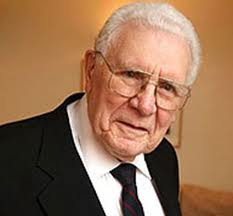
Congressmen and others are suggesting that, because it was a contractor who leaked information about NSA’s surveillance activities, that the number of contractors in intelligence should be reduced.  Is it true that reducing contractors will reduce leaks?

Leaks can be measured in several different ways — by number of leaks, importance of the material, by motivation, number of pages, signals versus other types, or weighted toward the present.   Yet in all categories,
contractors have proven to be no more likely to leak compared to direct hires, including especially executives.

That’s not surprising because there is little difference between the two types of employees.  In the latest census of those cleared at the Top Secret level, the employment status could not be determined for over 7% (or 100,000).   Many contractors are former direct hires, and vice versa; a worker might change status without even changing his desk or assignment.   Direct hires and contractors are vetted exactly the same way, except that contractors undergo even longer delays and more inconvenience.   Contractors tend to change assignments more often – that is their main benefit – but the pace of reassignment has quickened among direct hires as well.  Both types tend to remain employed within the intelligence community, often within one or two agencies.

Edward Snowden had been a CIA employee.  He underwent extensive vetting, then extensive training and acculturation prior to stationing overseas.  He was committed to a career in intelligence, as much as any 29-year-old unmarried techie can be said to be committed.   Booz Allen, his employer for 3 months, was a convenient administrative apparatus for positioning him where his computer skills were needed within the NSA universe.

There is no evidence to suggest that contractors are more likely to leak, therefore an increase in the proportion of direct hires would not reduce leaks.  One might claim instead that an overall reduction of the
intelligence workforce would reduce leaks.  There is no evidence to substantiate that claim either, but the larger point is that we are creating a hash out of two separate issues.  There are legitimate questions
about how to shape the intelligence workforce, and leaks have little to do with it.  There are legitimate questions about how to prevent leaks, and shaping the workforce has little to do with it.

The case of Edward Snowden is well worth pondering for what is says about leaks, but not for what is says about contractors.  Leaking is a very big discussion that should not be hijacked by another agenda that needs to stand on its own.  If Congressmen want to reduce contracting, they need to make the case fairly and dispassionately.  This is rarely attempted,  including by the Post, perhaps because it is so much easier to excite
emotions and prejudices against contractors.  Yet contractors are, for the most part, hardly different from direct hires.  They are just doing the job that Congress asked for and paid for.

See Also:

Dr. Russell Ackoff (P) on IC and DoD + Design RECAP