John Maguire: YouTube Audio (1:21:36) Blue Science’s Matt Pulver: Subquantum Kinetics, Pathological Science, and Modeling Consciousness

Collective Intelligence, Commercial Intelligence, Cultural Intelligence
0Shares
John Maguire
John Maguire

Published on May 17, 2013

Interview with Physicist and Consciousness Researcher Matt Pulver on the topics of Theoretical Physics, the Sociology of Science, and Consciousness/Perception. Matt works with Dr. Paul LaViolette in modeling Subquantum Kinetics; Dr. Paul's novel systems approach to microphysics and cosmology. Matt is also the coordinator of Project Camelot's Blue Science, an undertaking intended to expand public awareness of ‘Censored Science'. Reference Abstracted Outline below for effective skimming:

0.min-6.min: Matt's Academic experience; Project Camelot/Blue Science; Funding in Academia; the Independent Researcher; Kerry Cassidy

6.min-30.min: Collaberative work with Dr. Paul LaViolette; Predictions of Subquantum Kinetics; String Theory as a Brain Drain; Particles as Dissipative Structures; Gravity; Unaccounted Core Energy in Planets/Stars; Genic Energy; Galactic Superwaves; Pioneer Anomaly;  Was There a Big Bang; Red Shift as a Doppler Effect; Red Shift as Tired Light Effect; Micro Physics as an Open System Phenomenon

31.min-37.min: Science in Academia; Was the Ether Disproven; Politics of the Master Game; Black Projects; Phil Schneider and Underground Bases; Sociology of Science; Thrive Movie

38.min-54.min: Ra and the Law of One; Space for Spirituality; Gödel's Theorem; Philosophy/History of Mathematics; Consciousness; False-Flags; What Is Truth; Russell's Paradox; Formal Number Theory; Shortcomings/Limitations of Mathematical Logic/Proofs; Qualitative vs. Quantitative Thinking

55.min-1.hour.2.min: Structure of Consciousness; Altered Perception; Limitations of Awareness; Archetypes and Artifacts; Embracing Paradox and Holism

1.hour.3.min-1.hour.21.min: Where Does Consciousness Come From; Self-Awareness and God; Electrogravitics; Reverse Engineering B2-Bomber; T. Townsend Brown; Anti-Gravity; Cloaking/Stealth; Philadelphia Experiment; Gravitational Potential/Vector Force; The Scalar Ether; Over-Unity Prototypes

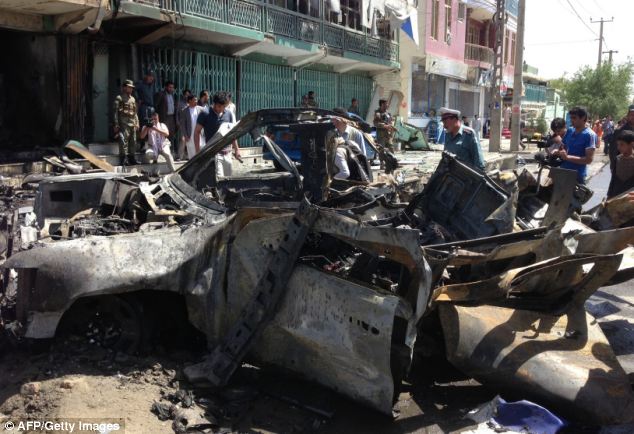
 

Dolphin: Six Americans Killed as Taliban Targets NATO

08 Wild Cards, Commerce, Ethics, Government, IO Deeds of War, Military, Officers Call, Peace Intelligence
0Shares
YARC YARC
YARC YARC

‘Six Americans' killed in suicide bomb in Afghanistan as Taliban target NATO workers

Muslim militant group, Hizb-e-Islami, claimed responsibility for attack
U.S. Defense Secretary confirmed two of the dead are US soldiers
Nationality of four civilian contractors not yet officially announced
Powerful explosion rattled buildings on the other side of Kabul
Identity of dead Americans has not yet been released

By Anna Edwards

MailOnline, : 01:40 EST, 16 May 2013

Click on Image to Enlarge

Read full article with video and more photographs.

Continue reading “Dolphin: Six Americans Killed as Taliban Targets NATO”

DefDog: Russian Fleet Enters Mediterranean, Parks at Cyprus

04 Inter-State Conflict, 05 Civil War, 06 Russia, 08 Wild Cards, Ethics, Government, IO Deeds of Peace, Military, Officers Call
0Shares
DefDog
DefDog

Ho ho ho….

Russian Pacific Fleet Warships Enter Mediterranean For First Time In Decades, To Park In Cyprus

Zero Hedge, 16 May 2013

Earlier we reported that the US has now officially landed a Marine force in Israel as well as an assault ship, in a visit that the US Navy promptly assured “is not associated with, nor a reaction to, any world events.” It seems we were not the only ones who read this justification somewhat skeptically: so did Russia.

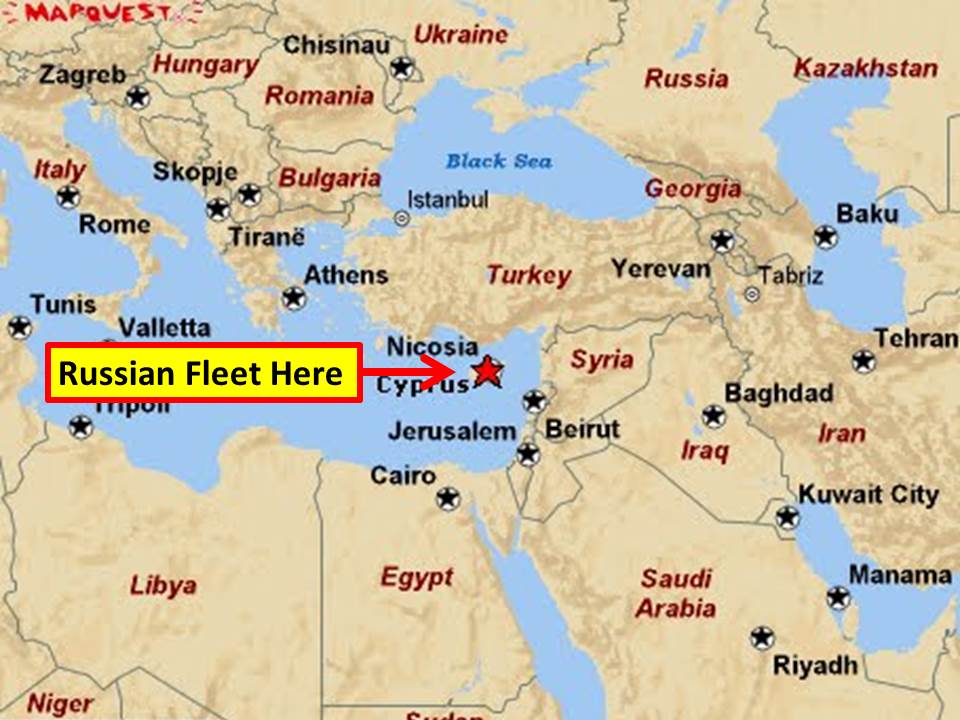
And in a historic event, the Russian Pacific fleet, for the first time in decades, crossed the Suez Canal and entered the Mediterranean, direction Cyprus' port of Limasol (hi Cyprus – Russia will be arriving shortly) in what is now the loudest implied warning to the US and Israel amassing military units across Syria's border that Russia will not stand idly by as Syria is used by the Israeli “Defense” Forces for target practice.

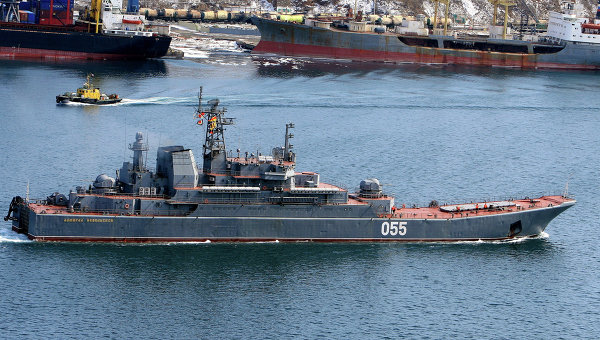
Russian Amphibious Ship Admiral Nevelskoi - Click on Image to Enlarge
Russian Amphibious Ship Admiral Nevelskoi – Click on Image to Enlarge

The task force has successfully passed through the Suez Channel and entered the Mediterranean. It is the first time in decades that Pacific Fleet warships enter this region,” Capt. First Rank Roman Martov said. This is what is also known as dropping hints, loud and clear.

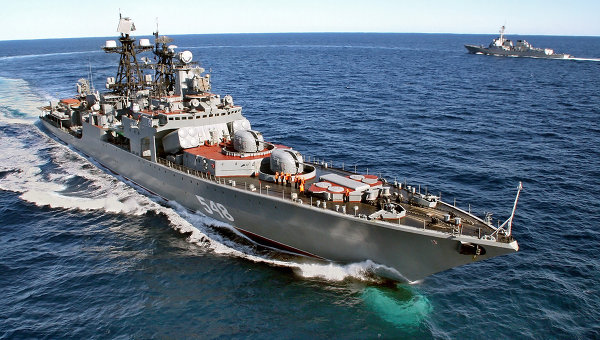
Admiral Panteleyev destroyer - Click on Image to Enlarge
Admiral Panteleyev destroyer – Click on Image to Enlarge

The group, including the destroyer Admiral Panteleyev, the amphibious warfare ships Peresvet and Admiral Nevelskoi, the tanker Pechenga and the salvage/rescue tug Fotiy Krylov left the port of Vladivostok on March 19 to join Russia’s Mediterranean task force.

The task force currently includes the large anti-submarine ship Severomorsk, the frigate Yaroslav Mudry, the salvage/rescue tugs Altai and SB-921 and the tanker Lena from the Northern and Baltic Fleets, as well as the Ropucha-II Class landing ship Azov from the Black Sea Fleet. The task force may be enlarged to include nuclear submarines, Navy Commander Admiral Viktor Chirkov said last Sunday.

Click on Image to Enlarge

Shore leave for a whole lot of submarines just a few hundred kilometers from Syria? Surely. From Rian.

The Defense Ministry said in April Russia has begun setting up a naval task force in the Mediterranean, sending several warships from the Pacific Fleet to the region. Russian Defense Minister Sergei Shoigu said in March a permanent naval task force in the Mediterranean was needed to defend Russia’s interests in the region.

A senior Defense Ministry official said the Mediterranean task force's command and control agencies will be based either in Novorossiysk, Russia, or in Sevastopol, Ukraine.

Admiral Vladimir Komoyedov, head of the parliamentary defense committee, previously told RIA Novosti that the Mediterranean task force should be comprised of 10 warships and support vessels as part of several tactical groups tasked with attack, antisubmarine warfare and minesweeping.

The Soviet Union maintained its 5th Mediterranean Squadron from 1967 until 1992. It was formed to counter the US Navy's 6th Fleet during the Cold War, and consisted of 30-50 warships and auxiliary vessels

It appears that the squadron is being reincarnated and quite rapidly at that.

It also appears that the two key naval forces in the Mediterranean are finally starting to position themselves for what may soon be a face off.

Hopefully Europe's “anti-manipulation” task force can spook enough majors to push the price of Brent much lower before the moment such an escalation becomes reality.

David Isenberg: Harvard Paper on Financial Legacy of Iraq and Afghanistan

03 Economy, Military
0Shares


David Isenberg
David Isenberg

The Financial Legacy of Iraq and Afghanistan: How Wartime Spending Decisions Will Constrain Future National Security Budgets Faculty Research Working Paper Series

Linda J. Bilmes, Harvard Kennedy School

Abstract:
The Iraq and Afghanistan conflicts, taken together, will be the most expensive wars in US history – totaling somewhere between $4 to $6 trillion. This includes long-term medical care and disability compensation for service members, veterans and families, military replenishment and social and economic costs. The largest portion of that bill is yet to be paid. Since 2001, the US has expanded the quality, quantity, availability and eligibility of benefits for military personnel and veterans. This has led to unprecedented growth in the Department of Veterans Affairs and the Department of Defense budgets. These benefits will increase further over the next 40 years. Additional funds are committed to replacing large quantities of basic equipment used in the wars and to support ongoing diplomatic presence and military assistance in the Iraq and Afghanistan region. The large sums borrowed to finance operations in Iraq and Afghanistan will also impose substantial long-term debt servicing costs. As a consequence of these wartime spending choices, the United States will face constraints in funding investments in personnel and diplomacy, research and development and new military initiatives. The legacy of decisions taken during the Iraq and Afghanistan wars will dominate future federal budgets for decades to come.

PDF 22 Pages

Continue reading “David Isenberg: Harvard Paper on Financial Legacy of Iraq and Afghanistan”

Graphic: Iran’s Shia Land Bridge to Lebanon & Mediterranean

Analysis, Multinational Plus, Tribes
0Shares
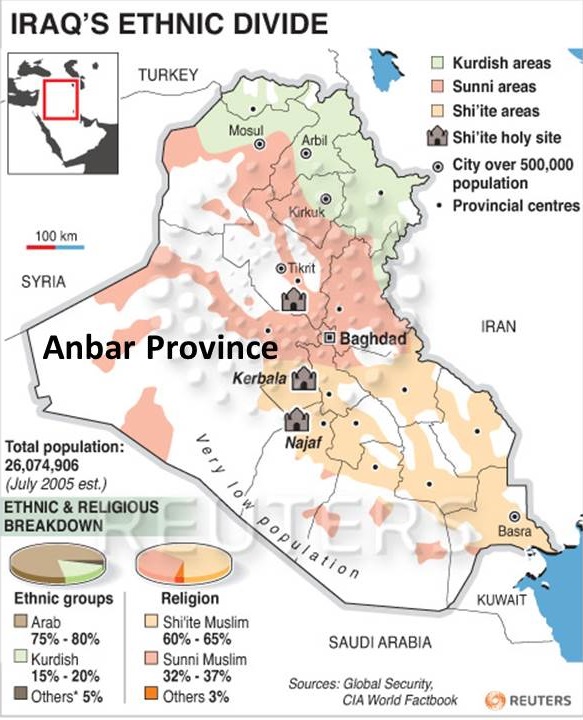
Click on Image to Enlarge

Source: Cambridge Forecast Shia Crescent

Extract:

Five major elements underpin the new Shia revival. The first is the sudden militancy of Iran, which has been led aggressively onto the world stage by President Mahmoud Ahmadinejad. This new Iranian confidence is itself based on internal developments but also three main external factors: the removal of the Taliban from its eastern border in 2001; the removal of Saddam (a chauvinist Sunni) from its border; and vastly increased oil revenues.