Chuck Spinney: Into the Sahel Rabbit Hole….

Corruption, Government, Idiocy, Ineptitude, Military
0Shares
Chuck Spinney
Chuck Spinney

This is a very important report by highly regarded scholar of the region, especially Algeria.

Call to arms will bring no peace to Sahel

Region cannot be returned to Mali’s control militarily, says Hugh Roberts

By Hugh Roberts, Financial Times, January 24, 2013 6:03 pm

The writer is Edward Keller Professor of North African and Middle Eastern History at Tufts University

David Cameron’s vision of decades of global counter-terrorist struggle in north Africa sounded like the promise of doom to anyone who cares about the region. The Sahel’s terrorism problem dates back no further than 2003 – the west’s global war on terror gave birth to it; the west’s part in the destruction of Muammer Gaddafi’s Libya aggravated it; and France’s decision to pursue another war in Mali is expanding it.

In 2003, two drastic changes occurred. Washington launched its Pan-Sahel Initiative, soon renamed the Trans-Saharan Counterterrorism Initiative; and a branch of the Salafist Group for Preaching and Combat (known by its French acronym of GSPC) migrated from north-eastern Algeria to the far south of the Algerian Sahara, announcing its arrival with the abduction of 32 European tourists that year.

These developments were linked. In its drive to involve itself in the Sahel, where it blithely trespassed on France’s traditional sphere of influence, the Pentagon massively hyped the terrorist threat. But what really made the PSI feasible was Algeria’s involvement. Algiers had seized on the terrorist attacks of September 11 2001 to align itself with US President George W. Bush’s war on terror. One reason for this was to avoid being marked for destruction, like Iraq. But the country also saw an opportunity to resume normal relations with its western partners, following a French-led boycott begun after a 1994 terrorist attack on an Air France flight.

Read full article.

Chuck Spinney: Why we lose wars at ever increasing cost…

Corruption, Government, Idiocy, Ineptitude, Military
0Shares
Chuck Spinney
Chuck Spinney

Don't hold your breath: One impediment to understanding what works and what does not work in war is an out-of-control secrecy system that clogs up DoD's own OODA loops with over-classified needlessly compartmented information.  The barriers within this system work to stretch out our own decision cycles.  But, as the American strategist Colonel John Boyd showed, one of the central objectives implicit in any military strategy is to stretch out the OODA loops governing your adversary's decision cycles.  Operating inside your adversary's OODA loops enables you to disconnect his decisions from the reality and collapse him into confusion and disorder (short explanation here, longer explanations here).  So, stretching out your own loops is, ipso facto, really loopy. 

 
The attached report by Scott Shane may seem hilarious, but it is really an outward symptom of the much deeper strategic problem posed by the compartmented nature of this self-inflicted wound.  Think about the mentality that fuels a predilection to burn books that reveal harmless chickenshit details — like, for example, the widely used nickname for National Security Agency and the real name of Baghram Air Force base, a name that became well known to the entire world during the Soviet Union's aborted occupation, or the reclassification of an unclassified citation for a bronze star medal.  Is this the behaviour of decision making system that is tightly connected to its own environment and is trying to improve its performance by learning from experience?  To ask this question is to answer it.
 
Of course, understanding how we disconnected our own decisions from reality in hot wars does not matter: The epistemological essence of a mindset ruled by the secret compartments of the military-technical revolution is that the future will be different from the past.  We are leaving the hot war in Afghanistan and an intensification of the secrecy system will be necessary to extract ever larger amounts of taxpayer dollars to fund the super-secret deep strike ‘precision' weapons which lie at the heart of the Obama's strategic pivot to a new cold war focused on China.

Pentagon Reverses Some of Its Censoring of a War Book

By SCOTT SHANE
New York Times, January 25, 2013

WASHINGTON — In an illustration of the government’s changeable ideas of what should be secret, Pentagon censors have decided that nearly half of more than 400 passages deleted from an Afghan war memoir can be printed without damaging national security.

Yoda: Hybrid Pedagogy — Teaching and Technology

Education, Knowledge
0Shares
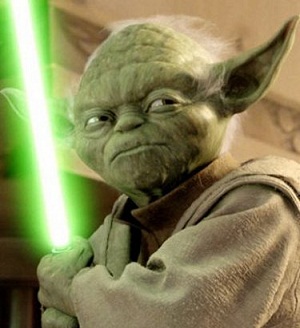
Got Crowd? BE the Force!

Hybrid, force is.

A Bill of Rights and Principles for Learning in the Digital Age

Hybrid Pedagogy, 22 January 2013

On December 14, 2012, a group of 12 assembled in Palo Alto for a raucous discussion of online education. Hybrid Pedagogy contributors Sean Michael Morris and Jesse Stommel gathered together with folks from a diverse array of disciplines and backgrounds, representing STEM fields, the humanities, schools of education, corporations, non-profits, ivies, community colleges, and small liberal arts colleges. Among us were adjuncts, CEOs, a graduate student, several digital humanists, and two outspoken educational technology journalists. As a group, we’d chaired online programs, designed MOOCs, dropped out of MOOCs, and the term “MOOC” was even coined in one of our living rooms. The goal of the summit was to open a broader conversation about online learning and the future of higher education. See the story in The Chronicle. This co-authored document, which calls for hacking and open discussion, was the result.

A Bill of Rights and Principles for Learning in the Digital Age

Preamble

Continue reading “Yoda: Hybrid Pedagogy — Teaching and Technology”

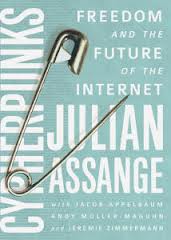
Michel Bauwens: Recommended Reading – Cypherpunks on Freedom and the Future of the Internet

Hardware, P2P / Panarchy, Software
0Shares
Michel Bauwens
Michel Bauwens

Book of the Day: Cypherpunks on Freedom and the Future of the Internet

Excerpted from a review by Cryptome:

“This is a highly informative book, perhaps the best published on the substance of WikiLeaks, its technology, philosophy, origin and purpose, rooted in the Cypherpunks resistance to authority through encryption and anonymizing technology. The trenchant and salient, wide-ranging discussion among Assange, Appelbaum, Müller-Maguhn and Zimmermann, is derived from a four-part RT series with additional editorial material and a summarizing prologue by Assange, “A Call to Cryptographic Arms.”

Amazon Page
Amazon Page

It is an excellent introduction to the struggle for control of digital communications, economics and governance. A prime candidate for inclusion of reading lists of the enemies of authoritarian institutions, corporations and governments heavily invested in the Internet and aiming to control it by secret collusion for their purposes — at the global public’s expense, loss of privacy and reduced democracy. It claims to be a “watchman’s warning” against the threat posed by the Internet and cellphone technology.

The panel asserts [11 points in all]:

1. The internet is a threat to human civilization because of its panoptic surveillance and profiling of users.

2. “Strategic surveillance” gathers all online and cellphone data as distinguished from tactical surveillance with is specifically targeted.

Continue reading “Michel Bauwens: Recommended Reading – Cypherpunks on Freedom and the Future of the Internet”

Mini-Me: Wall Street is Untouchable — No One Goes to Jail

Commerce, Corruption, Government, Law Enforcement
0Shares
Who?  Mini-Me?
Who? Mini-Me?

Huh?

Phi Beta Iota:  Only Iceland has demonstrated the combination of intelligence and integrity to actually serve the public interest.

See Also:

Matt Taibbi: GRIFTOPIA – RECAP

THE LATEST

January 23, 2013, 6:04 pm ET · by Sarah Childress.  Lanny Breuer is leaving his position as head of the Justice Department’s criminal division, The Washington Post reported Wednesday. As assistant attorney … Continue reading →

Did Wall St. Get Away With It? Live Chat Wed. 2 pm ET
January 22, 2013, 10:52 pm ET · by Nathan Tobey.  Join us for a live chat on “The Untouchables” with producer Martin Smith and New York Times DealBook reporter Peter Eavis at 2pm ET on Wednesday, January 23rd. You can leave a question now.

Blowing the Whistle on the Mortgage Bubble
January 22, 2013, 9:44 pm ET · by Azmat Khan.  Well before the 2008 financial meltdown, mortgage industry insiders discovered a ticking time-bomb that they say went up to the very top of Wall Street. What did they find? Who did they warn? And what happened to their warnings?

Too Big To Jail? The Top 10 Civil Cases Against the Banks
January 22, 2013, 9:44 pm ET · by Jason M. Breslow.  In nearly every major legal case to emerge from the crisis, government prosecutors have won multi-million dollar settlements, but companies and officials have not been required to admit wrongdoing.

Were Bankers Jailed In Past Financial Crises?
January 22, 2013, 9:43 pm ET · by Jason M. Breslow.  Not one Wall Street executive has been prosecuted for fraud related to the subprime crisis. How does that compare to past downturns?

Phil Angelides: Enforcement of Wall St. is “Woefully Broken”
January 22, 2013, 9:42 pm ET.  The current system of enforcement in the financial services industry has done little to deter pervasive fraud, says the former chairman of the Financial Crisis Inquiry Commission.

Lanny Breuer: Financial Fraud Has Not Gone Unpunished
January 22, 2013, 9:42 pm ET.  Prosecutors are holding Wall Street to account for the financial crisis, but success should not be measured solely by the number of convictions to date, says the head of the Justice Department’s criminal division.

Ted Kaufman: Wall Street Prosecutions Never Made a Priority
January 22, 2013, 9:41 pm ET.  The lack of high-level prosecutions from the financial crisis can be traced to the Obama administration’s ambivalence to upset the banks, the former U.S. senator told FRONTLINE.

As Deadlines Loom for Financial Crisis Cases, Prosecutors Weigh Their Options
January 22, 2013, 9:40 pm ET · For more than four years, regulators have struggled to successfully prosecute a Wall Street bank or its executives for alleged misconduct during the financial crisis. Now, time may be running out.


“Fraud Was … the F-Bomb”
January 22, 2013, 10:29 am ET · by Jason M. Breslow.  Well before the housing bubble burst, alarm bells were beginning to sound among key players in the mortgage industry: due diligence underwriters.

Penguin: Open-Ended Global War on “Terrorism”

08 Wild Cards, 10 Security, 11 Society, Corruption, Cultural Intelligence, Government, Ineptitude, Military, Officers Call
0Shares
Who, Me?
Who, Me?

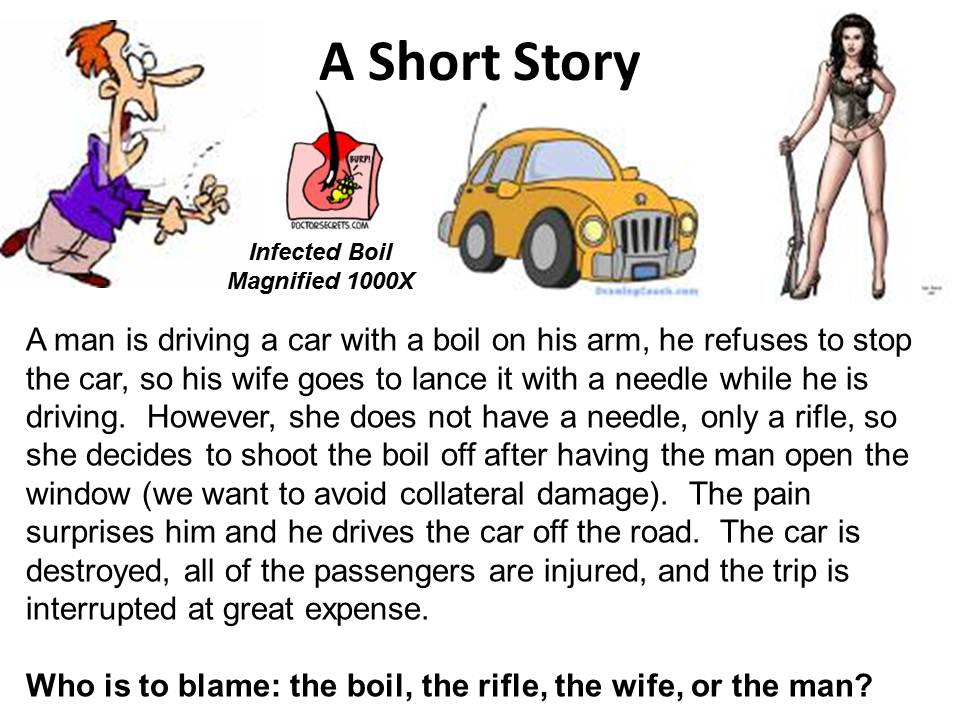
Cannot help but remember the graphic on terrorism as a boil.

Haven't We Seen This Movie Before?

The Open-Ended Global War on Terrorism

PEPE ESCOBAR

Asia Times, 23 January 2013

And the winner of the Oscar for Best Sequel of 2013 goes to… The Global War on Terror (GWOT), a Pentagon production. Abandon all hope those who thought the whole thing was over with the cinematographic snuffing out of “Geronimo”, aka Osama bin Laden, further reduced to a fleeting cameo in the torture-enabling flick Zero Dark Thirty.

Click on Image to Enlarge

It’s now official – coming from the mouth of the lion, Chairman of the Joint Chiefs of Staff General Martin Dempsey, and duly posted at theAFRICOM site, the Pentagon’s weaponized African branch.

Exit “historical” al-Qaeda, holed up somewhere in the Waziristans, in the Pakistani tribal areas; enter al-Qaeda in the Islamic Maghreb (AQIM). In Dempsey’s words, AQIM “is a threat not only to the country of Mali, but the region, and if… left unaddressed, could in fact become a global threat.”

With Mali now elevated to the status of a “threat” to the whole  world, GWOT is proven to be really open-ended. The Pentagon doesn’t do irony; when, in the early 2000s, armchair warriors coined the expression “The Long War”, they really meant it.

Even under President Obama 2.0′s “leading from behind” doctrine, the Pentagon is unmistakably gunning for war in Mali – and not only of the shadow variety. [1] General Carter Ham, AFRICOM’s commander, already operates under the assumption Islamists in Mali will “attack American interests”.

Thus, the first 100 US military “advisers” are being sent to Niger, Nigeria, Burkina Faso, Senegal, Togo and Ghana – the six member-nations of the Economic Community of West African States (ECOWAS) that will compose an African army tasked (by the United Nations) to reconquer (invade?) the parts of Mali under the Islamist sway of AQIM, its splinter group MUJAO and the Ansar ed-Dine militia. This African mini-army, of course, is paid for by the West.

Students of the Vietnam War will be the first to note that sending “advisers” was the first step of the subsequent quagmire. And on a definitely un-Pentagonese ironic aside, the US over these past few years did train Malian troops. A lot of them duly deserted. As for the lavishly, Fort Benning-trained Captain Amadou Haya Sanogo, not only did he lead a military coup against an elected Mali government but also created the conditions for the rise of the Islamists.

Continue reading “Penguin: Open-Ended Global War on “Terrorism””

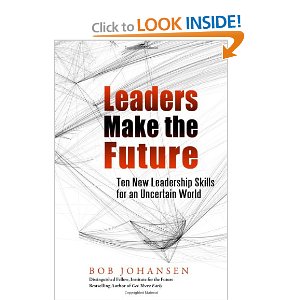
Berto Jongman: Recommended Book — Leaders Make the Future: Ten New Leadership Skills for an Uncertain World

Cultural Intelligence, Leadership
0Shares
Berto Jongman
Berto Jongman

Rate Your Leadship Skills for the Future – Free Self-Assessment

•    Grounded in the most recent ten-year forecast by the prestigious Institute for the Future
•    Identifies the new skills needed to thrive in the next decade
•    Provides tools, examples, and advice to help develop your expertise in each of the ten future skills

Amazon Page
Amazon Page

Some leadership skills are enduring.  But to be successful in the future, leaders also need an emerging set of skills uniquely suited to dealing with the challenges of the threshold decade we are entering.  Today’s businesses and organizations are operating in a world characterized by volatility, uncertainty, complexity, and ambiguity.  Though they already seemed stressed to the breaking point, Johansen reminds us that we are also more connected than ever before in our history, but we must fully realize the benefits of that connectivity. In the next decade, leaders will not just see the future—they will make it!  But they will not be able to do it alone.

– – – – – – – – – – – –

Bob Johansen was president and CEO of the Institute for the Future from 1996 to 2004 and is now the IFTF Distinguished Fellow, as well as serving on its board. Bob has worked for more than 30 years as a forecaster, exploring the human side of new technologies. He has a deep interest in the future of religion and its impact on business, society, and individuals. Bob works mainly with senior corporate executives across a wide range of industries. Bob is a frequent keynote speaker. He has taught both graduate and undergraduate courses. He is the author of six books, including Upsizing the Individual in the Downsized Organization with novelist Rob Swigart, a guide for organizations undergoing technological change and reengineering, and GlobalWork with Mary O'Hara-Devereaux, a guide to managing global, cross-cultural teams. A social scientist with an interdisciplinary background, Bob holds a BS degree from the University of Illinois, where he also played varsity basketball, and a Ph.D. from Northwestern University. Bob also has a divinity school degree from what is now called Colgate Rochester Crozer Divinity School, where he studied comparative religions.