It never occurred to me, when I lost the first bureaucratic battle on Open Source Intelligence (OSINT) in 1992, that my innate sense of integrity [do the right thing] would lead me to resign from the Marine Corps civil service in 1993 as a very young GM-14, and spend not five, not ten, but twenty years wandering in the wilderness helping over 66 governments and over 7,500 mid-career officers get a grip on sources and methods the traditional secret services refused to consider and the traditional consumers of intelligence did not know how to do. Of all my student bodies, the USA was the worst, remaining ignorant at the leadership level, helpless at the follower level–butts in seats, no brain required. Hence, as we approach a historic turning point, the possibility that we might have a Secretary of State and a Secretary of Defense that can actually get a grip on reality together, I thought it might be useful to offer up three things I have learned during my 20-year walk-about:
1. Why Your Intuition about Cyber Warfare is Probably Wrong
2. Pentagon Drops ‘Strategic Communication'
3. European Renewable Power Grid Rocked By Cyber-Attack
4. China’s Growing Military Might Obscures the Real Threat of Cyberwar
5. US Official: North Korea Likely Deceived US, Allies Before Launching Rocket
6. Cyber’s Next Chapter: Penetrating Sealed Networks
7. North Korea Steps Up Jamming
8. Information Warfare: Cyber War Tools for the Infantry
9. Unwitting Sensors: How DOD is Exploiting Social Media
10. The Effectiveness of US Military Information Operations In Afghanistan 2001-2010: Why RAND Missed The Point
11. Hacking the Human Brain: The Next Domain of Warfare
12. Cyber Security Hunter Teams Are the Next Advancement in Network Defense
13. Hype and Fear
14. ARCYBER on the Attack on Paper, In Training
15. Electronic Warfare Graduates First To Receive Crested Collar Insignia
16. How to Equip the U.S. Military for Future Electronic Warfare
17. Al-Qaida Hit by Cyber Attack
18. Chinese Hackers Suspected in Cyber Attack on Council on Foreign Relations
19. You Can’t Handle the Truth
20. 10th Annual Army Global Information Operations Conference
The white collared psychopathic criminals on Wall Street reaped billions in profits, paid themselves millions in bonuses, and cost taxpayers trillions when it all blew up in 2008. The ruling elite have added $6 trillion to our national debt and their central banker has added another $2 trillion to our ultimate tab, while providing free money to their Wall Street bank owners. They realize their efforts to restart the exponential growth engine have failed. They gutted our productive manufacturing based economic system by shipping the blue collar jobs overseas to Chinese slave labor facilities, replaced workers with machines, stimulated consumption with unlimited distribution of high interest debt, and allowed conglomerates to drive small business owners out of business with their cheap foreign sourced goods, all in the name of capitalism. The plan worked so well that real wages haven’t risen in 40 years, inflation has destroyed the purchasing power of the middle class, 47.7 million people are dependent on food stamps to survive, and the masses can’t even afford the cheap slave labor produced trinkets anymore. There is too little cash, too few jobs, too much debt, too many takers, too few makers, too many bankers, too much delusion, and too few resources to sustain the unsustainable. We have entered the end stages of a ravenous locust swarm. The fields have been stripped barren.
EXTRACT 2:
Kyle Bass recently revealed a fact about our government leaders:
“They’re not going to tell you that a collapse is coming. You’re going to have to see it for yourself. The government’s never going to tell you that it’s going to happen.These guys are never going to tell you the truth, because they can’t tell you the truth. Their job is to promote confidence, not to tell you the truth.”
We need more people to respond to Roger Waters’ question, “Mother, should I trust the government?” with this answer before we can begin to tear down the wall that seemed too high.
“During times of universal deceit, telling the truth becomes a revolutionary act.” – George Orwell
The week long power outage here in New Jersey, after hurricane Sandy, made me realize that we need simple, scalable, cheap, and locally produced power. Removing all distractions and giving an engineer of German lineage a week to think on a problem often gets the problem solved. After pulling out the 7-pocket expanding file with all my past Stirling designs, a couple notepads, my favorite gel pens, a dry erase board, and some reference books, I began designing. As with any engineering project, you need to describe what you want to accomplish, and your limiting factors. Due to cost constraints, engineering is always compromise.
What is the goal? An always-on (24 x 7 x 365) power supply that is inexpensive to produce, can be bulk produced with readily available materials, can be manufactured in any nation using 1950′s or earlier technology, and has a working lifespan greater than 20 years. (That sounds really simple, doesn’t it?)
Click on Image to Enlarge
What are the design criteria?
Low Temperature Differential (LTD) Stirling based design.
All parts must be designed for high-speed manufacture and assembly.
All materials used must be inexpensive and readily available.
The Stirling design must have the least number of wear points possible.
It must use inexpensive solar thermal panels for gathering energy.
The solar panels must be easily produced in an automated fashion.
It must have inexpensive (dirt cheap) energy storage.
It must produce at least 3 kW of power continuously (24 x 7 x 365 x 20).
On a daily basis, it must be capable of gathering two to three times the energy required for a 24-hour period, on the least sunny day of the year. (NREL solar radiation manual)
It must be capable of storing the energy required for 3 to 5 days of continuous usage with no energy input.
Any person with basic mechanical skills should be able to install the system.
“The kind of work that should be the main part of life is the kind of work you would want to do if you weren’t being paid for it. It’s work that comes out of your own internal needs, interests and concerns.”
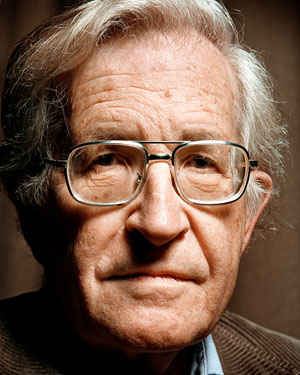
(the full original has details on Noam Chomsky’s own career evolution)
MK:The philosopher Frithjof Bergmann says that most people don’t know what kind of activities they really want to do. He calls that ‘the poverty of desire.’ I find this to be true when I talk to a lot of my friends. Did you always know what you wanted to do?
Noam Chomsky
NC: That’s a problem I never had – for me there was always too much that I wanted to do. I’m not sure how widespread this is – take, say, a craftsman, I happen to be no good with tools, but take someone who can build things, fix things, they really want to do it. They love doing it: ‘if there’s a problem I can solve it’. Or just plain physical labour – that’s also gratifying. If you work on command then of course it’s just drudgery but if you do the very same thing out of your own will or interest it’s exciting and interesting and appealing. I mean that’s why people look for work – gardening for example. So you’ve had a hard week, you have the weekend off, the kids are running around, you could just lie down to sleep but it’s much more fun to be gardening or building something or doing something else.
It’s an old insight, not mine. Wilhelm von Humboldt, who did some of the most interesting work on this, once pointed out that if an artisan produces a beautiful object on command we may admire what he did but we despise what he is – he’s a tool in the hands of others. If on the other hand he creates that same beautiful object out of his own will we admire it and him and he’s fulfilling himself. It’s kind of like study at school – I think we all know from our experience that if you study on command because you have to pass a test you can do fine on the test but two weeks later you’ve forgotten everything. On the other hand if you do it because you want to find out, and you explore and you make mistakes and you look in the wrong place and so on, then ultimately you remember.
The real reason U.S. Secretary of State Hillary Clinton has not been seen for the last month is because she was injured during a secret mission to Iran, according to published intelligence sources.
Quoting sources around Tehran and the Gulf Emirates, DEBKAfile, a Middle East news service known as an outlet for Israeli and Western intelligence, says Secretary Clinton made the clandestine trip during the first week of December.
Although the objective of her mission remains unclear, the incident, which took place shortly after December 1, coincides with an earlier DEBKAfile report that Obama administration officials launched secret talks with senior representatives of Ayatollah Ali Khamenei on Iran’s nuclear program.
Click on Image to Enlarge
The DEBKAfile article speculates that Secretary Clinton was on her way to a secret meeting with President Mahmoud Ahmadinejad in regard to those negotiations.
The plane carrying Secretary Clinton and her entourage of advisers and security personnel left Bahrain for its logged destination of Baghdad, but changed direction in midair and headed for Ahvaz, capital of the south Iranian province of Khuzestan. The Iranian president was waiting there for her arrival.
According to DEBKAfile, the plane somehow ran into technical trouble during the flight and made an emergency landing. Secretary Clinton was injured in the crash, and several of her staff were either injured or killed.
The unexplained death of Navy SEAL Commander Job Price is tied by some to the Clinton incident. At the time, the Pentagon reported that his sudden death on December 22, in Uruzgan, Afghanistan, was under investigation. Sources have told the UK Guardian that the reason for Commander Price’s death was suicide. It is now suggested that he headed the security detail for Secretary Clinton’s Iran mission and was killed in the accident.
The vague details and fuzzy timeline of events have led to wild speculation about the real reason for her sudden illness. Several top-ranking Republicans, including former U.S. Ambassador to the U.N., John Bolton, claimed Secretary Clinton came down with “diplomatic illness” to avoid testifying at a House Foreign Affairs Committee on the September 11 terrorist attack on the American embassy in Benghazi. Others have claimed she really had a stroke, or fell during a drunken stupor.
According to Gregory Treverton, US intelligence reform remains a work in progress. While reorienting the FBI and creating the National Counterterrorism Center represent progress, establishing the Department of Homeland Security and the position of Director of National Intelligence do not.
By Gregory Treverton for the ISN
Reshaping the FBI
NCTC
Creating the DNI
DHS and “Information Sharing”
Phi Beta Iota: The article is a sad mix of fluff and repressed criticism. There has been no substantive improvement in US intelligence, only a doubling of the budget and a doubling of the number of useless senior executives who have no idea how to actually “do” decision support in the public interest. The day will come when the US cannot afford to be without intelligence and integrity. Until that day comes, the US IC will remain 96% fraud, waste, and abuse.