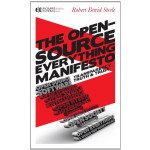
Table of Contents
Foreword by Howard Bloom ix
Author's Preface xiii
Chapter 1: Open Sesame 1
Changing the Game 9
Panarchy 23
Enter “Radical Man” 26
Terms of Reference 29
Continue reading “The Open Source Everything Manifesto: Table of Contents”

The truth at any cost lowers all other costs — curated by former US spy Robert David Steele.
Table of Contents
Foreword by Howard Bloom ix
Author's Preface xiii
Chapter 1: Open Sesame 1
Changing the Game 9
Panarchy 23
Enter “Radical Man” 26
Terms of Reference 29
Continue reading “The Open Source Everything Manifesto: Table of Contents”
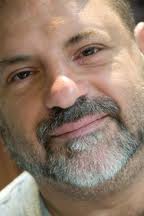
Robert Steele author of the book The Open-Source Everything Manifesto: Transparency, Truth, and Trust joins us in an integrity inspired talk on his new book. “In the United States, where every form of organization from government to banks to labor unions has betrayed the public trust—is integrity. Also lacking is public intelligence in the sense of decision-support: knowing what one needs to know in order to make honest decisions for the good of all, rather than corrupt decisions for the good of the few.
The Open-Source Everything Manifesto is a distillation of author, strategist, analyst, and reformer Robert David Steele life's work: the transition from top-down secret command and control to a world of bottom-up, consensual, collective decision-making as a means to solve the major crises facing our world today. The book is intended to be a catalyst for citizen dialog and deliberation, and for inspiring the continued evolution of a nation in which all citizens realize our shared aspiration of direct democracy—informed participatory democracy. Open-Source Everything is a cultural and philosophical concept that is essential to creating a prosperous world at peace, a world that works for one hundred percent of humanity. The future of intelligence is not secret, not federal, and not expensive. It is about transparency, truth, and trust among our local to global collective. Only “open” is scalable.”
As we strive to recover from the closed world corruption and secrecy that has enabled massive fraud within governments, banks, corporations, and even non-profits and universities, this timely book is a manifesto for liberation—not just open technology, but open everything.
THE OPEN SOURCE EVERYTHING MANIFESTO: Transparency, Truth & Trust
See Also:
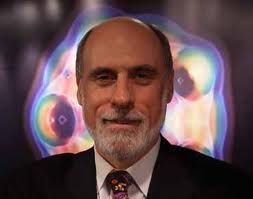
New York Times, May 24, 2012
The Internet stands at a crossroads. Built from the bottom up, powered by the people, it has become a powerful economic engine and a positive social force. But its success has generated a worrying backlash. Around the world, repressive regimes are putting in place or proposing measures that restrict free expression and affect fundamental rights. The number of governments that censor Internet content has grown to 40 today from about four in 2002. And this number is still growing, threatening to take away the Internet as you and I have known it.
Some of these steps are in reaction to the various harms that can be and are being propagated through the network. Like almost every major infrastructure, the Internet can be abused and its users harmed. We must, however, take great care that the cure for these ills does not do more harm than good. The benefits of the open and accessible Internet are nearly incalculable and their loss would wreak significant social and economic damage.
Against this background, a new front in the battle for the Internet is opening at the International Telecommunications Union, a United Nations organization that counts 193 countries as its members. It is conducting a review of the international agreements governing telecommunications and aims to expand its regulatory authority to the Internet at a summit scheduled for December in Dubai.
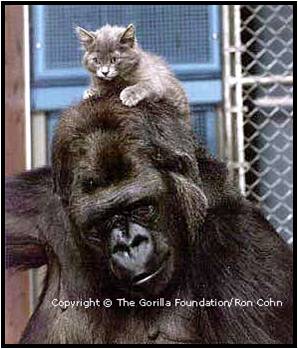
Koko sad.
The Canadian Oil Sand Mines Refused Us Access, So We Rented This Plane To See What They Were Up To
Robert Johnson
Business Insider, 18 May 2012
After being refused a mine tour and any type of access to a mining site or equipment, Business Insider rented a plane that I used to see everything I could of the mines on my own.
Restricted to flying no lower than 1,000 feet above the ground, I spent nearly two hours leaning out the window of a small Cessna 172 with a long lens, snapping pictures and trying to keep warm.
The oil sands hold up to two trillion barrels of oil spread over more than 54,000 square miles, making it the second largest oil deposit in the world after Saudi Arabia.
The amount of energy spent recovering that oil and the pollution created in refining it is immense and the impact on the environment profound.
The Hack That Wasn’t: Sec. Clinton and Operation AdWords
Kim Zetter
WIRED, 24 May 2012
When news outlets recently quoted U.S. Secretary of State Hillary Clinton claiming that State Department operatives hacked the websites of al-Qaida affiliates in Yemen, we didn’t know whether to be proud of the feds’ leet skills or appalled at the administration’s hypocrisy regarding hacking.
Turns out the hacks who wrote the stories got it wrong – though Danger Room’s David Axe, who was on the scene, got the story right the first go-around. And now, with the hyped headlines dialed back, we’re just disappointed.
Turns out the team simply purchased anti-al-Qaida ads on the websites to counter anti-American ads the sites were running.
Call it Operation AdWords, if you like.
Clinton was delivering a keynote speech at the Special Operations Command gala dinner in Tampa, Florida, when, as the Associated Press reported, she described how State Department specialists attacked sites tied to al-Qaida, which were trying to recruit new members by “bragging about killing Americans.”
“Within 48 hours, our team plastered the same sites with altered versions of the ads that showed the toll al-Qaida attacks have taken on the Yemeni people,” Clinton said, according to the AP. “We can tell our efforts are starting to have an impact because extremists are publicly venting their frustration and asking supporters not to believe everything they read on the internet.”
The AP rushed out a story with the headline “Hillary Clinton: U.S. Hacked Yemen al-Qaida Sites,” only to revise the story with a more demure headline later, reading “Clinton: US wars with al-Qaida on the web.”
The latter story included new quotes from a State Department official clarifying that the specialist didn’t actually hack the sites. Instead, he said, they challenged extremists in open forums.

Leading academic and industry experts have validated BlackLight's new process that directly produces electric energy from the conversion of water vapor to a new, more stable form of Hydrogen. Experts agree that BlackLight's ‘Hydrino theory' represents a fundamental breakthrough in clean energy technology.
Adapted by Sterling D. Allan from a press release
Pure Energy Systems News
Cranbury, NJ (May 22, 2012) — BlackLight Power, Inc. (BLP) today announced a major breakthrough in clean energy technology, which experts agree holds tremendous promise for a wide range of commercial applications. The announcement comes on the heels of BlackLight's recent completion of a $5 million round of financing to support commercial development of its new process for producing affordable, reliable energy from water vapor.
In six separate, independent studies, leading scientists from academia and industry, with PhDs from prestigious universities including the Massachusetts Institute of Technology and the California Institute of Technology, confirm that BlackLight has achieved a technological breakthrough with its CIHT (Catalyst-Induced-Hydrino-Transition) clean energy generating process and cell. The Process is fueled by water vapor that is a gaseous component of air and present wherever there is any source of water. The CIHT cell harnesses this energy as electrical power output and is suitable for essentially all power applications including transportation applications and electrical power production completely autonomous of fuels and grid infrastructure at a small fraction of the current capital costs.

