Michel Bauwens: The commons law project: A vision of green governance

Uncategorized
0Shares
Michel Bauwens

The commons law project: A vision of green governance

Republished from David Bollier:

(the original has links to the source material)

“For the past two years or more, I’ve been working on a major research and writing project to try to recover from the mists of history the bits and pieces of what might be called “commons law” (not to be confused with common law). Commons law consists of those social practices, cultural traditions and specific bodies of formal law that recognize the rights of commoners to manage their own resources. Most of these governance traditions deal with natural resources such as farmland, forests, fisheries, water and wild game. Commons law has existed in many forms, and in many cultures, over millennia.

Ever since the rise of the nation-state and especially industrialized markets, however, commons law has been marginalized if not eclipsed by contemporary forms of market-based law. Over the past 200 years, individual property rights and market exchange have been elevated over most everything else, and this has only eroded the rights of commoners, it has contributed to the destruction of the Earth and its fragile natural systems.

Continue reading “Michel Bauwens: The commons law project: A vision of green governance”

Howard Rheingold: Meta-Cognition

Advanced Cyber/IO, Civil Society, Collective Intelligence, Ethics
0Shares
Howard Rheingold

Metacognition — awareness of one's attention and thinking process — is increasingly a 21st century necessity. — Howard

Metacognition — I Know (or Don't Know) that I Know

At New York University, Sir Henry Wellcome Postdoctoral Fellow Dr Steve Fleming is exploring the neural basis of metacognition: how we think about thinking, and how we assess the accuracy of our decisions, judgements and other aspects of our mental performance.

Metacognition is an important-sounding word for a very everyday process. We ‘metacognise' whenever we reflect upon our thinking process and knowledge.

It's something we do on a moment-to-moment basis, according to Dr Steve Fleming at New York University. “We reflect on our thoughts, feelings, judgements and decisions, assessing their accuracy and validity all day long,” he says.

This kind of introspection is crucial for making good decisions. Do I really want that bar of chocolate? Do I want to go out tonight? Will I enjoy myself? Am I aiming at the right target? Is my aim accurate? Will I hit it? How sure am I that I'm right? Is that really the correct answer?

If we don't ask ourselves these questions as a kind of faint, ongoing, almost intuitive commentary in the back of our minds, we're not going to progress very smoothly through life.

Read full article.

Phi Beta Iota:  The role of ethics and philosophy in channeling and integrating knowledge is not sufficiently appreciated at this time.  Apart from being ignorant in the whole, we also lack integrity in the whole.

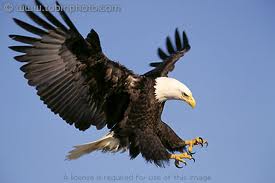
Eagle: Small Victory in Court Smash-Down of US Martial Law

Uncategorized
0Shares
300 Million Talons...
truthdig, May 18, 2012

By Chris Hedges

In January, attorneys Carl Mayer and Bruce Afran asked me to be the lead plaintiff in a lawsuit against President Barack Obama and Defense Secretary Leon Panetta that challenged the harsh provisions of the National Defense Authorization Act (NDAA). We filed the lawsuit, worked for hours on the affidavits, carried out the tedious depositions, prepared the case and went to trial because we did not want to be passive in the face of another egregious assault on basic civil liberties, because resistance is a moral imperative, and because, at the very least, we hoped we could draw attention to the injustice of the law. None of us thought we would win. But every once in a while the gods smile on the damned.

Continue reading “Eagle: Small Victory in Court Smash-Down of US Martial Law”

Owl: US Government Criminality from Local to National

01 Poverty, 03 Economy, 06 Family, 07 Other Atrocities, 09 Justice, 11 Society, Corruption, Government
0Shares
Who? Who?

Government larceny and criminality just never ends, it seems to be increasing, especially against those who can least to afford to defend themselves against it:

Another Way to Kill Small U.S. Farmers: Seize Their Bank Accounts on Phony Charges

The farmers, Randy Sowers and his wife Karen, made deposits totaling more than $295,000 from May 2011 to February 2012, but each transaction was less than $10,000. Now they are being accused of “structuring,” a violation of federal currency reporting requirements, as the feds are accusing them of deliberately depositing money in increments of less than $10,000 in an attempt to evade Currency Transaction Reporting requirements. The dairy farmer's “crime” stems from his weekly sales at local farmers' markets. The sales averaged about the same amount each week and, dutifully, the Sowers deposited them. They'd reportedly never even heard of the Bank Secrecy Act or “structuring,” but that was of no interest to the feds—the consistency of the amount the Sowers deposited, always less than $10,000, raised red flags to the feds, who claimed that this was indicative of a crime. The government promptly seized about $70,000 from the bank account, then issued a warrant for the seizures. The raid on the Sowers was conducted by an agency created in 2009 to go after money-laundering criminals. The agency started out with a bang by seizing $1.2 billion from a real money launderer, but it appears that what it's interested in now is making criminals out of small business persons, including small farmers.

But small business people are not the only targets of government and corporate predators. Poor people are too, as evidenced in this Mother Jones article:

How Corporations and Local Governments Use the Poor As Piggy Banks

Continue reading “Owl: US Government Criminality from Local to National”

Theophillis Goodyear: Montreal Pots And Pans Video Of Protest Against Bill 78 Goes Viral

Uncategorized
0Shares
Theophillis Goodyear

Montreal Pots And Pans Video Of Protest Against Bill 78 Goes Viral

A video of protesters banging pots and pans on Quebec streets is going viral on social networks.

Posted on Friday afternoon, the beautiful black and white film shows protesters of all ages taking to the streets to protest the emergency law Bill 78. The Vimeo video quickly began showing up all over Twitter and Facebook.

Bill 78 is being called a draconian attempt to quell massive student protests that have taken over Quebec streets for more than 100 days. The bill limits the ability to protest by requiring groups to get police approval for demonstrations and restricting where they can take place, among other provisions.

Read more, see video.

David Swanson: Lies and Consequences Across 15 Wars

04 Inter-State Conflict, 07 Other Atrocities, 10 Security, 11 Society, Corruption, DoD, Government, IO Deeds of War, Media, Military
0Shares
David Swanson

Lies and Consequences in Our Past 15 Wars

By David Swanson

“Kings had always been involving and impoverishing their peoples in wars, pretending generally, if not always, that the good of the people was their object.  This, our Convention understood to be the most oppressive of all Kingly oppressions; and they resolved to so frame the Constitution that no one man should hold the power of bringing this oppression upon us.”–Abraham Lincoln

Continue reading “David Swanson: Lies and Consequences Across 15 Wars”

John Robb: Automation of Censorship and Extra-Judicial Assassination

07 Other Atrocities, 09 Justice, Corruption, DHS, DoD, Government, IO Deeds of War, Officers Call
0Shares
John Robb

The Automation of Government Coercion

Posted: 25 May 2012 09:10 AM PDT

I recently did a series of interviews for an international venture investing newsletter called Capitalist Exploits.  Here's a question I got that I thought we be of interest to GG readers.  I've extended the answer a bit from the original in the interview.

Mark: Switching gears just a bit… We've watched the SOPA/PIPA controversy, now its CISPA; the “Stellar Wind” project was featured in Wired last month, and recently an NSA whistleblower, former Director William Binney, came out and said flat out that the government is lying, they intercept and store everything we do, Constitution be damned. It seems the government won't stop until it completely controls the flow of information on the Internet and has the ability to monitor and record everything we say and do online. You're a counter-terrorism expert, how much of this is hype and how much of it is really necessary to safeguard national security, in your opinion. And what about our civil liberties and right to privacy?

John: It’s a mixed bag. There’s certainly lots of concern in regards to how the NSA gathers data on US citizens. Added to what the private sector is gathering, its safe to conclude that we don’t have any privacy.

For example, nearly every new phone sold today has a GPS chip in it. It’s constantly gathering data on where that phone is and sending it to the phone company. All of that phone company data, from all of the phone companies across the world, is aggregated and provided to select governments for use in counter-terrorism. In short, the three billion people that are using cell phones are being tracked in order to help find and kill a couple hundred terrorists (its contribution is probably limited to being the primary source for neutralizing a couple of terrorists a year).

Continue reading “John Robb: Automation of Censorship and Extra-Judicial Assassination”