Event: 5 Nov 2010, New York City, Columbia Univ, Mobile Money II

01 Poverty, 03 Economy, Academia, Civil Society, Commerce, Mobile, Technologies
0Shares

Mobile Money II

Columbia Institute for Tele-Information

Columbia Business School

Uris Hall TBD

In April 2010 CITI held its first conference on “Mobile Money”, focusing on the macroeconomic aspects.  Since then, developments have accelerated.  Around the world, the rapid spread of mobile phones is being followed by their use as a tool for financial transactions.  The cell phone serves as a bank account, debit card, and money creator. Developing countries lack effective financial infrastructure.  The positive economic impact of the mobile telecommunications infrastructure has been demonstrated, as has been the ability of microfinance to stimulate economic activity.  Now a hybrid of the technologies has begun to emerge, enabling a mobile financial system.  A notable example is Kenya where the M-PESA system (‘m-money’ in Swahili) has transferred in its short history over $5.4 billion by 12 million customers. This conference addresses some of the following issues:

  • What are the economics of mobile money?
  • What policy issues does it raise?
  • Is m-money a threat to the traditional banking system?
  • How might it be regulated?
  • Security issues
  • Consumer protection perspectives
  • Investor perspectives
  • Indicators for demand
  • M-money and m-health
  • What are consumer and privacy protection issues?
  • Who will control the system—banks or telecom operators?
  • What are the emerging trends?
 Continue reading "Event: 5 Nov 2010, New York City, Columbia Univ, Mobile Money II"

Journal: US State Department Clueless on Afghanistan

04 Inter-State Conflict, 05 Civil War, 07 Other Atrocities, 08 Wild Cards, 10 Security, Corruption, Cultural Intelligence, Government, Officers Call
0Shares
DefDog Recommends...

humanitarian news and analysis

a project of the UN Office for the Coordination of Humanitarian Affairs

Analysis: Peace moves in Afghanistan as fighting goes on

EXTRACT:

The Taliban have rejected formal contacts with Kabul and dubbed the process “futile propaganda”. They have repeatedly vowed not to engage in any negotiations until all foreign forces leave Afghanistan.

Ordinary Afghans are suffering the most. The conflict has killed and wounded thousands over the past few years, according to the UN.

EXTRACT:

Richard Barrett, coordinator of the UN al-Qaeda-Taliban monitoring team, however, believes the Taliban are “beginning to look at alternatives to fighting”.

The government has dropped the term “moderate Taliban” which it used in previous peace efforts: President Karzai has invited all Taliban, including their reclusive supreme leader Mullah Mohammad Omar, to peace talks.

However, Washington has rejected a role for Mullah Omar in the peace process.

“I can’t imagine Mullah Omar playing a constructive role in Afghanistan… Our focus on Mullah Omar, from a US standpoint, is based on his complicity in support of al-Qaeda that led to the plot of 9/11,” Philip J. Crowley, assistant secretary in the US State Department, told reporters on 14 October.

Read full article…..

Phi Beta Iota: Over the past decade we have observed that at the political level, the US Department of State is next to worthless for two reasons: it does not know the truth of any matter, it simply parrots ideologically designed phrases; and it is consequently incapable of speaking truth to power.  The US Government is broken and bankrupt beyond imagination.

Reference: Reconnecting to Reality…Anyone Home?

Uncategorized
0Shares
Berto Jongman Recommends...

CUTTING THE FUSE

Moving Beyond the War on Terror

Tuesday, October 12, 2010 – Capitol Hill

Presumption: The root cause of terrorism is Islamic Fundamentalism — religiously motivated hatred of American and Western values among a fringe of Muslims.

Reality: Based on research by CPOST (Chicago Project on Security and Terrorism), suicide terrorist attacks like 9/11 are driven not by religion alone, but triggered by foreign or military policies of the United States, its allies, and other democracies. Military occupation accounts for nearly all suicide terrorism around the world since 1980. [Emphasis added.]

Conference: Moving beyond the war on terror, what are America's best policy choices in Afghanistan, the Middle East, and at home and for other core national security issues, such as nuclear proliferation and the growing economic constraints on US foreign policy? The conference engages many of the brightest minds in the country on this critical question.


Order Now

Dr. Robert Pape

University of Chicago

Reference: Panetta Puts Lipstick on the Pig (Again)

Government, Memoranda
0Shares
No Change Needed....

Message from the Director: Lessons from Khowst

Last December, our Agency family lost seven courageous and talented colleagues in a terrorist attack at Forward Operating Base Chapman in Khowst, Afghanistan. These dedicated men and women were assigned to CIA’s top priority—disrupting and dismantling al-Qa’ida and its militant allies. That work carries, by its very nature, significant risk. CIA is conducting the most aggressive counterterrorism operations in our history, a mission we are pursuing with a level of determination worthy of our fallen heroes. We will sustain that momentum and, whenever possible, intensify our pursuit. We will continue to fight for a safer America.

Earlier this year, I directed that a task force of seasoned Agency professionals conduct a review of the Khowst attack. The purpose was to examine what happened, what lessons were learned, and what steps should be taken to prevent such incidents in the future. In addition, I asked Ambassador Thomas Pickering and Charlie Allen, a highly accomplished former Agency officer, to conduct an independent study of the Khowst attack and to review the work of the task force. They concurred with its findings. One of CIA’s greatest strengths is our ability to learn from experience, refine our methods, and adapt to the shifting tactics of America’s enemies.

The review is now complete, and I would like to thank those who participated. They did our Agency a great service. It was, to be sure, a difficult task—especially since key insights perished with those we lost. Perfect visibility into all that contributed to the attack is therefore impossible. But based on an exhaustive examination of the available information, we have a firm understanding of what our Agency could have done better. In keeping with past practice, we will provide the Khowst report to the Office of Inspector General.

In highly sensitive, complex counterterrorism operations, our officers must often deal with dangerous people in situations involving a high degree of ambiguity and risk. The task force noted that the Khowst assailant fit the description of someone who could offer us access to some of our most vicious enemies. He had already provided information that was independently verified. The decision to meet him at the Khowst base—with the objective of gaining additional intelligence on high priority terrorist targets—was the product of consultations between Headquarters and the field. He had confirmed access within extremist circles, making a covert relationship with him—if he was acting in good faith—potentially very productive. But he had not rejected his terrorist roots. He was, in fact, a brutal murderer.

Mitigating the risk inherent in intelligence operations, especially the most sensitive ones, is essential to success. In this case, the task force determined that the Khowst assailant was not fully vetted and that sufficient security precautions were not taken. These missteps occurred because of shortcomings across several Agency components in areas including communications, documentation, and management oversight. Coupled with a powerful drive to disrupt al-Qa’ida, these factors contributed to the tragedy at Khowst. Each played an important role; none was more important than the others. Based on the findings of the task force and the independent review, responsibility cannot be assigned to any particular individual or group. Rather, it was the intense determination to accomplish the mission that influenced the judgments that were made.

There are no guarantees in the dangerous work of counterterrorism, but the task force identified six key areas that deserve greater focus as we carry out that vital mission. We will:

  • Enforce greater discipline in communications, ensuring that key guidance, operational facts, and judgments are conveyed and clearly flagged in formal channels.
  • Strengthen our attention to counterintelligence concerns while maintaining a wartime footing.
  • Apply the skills and experience of senior officers more effectively in sensitive cases.
  • Require greater standardization of security procedures.
  • More carefully manage information sharing with other intelligence services.
  • Maintain our high operational tempo against terrorist targets, even as we make adjustments to how we conduct our essential mission.

I have approved 23 specific actions recommended by the task force, some of which I ordered implemented months ago. They provide for organizational and resource changes, communications improvements, tightened security procedures, more focused training, and reinforced counterintelligence practices. These include:

  • Establishing a War Zone Board made up of senior officers from several components and chaired by the Director of the National Clandestine Service. It will conduct a baseline review of our staffing, training, security, and resources in the most dangerous areas where we operate.
  • Assembling a select surge cadre of veteran officers who will lend their expertise to our most critical counterterrorism operations.
  • Creating an NCS Deputy within the Counterterrorism Center, who will report to the Director of the Counterterrorism Center and ensure a more integrated effort across Agency offices.
  • Conducting a thorough review of our security measures and applying even more rigorous standards at all our facilities.
  • Expanding our training effort for both managers and officers on hostile environments and counterintelligence challenges.
  • Creating an integrated counterintelligence vetting cell within our Counterterrorism Center that focuses on high-risk/high-gain assets, evaluates potential threats, assesses “lessons learned,” and applies the latest technology and best practices to counterterrorism operations.
  • Designating a senior officer to ensure that all the recommendations are indeed implemented.

We’ve now taken a hard look at what happened and what needed to be done after the tragedy at Khowst. While we cannot eliminate all of the risks involved in fighting a war, we can and will do a better job of protecting our officers. Drawing on the work of the task force and its insights, it’s time to move forward. Nothing in the report can relieve the pain of losing our seven fallen colleagues. By putting their lives on the line to pursue our nation’s terrorist enemies, they taught us what bravery is all about. It is that legacy that we will always remember in our hearts.

Leon E. Panetta

Posted: Oct 19, 2010 06:30 PM
Last Updated: Oct 19, 2010 06:30 PM
Last Reviewed: Oct 19, 2010 06:30 PM

Phi Beta Iota: Can't fix stupid.

See also:

Journal: CIA Officer Blew Off Warning in Jordon Weeks in Advance of Jordanian Suicide Bombing in Afghanistan that Killed Seven

Journal: The Truth on Khost Kathy

Journal: CIA Leads the “Walking Dead” in USA (With RECAP Links)

Reference: Fixing Intel–A Blueprint for Making Intelligence Relevant in Afghanistan

Reference: Retired CIA officer–Fix the Agency

Review: Beyond Repair: The Decline and Fall of the CIA

Review: The Human Factor–Inside the CIA’s Dysfunctional Intelligence Culture

Worth a Look: Book Reviews on Intelligence (Lack Of)

Worth a Look: Ideal “Scary Story” for Incumbents

Worth A Look
0Shares
Amazon Page

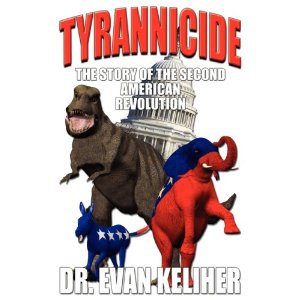
GIFT IDEA:  Buy this book, read it, and then mail it in a plain brown envelope to your incumbent.  This is our non-violent way of helping them understand just how pissed-off America is by the two-party corrupt tyranny.  Act now before the book goes out of print.  This is an “icon” book, faster, better, cheaper than buying bullets.  Communicate!

Journal: UK Defence Bottoms Up, US DoD Next…

10 Security, 11 Society, Budgets & Funding, Military, Officers Call, Peace Intelligence
0Shares
Joe Cirincione

Joe Cirincione

President of Ploughshares Fund

Posted: October 20, 2010 02:13 PM

British Budget Collapse Foreshadows Cuts to Come in U.S. Defense Budget

Great Britain's cuts, particularly to its nuclear forces, are the canary in the defense budget mine. Just as massive deficits forced the conservative UK government to cut deep into its military programs, the United States will soon have to choose: update its force structure or cling to obsolete Cold War posture?
– – – – – –

U.S. Secretary of Defense Robert Gates is going through his own budget pain, now choosing which weapons to cut in an effort to save some $100 billion over the next five years. The Pentagon budget has doubled since 2001, rising an average of seven percent a year. This budget growth is expected to slow to only 1 percent in the near future, and even that may be unsupportable. Something's got to give. To preserve vital conventional military forces, the service chiefs will likely have to cut into the $54 billion spent each year on nuclear weapons-related programs.

Read full article…

Phi Beta Iota: DoD needs to fall back to $500 billion a year, and wean itself of contractors at the same time that it creates a long-haul Air Force, a 450-ship Navy, and a military-based multinational Peace Corps.

2010: Human Intelligence (HUMINT) Trilogy Updated

2010: OPINION–America’s Cyber Scam

2009 Perhaps We Should Have Shouted: A Twenty-Year Restrospective

2008 U.S. Naval Power in the 21st Century

2008 Rebalancing the Instruments of National Power–Army Strategy Conference of 2008 Notes, Summary, & Article

2001 Threats, Strategy, and Force Structure: An Alternative Paradigm for National Security

2000 Presidential Leadership and National Security Policy Making

1998 JFQ The Asymmetric Threat: Listening to the Debate

1997 Strategic Intelligence in the USA: Myth or Reality?

1997 USIP Conference on Virtual Diplomacy Virtual Intelligence: Conflict Avoidance and Resolution through Information Peacekeeping

1995 Re-Inventing Intelligence The Vision and the Strategy

1995 GIQ 13/2 Creating a Smart Nation: Strategy, Policy, Intelligence, and Information

1993 On Defense & Intelligence–The Grand Vision

1991 MCG Intelligence Support for Expeditionary Planners