Worth a Look: Ric Merrifield Blog, Extract on Privacy

Privacy, Worth A Look
0Shares
WLIP
Home Page

Bynamite

Reputationdefender

MyIDPal

Abine

Foursquare

. . .even Zillow

Not familiar with these companies?  You should be, because they are plotting the course for the future of internet privacy and how we interact with people and merchants.

Bynamite is just the latest and there is a very good article about them here.  In short, Bynamite has (correctly, in my opinion) seen that each time we conduct a search on the internet, the search itself is a transaction because it gives merchants and the search engines more information about our interests, tastes, and needs.  Bynamite also thinks that this sort of profile information will in short order play a very real role in the prices we pay for goods and the kinds of coupons we get.  I think they are right about that as well – and this by itself is one of the most fundamental changes in the world of commerce to come along in a very long time – a set of one, or many, micro transactions prior to the primary transaction(s) that then inform the price we pay for future transactions – in essence context-rich transactions.
Read Rest of Post

Blog Home Page

NIGHTWATCH Extract: China-Sri Lanka

02 China, 03 Economy, 03 India, 10 Security
0Shares

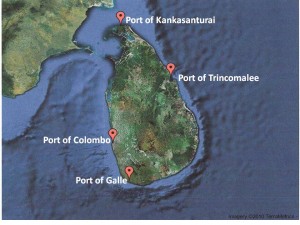
Sri Lanka Ports

China-Sri Lanka: On 16 September, China and Sri Lanka agreed to enhance bilateral military cooperation. The announcement came during a meeting between General Chen Bingde, Chief of the General Staff of the People's Liberation Army of China, and Sri Lankan Defense Minister Gotabaya Rajapaksa.

NIGHTWATCH Comment: The terms and value of the agreement are not yet known. Nevertheless, any new Chinese defense cooperation initiative with any South Asian country will draw the attention of the Indians. This reinforces China's defense connections with the country immediately south of India and in which India has strategic interests, albeit badly managed most of the time.

Following the near trebling of the armed forces to achieve victory over the Tamil Tigers, the Sri Lankan Army requires a major overhaul, downsizing, retraining and re-equipment. It is significant about Sri Lankan leadership views of India that they turned to China. India, China and Pakistan all have helped Sri Lanka in fighting the Tigers.

For India, this will reinforce suspicions that China plans and intends to encircle India with client states.

NIGHTWATCH  KGS Home

See Also:

2010 Chinese firm partners with Sri Lanka's Aitken Spence on Colombo Port project
2010 China eyes rail link to Chittagong
2009 India Alarmed As Chinese Built Gwadar Port Of Pakistan Becomes Operational
NIGHTWATCH Extract: China-Iran Rail + China ReCap

Undersea Cable Ships, Cables, & the People that Help Facilitate the Global Internet

Commerce, Geospatial, Photography, Technologies, True Cost
0Shares
Photo by David Meyer/ZDNet UK

Aboard an Alcatel-Lucent undersea cable ship
September 5, 2010

The Ile de Batz is one of three dedicated ships that Alcatel-Lucent uses to lay the submarine fiber-optic cables that carry broadband connectivity across the oceans.

The ship is usually based in Calais, France, but made a stop recently in Greenwich, England, to pick up components from Alcatel-Lucent's factory. The telecommunications infrastructure company invited ZDNet UK to see the factory and the ship, and have a look at a vital part of the global Internet that's normally hidden by miles of water.

The Ile de Batz usually spends between 30 and 40 days at sea on each voyage. It can lay up to 200 kilometers (120 miles) of cable per day, in normal conditions, to a depth of about 8km. That cable and its components are expected to have a lifespan of about 25 years.

Continue reading “Undersea Cable Ships, Cables, & the People that Help Facilitate the Global Internet”

Journalists, Media Professionals Donating Frequently to Federal Political Candidates

Government, Media
0Shares
source article

Journalists, Media Professionals Donating Frequently to Federal Political Candidates this Election Cycle
By Megan R. Wilson on September 14, 2010

Last year, Christopher Hayes gave $250 to the congressional campaign of a good friend, Alabama Democrat Josh Segall. That’s hardly noteworthy, but for one factor: Hayes is the Washington, D.C., editor of The Nation, a left-leaning news magazine that covers U.S. politics. And his political donation is not an anomaly in journalism, where donating to or otherwise advocating for politicians is often taboo – if not prohibited outright by some news companies.

Hayes is one of 235 people who identified themselves on government documents as journalists, or as working for news organizations, who together have donated more than $469,900 to federal political candidates, committees and parties during the 2010 election cycle, a Center for Responsive Politics analysis indicates.

People identifying themselves as working for hard news outlets such as the Washington Post, the New York Times, the New York Post, News Corp., Vanity Fair and Reuters are among the listed donors. Also listed are employees from outlets offering lighter fare — ESPN, Vogue — or community news. Some have donated thousands of dollars.
The average contribution per person identified is eight times Hayes’ amount, and because of some big-spending media professionals, that number is slightly skewed upwards — with the median amount donated coming in at $500. Sixty-five percent of all identified donations went to Democrats, the Center’s research indicates.

To download an itemized spreadsheet of self-identified journalists and other people working for news organizations, click here: Media Donations 091410.xls

Journal: Tim Berners-Lee Says “Free Internet for All”

About the Idea, Autonomous Internet, Collaboration Zones, Communities of Practice, Historic Contributions, IO Sense-Making, Key Players, Mobile, Policies, Real Time, Threats, Topics (All Other)
0Shares
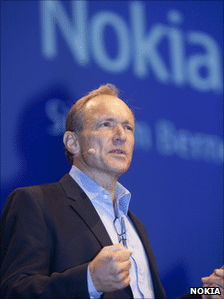
Tim Berners-Lee Calls for Free Internet for All -- Full Story Online

BBC 15 September 2010 Last updated at 05:58 ET

Tim Berners-Lee calls for free internet worldwide

The inventor of the Web has called for everyone to have access to his creation for free.

Tim Berners-Lee said that he would like to see everybody given a low-bandwidth connection “by default”.

He said the web could be instrumental in giving people access to critical services such as healthcare.

Currently, he said, just one-fifth of the world's population has access to the web.

“What about the other 80%?” he asked the audience at the Nokia World conference in London.

Tip of the Hat to Pierre Levy at LinkedIn.

Phi Beta Iota: Sir Tim is on target but misses the critical point, which is that the Internet is already free, what is NOT free is the handheld device needed to access it.  Earth Intelligence Network and its 24 co-founders are committed to the idea of free cell phones for the five billion poor, along with national call centers that educate them “one cell call at a time” while also providing access to the kinds of Internet application that the Grameen AppLab is creating.