Afghanistan Hashish, (not only opium) Declared World’s Largest Producer

01 Agriculture, 01 Poverty, 03 Economy, 04 Education, 09 Terrorism, 10 Security, 10 Transnational Crime, 11 Society, 12 Water, Threats
0Shares
read the article
By VIVIENNE WALT

It's hardly news that Afghanistan's huge opium crops supply more than 90% of the world's heroin. But now U.N. officials say Afghanistan is also the world's biggest producer of another drug – hashish. In its first attempt to calculate how much cannabis is grown in the country, the U.N. Office of Drugs and Crime says in a report released in Kabul on Wednesday that Afghan farmers earned up to $94 million last year from selling between 1,500 and 3,500 tons of hash – the resin extracted from cannabis crops.

U.S. and NATO officials believe that at least part of this revenue goes to insurgent groups to finance their attacks against coalition forces in southern Afghanistan, where almost all of the 139 soldiers killed this year have died. The report found that farmers grow about 17,000 hectares (about 42,000 acres) of cannabis in half of the country's 34 provinces – largely in the south. That is where Afghanistan's most fertile land is, the report says, and its rich soil produces an “astonishing yield” of potent hashish of about 320 pounds per hectare – more than three times the yield from cannabis grown in Morocco, another big hash producer. “Afghanistan is using some of its best land to grow cannabis,” says Antonia Maria Costa, director of the U.N. drug office in Vienna. “If they grew wheat instead, insurgents would not have money to buy weapons and the international community would not have to spend hundreds of millions of dollars on food aid.” (See pictures of cannabis culture.)

  • Afghanistan Cannabis Survey (Full report) (pdf)
    Income from cannabis per ha (gross/net) US$ 3,900 / US$ 3,341
    Income from opium per ha (gross/net) US$ 3,600 / US$ 2,005
    Income from wheat per ha (gross/net) US$ 1,200 / US$ 960

Journal: Israel’s Government a Mutant Cancer

04 Inter-State Conflict, 09 Justice, 10 Security, 11 Society, 12 Water, Government, Military, Peace Intelligence
0Shares
Chuck Spinney

If the peace settlement does not include relocation assistance (economic), the settlers who want to relocate will be left ruined–at the same time that the government has ruined them, it plans to once again ruin Lebanon.  Apart from economic equity for the relocatable settlers, a regional water management treaty that is fully transparent and enforceable through international sanctions against Israel as needed, are essential elements of any sustainable regional peace plan that integrates prosperity for all.

Israel Threatens Lebanon … Again

A New Middle East War?

By CONN HALLINAN, Counterpunch, 30 Mar 2010

When Israeli Minister without Portfolio Yossi Peled said recently that a war with Lebanon’s Hezbollah was “just a matter of time” and that such a conflict would include Syria, most observers dismissed the comment as little more than posturing by a right-wing former general. But Peled’s threat has been backed by Israeli military maneuvers near the Lebanese border, violations of Lebanese airspace, and the deployment of an anti-missile system on Israel’s northern border.

The Lebanese are certainly not treating it as Likud bombast.

“We hear a lot of Israeli threats day in and day out, and not only threats,” Lebanese Prime Minister Saad Hariri told the BBC. “We see what is happening on the ground and in our airspace…during the past two months—every day we have Israeli airplanes entering Lebanese airspace.” Hariri added that he considered the situation “really dangerous.”

By Tobias Buck in Karnei Shomron
Financial Times,March 30 2010 20:06

Benny Raz put up a “For Sale” sign outside his home last year, but he admits there is little hope of finding a buyer. The house itself is a three-bedroom property on a quiet street, with a garden and terrace offering views across rolling hills dotted with olive trees.

The problem is one of location: Mr Raz’s house sits on the outskirts of Karnei Shomron, a Jewish settlement built in the Israeli-occupied West Bank. He bought the house 15 years ago for $130,000 (€97,000, £87,000). Today, Mr Raz says, no buyer is willing to pay more than $70,000 for the property – not nearly enough for the family to afford another place inside Israel itself.

Like thousands of so-called “economic settlers”, the 57-year-old moved to the West Bank for the cheap housing, the tax breaks and the promise of a comfortable life. Now, many of them find they are stuck. “The government said: I will help you buy a house in Karnei Shomron, so I went with my family. I came for economic reasons, not ideological reasons. I came because I wanted a cheaper house,” says Mr Raz.

Phi Beta  Iota: There is nothing wrong with Israel, or the United States of America, that could not be fixed by restoring informed participatory democracy.  Right now both governments are out-of-control and totally corrupt monsters, both cancers encroaching on everything they touch.

Journal: Barack Obama–Corruption, Not Change

05 Energy
0Shares
Full Story Online

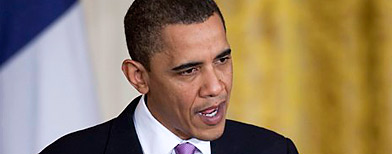
Obama to allow oil drilling off Virginia coast

By PHILIP ELLIOTT, Associated Press Writer

Wed Mar 31, 6:18 am ET

WASHINGTON – In a reversal of a long-standing ban on most offshore drilling, President Barack Obama is allowing oil drilling 50 miles off Virginia's shorelines. At the same time, he is rejecting some new drilling sites that had been planned in Alaska.

Phi Beta Iota: This decision is corrupt on so many levels we will leave our comment at that.

21.3% of Malicious ‘Spam’ Researched by Symantec comes from Shaoxing China (30% China, 21.1% from Romania, US 3rd)

02 China, Cyberscams, malware, spam
0Shares

Researchers based in Symantec studied over 12 billion emails and
identified that almost 30% of all malicious emails are sourced from
within China and that 21.3% came from the Chinese city of Shaoxing
alone.  The researchers were also able to identify that the primary
targets for these malicious emails were human rights activists and
experts in Asian defence policy, which they claim indicates a strong
state involvement in the attacks.  The research shows that 28.2% of the
targeted attacks came from China, with 21.1% coming from Romania and the
United States coming in as the third highest source of malicious emails.

Read the original article

PhiBetaIota: It's worth noting that the article says “hacker” and later “attacks” as though they are equivalent. Anyone with a more sophisticated understanding of hacking is aware that this is not the case, and that there is a whole community of hackers that embody a whole other non-malicious form of hacking (see 2600.com & their summer conference in NYC).