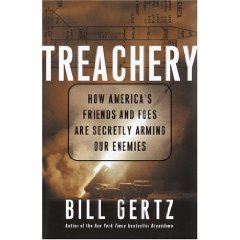
Review: Treachery–How America’s Friends and Foes Are Secretly Arming Our Enemies (Hardcover)

4 Star, Intelligence (Government/Secret)
0Shares

Amazon Page
Amazon Page

4.0 out of 5 stars Useful but Hypocritcal,

January 11, 2006
Bill Gertz
Bill Gertz is a “thought leader” and what he has to say is always worth listening to or reading.

This book is absolutely first rate as far as it goes, in lambasting the French, the Germans, the Russians, China, Iran, North Korea, Libya, Syria, and the United Nations for their varied contributions to global instability and corruption.

However, the book is also hypocritical in ignoring the documented fact that the U.S. is by far the largest arms merchant and the biggest bully on the block. The book also ignores Israel and the 38+ dictators that the U.S. supports (there are actually 44 still left but six are included in this book).

A third of the book is an appendix of classified documents with a great deal blocked out, this is one of the author's signature features, but the bottom line is that the book is a very large Op-Ed. Worth buying and reading, absolutely spot on, but hypocritical and incomplete.

Vote on Review
Vote on Review

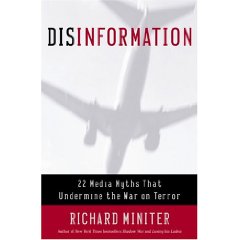
Review: Disinformation –22 Media Myths That Undermine the War on Terror (Hardcover)

3 Star, Information Society, Misinformation & Propaganda
0Shares

Amazon Page
Amazon Page

3.0 out of 5 stars One third correct, one third misleading, one third nonsense,

January 11, 2006
Richard Miniter
This book caught my eye in an airport bookstore, and I certainly do recommend it for purchase and review if you can afford it (see last line), but with a ton of salt. It could be usefully read with Larry Beinhart's “Fog Facts,” Robert Parry's “Lost History,” and Roger Shattucks's “Forbidden Knowledge.” Taken together, the four books provide a superb overview of what can be known, ignored, lost, hidden, or manipulated.

One third of these myths are correct and acceptable. For example, the myth that Bin Laden was funded by CIA (he was not, he was funded by the Saudi government), and the myth that Bin Laden is extraordinarily wealthy (he is not, he gets up to $10M a year from varied sources including $1M from his family in Saudi Arabia) are both well known to those who read widely in this area.

One third of these myths are misleading and incomplete. For example, the myth that Bin Laden was not heard of suggests that he came out in 1998 when he actually came out, with the full support of the Saudi government, in 1988. The author appears unwitting of the book by Yossef Bodansky on “Bin Laden: The Man Who Declared War on the US” and varied interviews in the pre-1998 era when Bin Laden said, on the record and on camera, that he planned to attack America if it did not remove its military forces from the Middle East. The myth on the 6 August CIA briefing to the President is *very* misleading, and ignores the enormous additional information that was provided.

Some of the myths are pure nonsense. The three that stand out are the author's attempt to show that Iraq had a great deal to do with Al Qaeda; that Al Qaeda does not have nuclear devices; and that Halliburton has not really profited from Iraq. The author is disingenuous at best. All of the Arabic literature clearly shows that Bin Laden despised Saddam Hussein and had no need nor desire for his support, incidental encounters not-withstanding (the President of Czechoslovakia, Vaclav Havel, has repeatedly stated that the myth of a meeting in Prague is just that–a myth). Paul Williams has done a fine job of bringing together all the open source information on Al Qaeda having both nuclear devices, and access to Pakistani and Russian and Iranian expertise in “refreshing” those devices (see my review of “Osama's Revenge: THE NEXT 9-11 : What the Media and the Government Haven't Told You”). Finally, on Halliburton (which includes the Brown and Root company that many say smuggles drugs back into the US with CIA complicity), the author is actively either ignorant or dishonest. Halliburton cooks its books, plain and simple. They are under active investigation for cheating the military in Iraq, and they paid $15M on billions in profit in one tax year that has been publicly examined.

One quarter of the book is appendices of dubious value.

Bottom line: if you make more than $75K a year and like to be informed, buy the book. If you make less, do not bother, get a good steak instead.

Vote on Review
Vote on Review

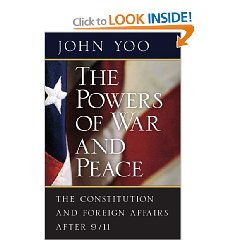
Review: The Powers of War and Peace–The Constitution and Foreign Affairs after 9/11 (Hardcover)

3 Star, Congress (Failure, Reform), Empire, Sorrows, Hubris, Blowback, Executive (Partisan Failure, Reform)
0Shares

Amazon Page
Amazon Page

3.0 out of 5 stars Useful in Understanding the Arrogance and Ignorance of Presidential Sychophants,

January 8, 2006
John Yoo
EDITED 17 Oct 07 to add links to ten relevant books.

There is absolutely no question but that the author of this book is patriotic, educated (after the American fashion), and well-intentioned. Sadly, this does not mean that he has any common sense, any historical context, any strategic vision, nor any relevance to the future. Indeed, and I rarely write negative reviews (5 out of 1015+), this book is most useful for understanding the ignorance and arrogance of Presidential sycophants who place loyalty to a single man and office and party (or rather, ideological branch of the party) above their loyalty to the Constitution, the Republic, or the public interests they are supposed to be defending.

The book is best summarized by a quote from a White House staffer who is reported to have said, in talking to an expert on foreign affairs, “You must be one of those reality-based people. We are an empire, we make our own reality.”

The problem with this arrogant and ignorant statement, which is manifested throughout this interesting book, is that a reality based on ideological fantasy and the security of hiding behind the Secret Service completely begs off on confronting the harsh realities of a world in which 5 billion pissed off poor people are inevitably going to sponsor 1 million armed terrorists who know how to create Improvised Explosive Devises (IED) and know how to deliver the “death of a thousand cuts” to US infrastructure (water and fuel pipelines, energy generators, shipping port cranes, key communications switching stations, key banks, etc.

The “sucking chest wound” in this book is that it does not recognize the role played by the (once) wise men of Congress, in two houses–one, the Senate, designed for long-term deliberation, the other, the House, designed for mid-term respect for the “wisdom of the crowds,” both of which were created by the Founders to temper Presidential hubris, Presidential ambition, and Presidential mendacity.

The fact that our Congress today is grotesquely corrupt and dysfunctional does not in any way render the above point moot. As we saw in the rush to war on Iraq, which has now put us in a six-front-war that will last 100 years, the Executive is all too fragile and malleable and prone to short-term error with long-term consequences.

The author makes a case for Presidential power in this book that is isolated from historical, ideo-cultural, socio-economic, techno-demographic, and natural-geographic context. This is not a debate about how to get from here to 2008 “efficiently,” but rather a debate about how to survive and prosper as a Nation over the next 200 to 500 years.

Were the author more intellectually-honest and reality-aware, he would understand that the future of American cannot be secured by a few guns against 5 billion at the “Bottom of the Pyramid,” and he would understand that the end of cheap oil, the end of free water, the rise of pandemic disease, the looming catastrophes of poverty and environmental degradation are all context within which long-term strategies are essential, in which we must help create indigenous wealth that is scalable and self-generating.

Bottom line: this book represents the kind of narrow, ignorant, sycophantic view of the Presidency that has come to characterize the Cheney-Addington-Gonzalez view of Bush as a puppet and the people as stupid. If this book were to become “reality,” not only would Congress and the people forfeit all their powers (of the purse, of the power to declare war, of the power to hold elections, of the power to live under the rule of law), but in becoming “reality,” this book's premises would destroy the Republic.

Read this to understand the internal threat to our Republic. Well-intentioned individuals who have no clue how to serve the people, and are intent on serving their narrow constituency of a single President whose wealthy pals want to loot the Commonwealth with as few restrictions as possible until the party is over and they can move to Switzerland and leave us to deal with their multiple deficits.

I have three sons. This book has persuaded me that they must each receive a liberal arts education before going on to specialize in a craft, for in this book, I see all that is evil about narrowly-educated individuals who mean well but know little of the real world.

See also:
Vice: Dick Cheney and the Hijacking of the American Presidency
American Fascists: The Christian Right and the War On America
Running on Empty: How the Democratic and Republican Parties Are Bankrupting Our Future and What Americans Can Do About It
The Broken Branch: How Congress Is Failing America and How to Get It Back on Track (Institutions of American Democracy)
Breach of Trust: How Washington Turns Outsiders Into Insiders
Crossing the Rubicon: The Decline of the American Empire at the End of the Age of Oil
The Road to 9/11: Wealth, Empire, and the Future of America
Wars of Blood and Faith: The Conflicts That Will Shape the 21st Century
Resource Wars: The New Landscape of Global Conflict With a New Introduction by the Author
The Search for Security: A U.S. Grand Strategy for the Twenty-First Century

Vote on Review
Vote on Review

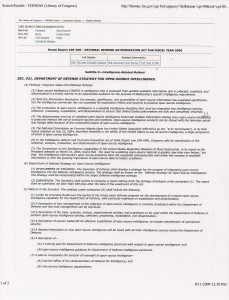
2006 House Appropriations Committee Public Law 109-163 6 January 2006 Section 931 Department of Defense Strategy for Open-Source Intelligence

Historic Contributions, Legislation
0Shares
HAC DoD OSINT Strategy

Here is a summary of what Congress demanded from DoD that has not been provided to date:

1)Ā  A plan for providing funds

2)Ā  A description of management now and as it could be improved

3)Ā  A description of tools, systems, centers, organizational entities amd procedures

4)Ā  A description of proven tradecraft including operational security

5) A description of OSINT fusion with other disciplines

6)Ā  A description of a training plan and guidance for DoD intelligence personnel

7) A plan to incorporate oversight of OSINT

8) A plan to incorporate the OSINT specialty int oall existing DoD personnel systems;

9) Aplan to utilize reserve personnel; and

10) A plan for the use of the Open Source Information System (OSIS).

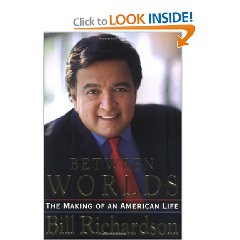
Review: Between Worlds–The Making of an American Life (Hardcover)

4 Star, Biography & Memoirs
0Shares

Amazon Page
Amazon Page

4.0 out of 5 stars Disappointing–shallower than anticipated,

January 5, 2006
Bill Richardson
I am a Hispanic on my mother's side, completely disdainful of both the Republican and the Democratic parties for having “sold out” to special interests and betrayed the public trust, and actively interested in “alternative candidates” that might make the leap from being a captive of the machine to being a true representative of the people.

Bill Richardson is undeniably attractive to both Hispanics and to Native Americans, and he moves easily and ably in the Anglo world of energy and environmental politics. As a former UN Ambassador and as a former Secretary of Energy I bought this book eagerly anticipating a “roadmap” for what the author calls the “New Progressivism.”

This is not such a roadmap. While I respect the author very much, this book reads more like a dictated and then ghost-edited “formula” book. It communicates absolutely no sense of the over-all challenges facing America and the world, not even in the energy arena. “Peak Oil” is not mentioned in this book, and neither are alternative sources of energy. Global poverty and disease and water scarcity are not mentioned in this book.

While the author does discuss predatory lending in his own state, something he commendably seeks to stop, he seems to have no sense of the global impact of immoral predatory capitalism.

While the author is clearly an exceptional negotiator able to charm dictators, and he provides several admirable stories to support this view, he does not seem to grasp that our foreign policy is “gutted” by our continuing support for 44 dictators.

There are some gems in here, for instance when he notes that Madeline Albright slammed the door shut on the Iranians when they were seeking rapprochement with the US through UN channels.

While the author does not stress the point, he does seem to champion an end to the embargo on Cuba, and a re-opening of a full relationship that should inevitably profit both countries. Perhaps his Mexican heritage has ensured that he heard the Mexican President when he refused to duplicate the US embargo, with the famous words “if I were to say that Cuba was a threat to our national security, 40 million Mexicans would die laughing.”

I have plenty of underlining throughout the book, and it was sufficient to warrant my full attention over two flights in and out of Tampa, but I put the book down thinking to myself that the book was a tease, not the main event.

The author says that he has produced over 30 major policy studies for his New Mexican governorship, and I believe it. I'd like to see a serious book by this man, one that addresses the key issues facing America across every Cabinet department, and ends with a chapter on ends and means. To his credit, he is a strong champion of a balance budget.

Nice guy–clearly a strong candidate for Secretary of State. It is not at all clear from this book that he is ready to run for President.

Vote on Review
Vote on Review

Review: Under and Alone–The True Story of the Undercover Agent Who Infiltrated America’s Most Violent Outlaw Motorcycle Gang (Hardcover)

4 Star, Crime (Organized, Transnational), Intelligence (Government/Secret)
0Shares

Amazon Page
Amazon Page

4.0 out of 5 stars Over-Sold, Interesting but on the Margins,

January 5, 2006
William Queen
In a global economy of perhaps $5 trillion a year, fully another $2 trillion a year is illicit (see the book by Moises Naim of that title). This means not only that there is $2 trillion a year in illegal activities that include murder, rape, trade in women and children, and so on, but also that this $2 trillion is not taxed and therefore does not contribute to the social programs that are essential to keep a nation strong. Since motorcycle gangs are now global, vicious, and largely “out of control,” the book struck me as helpful and worth reading.

It is worth reading, and there is no question but that the author risked his life, perhaps even ruined his life, by spending a long time penetrating the Mongols, arguably the most vicious (and unwashed) of the motorcycle gangs.

I put the book down with three thoughts:

1) There has got to be a better way to put gangs like this out of business. Cities have sanitation codes, there ought to be a way to keep people like this in remediation without having to risk officer's lives penetrating their gangs.

2) An awful lot of taxpayer dollars and a lot of very high-quality officer time went into this, at great personal risk, with relatively marginal results.

3) Gangs share a couple of similarities with terrorists: they have access to very high-powered lawyers and a great deal of money when they need it; and law enforcement is ham-strung by out of date laws and conventions that insist on treating out and out ruthless “Mongols” with the same rules used for more civilized members of society. I cannot but help conclude that we ought to have a “no holds barred” option on gangs in the same way that we now have a no holds barred option on terrorists.

Vote on Review
Vote on Review