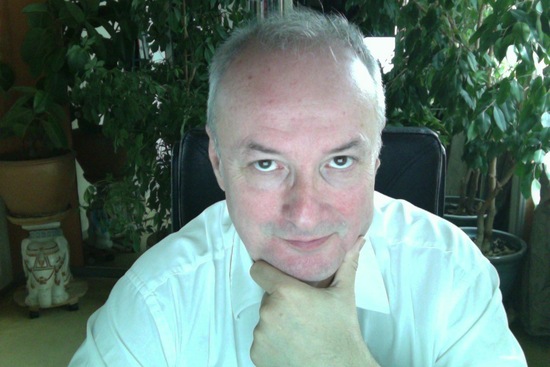
George thought you might be interested in the op-ed below published today by Guinean President Alpha Condé. President Condé writes about the struggle to reform business practices in Guinea’s mining sector so all the people of Guinea can benefit from the country’s immense mineral wealth. The op-ed comes in the context of Conde’s participation in this year’s G8 meeting, which is focusing on trade, taxes, and transparency. OSF has been in the forefront of promoting transparency particularly in the governance of natural resources. President Condé is emerging as a champion of these values in Africa. His op-ed is an elegant statement of why the issue is so vital to the continent’s development.
We need G8 support for transparency and good global business governance so that our assets can be used to benefit everyone rather than just a few greedy mining companies and politicians.
In December 2010, I was elected president of Guinea in its first truly open and democratic elections. I said then that I had inherited a country, not a state. Our economy was in ruins, our people among the poorest on the planet and our political system weakened by decades of corruption, dictatorship and misrule.
It needn't be so. Guinea has vast mineral wealth, the world's largest reserves of bauxite and some of the highest grade iron ore deposits.
Making these assets work for all our people rather than a few unscrupulous international mining companies and politicians means confronting the deeply ingrained corruption in our politics and business. But uprooting such corruption can be painfully slow, and is often dangerous. After all, vested interests do not welcome challenge.
On 22 November 2013, the Oswald Innocence Campaign will be hosting the premiere event to commemorate the 50th observance of the JFK assassination. Presenting cutting-edge research on the death of our 35th President that holds the keys to understanding what took place, it will feature some of the best authors on some the most important evidence that clarifies and illuminates that tragic event in Dallas, 50 years ago.
The research presented will advance extensive, detailed evidence establishing that the assassination of JFK was a “national security event”, which involved crucial elements of the most powerful institutions in the American government, including the CIA, the Joint Chiefs, the FBI and the Secret Service, who conspired with the Mafia, anti-Castro Cubans and Texas oil men to remove JFK from office and replace his policies with those of Lyndon Baines Johnson.
As Ralph Cinque has observed, this November 22nd, the government and the media are going to be going all out with the official lie about JFK–and with extreme prejudice. They are going to pull all the stops to promote the indefensible and long-disproven lie–one more stomach-churning time. What can we do to stand up to this evil pomposity? We can literally stand together–in Santa Barbara. We can come together and evoke the call for JFK truth. A coup d-etat took place in 1963, and we have been living with the results of it for half a century–with millions of dead across the globe. With the death of John Kennedy, the US became a perpetual warfare state, and we live every day of our lives with the consequenes of that monstrous fact. So, join us on this very special day to find strength in numbers, to make a blip on the national radar and take personal responsibility for disseminating the truth about JFK.
What you weren’t supposed to ever know
The evidence that substantiates the scenario of the assassination as a national security event is extensive and compelling. It has generate enormous resistance even within the JFK community, where several of those who will present their findings have been banned in a massive effort to suppress the truth and preserve the illusion that it was an event of a different kind, where the view that “the Mafia did it” or “the Cubans did it” or “the KGB did it” are frequently advanced, but where none of them could have effected the cover-up that was indispensable to convey the false impressions this conference will correct:
* Lee Harvey Oswald was working for the government when he was framed for the death of JFK
* Photos and films allegedly taken during the assassination were altered to conceal the truth
* Autopsy photos and X-rays were altered and faked to support a false account of the murder
* LBJ was a pivotal player–perhaps the pivotal player–who brought about the assassination
* George H.W. Bush was not only in Dealey Plaza but took an active role in carrying out the plot
* There were multiple shooters who tied the conspirators together to insure their mutual silence
* They included a Deputy Sheriff, an Air Force expert, an anti-Casto Cuban, a Police Officer and a Mafia shooter
* LBJ’s personal hit-man, who killed a dozen people for Lyndon, also appears to have been directly involved
* The Mafia could not have extended its reach into Bethesda Naval Hospital to alter X-rays and photographs
* Anti-Castro Cubans would have been unable to substitute someone else’s brain for that of JFK
* While the KBG had the capability to alter films, it could not have gained access to the Zapruder film
The experts assembled for this unique conference–which will explain how it was done, who was responsible and why, and how it was covered up–have invested decades upon decades of their lives to research on crucial aspects of the case, including the medical, the ballistic, and the film and photographic evidence. They include the leading authorities on the role of Lyndon Baines Johnson, on the involvement of George H.W. Bush, on the management of the cover-up, on the death of key witnesses intimately related to JFK and by others who personally knew the man accused of killing him. If you are there, you will understand what went down.
Erin Niemela's recent proposal that we amend the Constitution to ban war is provocative and persuasive. Count me in. But I have a related idea that I think should be tried first.
While banning war is just what the world ordered, it has about it something of the whole Bush-Cheney ordeal during which we spent years trying to persuade Congress to ban torture. By no means do I want to be counted among those opposed to banning torture. But it is relevant, I want to suggest, that torture had already been banned. Torture had been banned by treaty and been made a felony, under two different statutes, before George W. Bush was made president. In fact, the pre-existing ban on torture was stronger and more comprehensive than any of the loophole-ridden efforts to re-criminalize it. Had the debate over “banning torture” been entirely replaced with a stronger demand to prosecute torture, we might be better off today.
We are in that same situation with regard to war. War was banned 84 years ago, making talk of banning war problematic.
>We were in that same situation, in fact, even before the U.N. Charter was drafted 68 years ago. By any reasonable interpretation of the U.N. Charter, most — if not all — U.S. wars are forbidden. The United Nations did not authorize the invasion of Afghanistan or Iraq, the overthrow of the Libyan government, or the drone wars in Pakistan or Yemen or Somalia. And by only the wildest stretch of the imagination are these wars defensive from the U.S. side. But the two loopholes created by the U.N. Charter (for defensive and U.N.-authorized wars) are severe weaknesses. There will always be those who claim that a current war is in compliance with the U.N. Charter or that a future war might be. So, when I say that war is illegal, I don't have the U.N. Charter in mind.
Nor am I thinking that every war inevitably violates the so-called laws of war, involving countless atrocities that don't stand up under a defense of “necessity” or “distinction” or “proportionality,” although this is certainly true. Banning improper war, while useful as far as it goes, actually supports the barbaric notion that one can conduct a proper war. The situation in which a war would be a “just war” is as mythical as the much-imagined situation in which torture would be justified.
Nor do I mean that U.S. Constitutional war powers are violated or fraud is perpetrated in making the case for war, although these and other violations of law are frequent companions of U.S. wars.
I also do not want to dispute the advantages of banning war in the highest law, the Constitution. There is a common misconception that holds up lesser, statutory law as more serious than the Constitution or the treaties that it makes “supreme law of the land.” This is a dangerous inversion. Edward Snowden is right to expose violations of the Fourth Amendment. Senator Dianne Feinstein is wrong to insist that those violations have been legalized by statutes. Amending the Constitution to ban war would (if the Constitution were complied with) prevent any lesser law from legalizing war. But a treaty would do that too. And we already have one.
As we ask for your support for our ongoing work, we want to share a few thoughts on the nature of that work.
We are coming to see co-intelligence as the capacity of life and all of us to consciously participate in dynamic, evolving wholeness – in ourselves, in our groups and communities, in the life of our world, and in the wondrous ongoing story of our universe.
There is real joy in such participation. There is also abundance, peace, justice, and sustainability… and deep meaning and wisdom.
The Co-intelligence Institute seeks to help co-intelligent participation become an indelible part of our cultures, our political and economic systems, and the ways we all think, feel, and live our lives.
Today's crises make it increasingly hard to live in the old ways. We are rapidly learning we can't be oblivious participants, acting as if we are separate from each other and the world, treating life as if it is there just to torment or serve us.
The newly obvious consequences of those behaviors and attitudes have inspired a global wave of evolutionary engagement – what Swami Beyondananda calls “the Great Upwising” – creating new and better ways to participate consciously and vibrantly in and with life, together.
Unless he was an asset of the Chinese or some other foreign intelligence service prior to “coming out” as he did, I don't think it's likely any foreign intel service is going to latch onto Edward Snowden.
Amazon Page
If he were already a recruited asset, one would think that his case officers would have given him a better exfil plan than “fly to Hong Kong and hold a press interview.” In fact, were he already on some service's payroll, the counsel would have been “stay right where you are, you can do us the most good in your current Booz Allen position.” He is a “property,” but don't think it likely that he would be picked up in such a short time by any country's service, China included.
To use jargon, Snowden is “blown” — that is, he is a hot potato, with many downsides politically and from almost any perspective. My guess is that he realized after his flight to HK and going public that this was not a very swift move, and that he was in danger of being picked up by the authorities, acting on behalf of the local U.S. mission there (or, in his paranoid mind's eye, snatched and rendered by the hated CIA) — and he was relentlessly besieged by media — so he disappeared himself for the moment, which won't last in Hong Kong, a very well-organized society with a super security force. In short, any service that might like to contact him for a debriefing or other relationship would right now be appealing to its highers (the very top) with arguments as to just why they would wish to touch this guy at this time.
AMYGOODMAN: William Binney, can you respond to the director of national intelligence, James Clapper? And then I want to ask Glenn to do the same.
WILLIAMBINNEY: Sure. In my mind, that’s a red herring. I mean, it’s just a false issue. The point was, the terrorists have already known that we’ve been doing this for years, so there’s no surprise there. They’re not going to change the way they operate just because it comes out in the U.S. press. I mean, the point is, they already knew it, and they were operating the way they would operate anyway. So, the point is that they’re—we’re not—the government here is not trying to protect it from the terrorists; it’s trying to protect it, that knowledge of that program, from the citizens of the United States. That’s where I see it.
U.S. agencies did not find Headley or warn foreign counterparts about him in the first half of 2009 while he conducted surveillance in Denmark and India and met and communicated with ISI officers and known Lashkar and al-Qaida leaders.
In an exclusive interview carried out from a secret location in the city, the former Central Intelligence Agency analyst also made explosive claims that the US government had been hacking into computers in Hong Kong and on the mainland for years.
The government would like to shift the conversation to accuse other people of wrongdoing, when it is their own wrongdoing that should be discussed and examined before the American people. David Colapinto, a lawyer who has represented a number of whistleblowers
When the federal government went looking for phone numbers tied to terrorists, it grabbed the records of just about everyone in America. Why every phone number? “Well, you have to start someplace,” Director of National Intelligence James Clapper told NBC News on Monday. (J. Scott Applewhite / Associated Press / June 12, 2013)
According to Snowden, the NSA has engaged in more than 61,000 hacking operations worldwide, including hundreds aimed at Chinese targets. Among the targets were universities, businesses and public officials.
Snowden's allegations appear to give weight to claims by some Chinese government officials that the country has been a victim of similar hacking efforts coming from the United States.
With some honorable exceptions, their primary function is protecting the interests of the political and corporate establishments, often by finding some novel and tendentious way to legitimate their self-interested actions.
Within this framework, scandal is best understood as a disruption of the natural, sacred order, which is restored by ritual exposure, condemnation, punishment, and cleansing. Conceptually, the essence of scandal is that things are not as they seem, or as they should be – that supposedly “high” things are actually “low”, that righteous things are corrupt, honourable things dishonorable – and that all must be made right again.
The techno-social revolution that we are living through spurred by the Internet, social media and cleverly designed, inconspicuous platforms are inviting us to throw away our personal privacy. This revolution is driven by a combination of commercial competition between the Information Age commerical giants and encouraged by governments desperate to deliver us to the ‘promised land' of safety and security. The question is – whose safety, whose security?
A poll conducted by the Pew Research Center over the four days immediately after the news first broke found that just 41 percent of Americans deemed it unacceptable that the National Security Agency “has been getting secret court orders to track telephone calls of millions of Americans to investigate terrorism.”
“Existing laws do not seem to have kept up with the threat to privacy and other rights posed by the government’s relatively new capacity to collect and analyze quickly vast quantities of personal information,” said Kenneth Roth, executive director at Human Rights Watch.
Against the Nationalist Fragmentation of Cyberspace & Against “Astroturf Activism”
The Arab Spring redrew the battle-lines between over the control of information between the statist/capitalist elites and the popular classes – raising questions of increased restriction and surveillance, and of the limits of cyber-activism. In some ways this battle is often mischaracterised as being a narrow debate between cool intellectual property technocrats and wild-eyed free-use pirates, or as being a political dispute between authoritarian regimes and free speech activists, with no wider relevance to society. But it is clear that what is at stake is the global ideology (and exploitative practice) of corporatist enclosure versus that of the creative commons; in other words, it is more even than a universalist human rights concern, but is rather an asymmetrical war between the parasitic and productive classes over a terrain of power/wealth-generation known as the knowledge economy.

 As Ralph Cinque has observed, this November 22nd, the government and the media are going to be going all out with the official lie about JFK–and with extreme prejudice. They are going to pull all the stops to promote the indefensible and long-disproven lie–one more stomach-churning time. What can we do to stand up to this evil pomposity? We can literally stand together–in Santa Barbara. We can come together and evoke the call for JFK truth. A coup d-etat took place in 1963, and we have been living with the results of it for half a century–with millions of dead across the globe. With the death of John Kennedy, the US became a perpetual warfare state, and we live every day of our lives with the consequenes of that monstrous fact. So, join us on this very special day to find strength in numbers, to make a blip on the national radar and take personal responsibility for disseminating the truth about JFK.