Michael Bauwens: P2P Foundation Open Ontology

Advanced Cyber/IO, Collective Intelligence, Earth Intelligence
Michel Bauwens

Open Ontology, by Paola Di Maio

While different definitions for ontology exist, it can be said that Ontologies are conceptual and semantic frameworks representing models of the world, as well as explicit and complete knowledge representations of a model of reality, expressed using different formalisms and artifacts. When trying to understand what makes up an ontology, different authors have different views. Mike Uschold et al. say that an ontology may take a variety of forms, but it will necessarily include a vocabulary of terms and some specification of their meaning, such as definitions and an indication of how concepts are interrelated, which collectively impose a structure on the domain and constrain the possible interpretations of terms. Particularly in Web based environments, an ontology delimits the boundary of the system's knowledge and functional domain, and serves as conceptual and semantic reference for software development. In practical terms, entities and attributes, classes, objects and properties, as well as data models, data schemas, metadata and vocabularies and their extensions, when ‘normalized' all contain information that models a view of the world, for the purpose of a given system, and constitute the representation of such domain, in short, an ontology.

The expression ‘open ontology' is not new, and it is used generically to reference ontologies which are in the public domain, and sometimes to ontologies that have been developed using collaborative processes.

In our work, we have come across the need to define and qualify, at least to some extent the degree of ontology ‘openness':

Read full page.

Continue reading “Michael Bauwens: P2P Foundation Open Ontology”
David Jimenez: Visual Understanding Environment – Open Source, Tufts, Digital Education and Research

04 Education, Academia, Advanced Cyber/IO, Collective Intelligence
David Jimenez

The Visual Understanding Environment (VUE) is an Open Source project based at Tufts University. The VUE project is focused on creating flexible tools for managing and integrating digital resources in support of teaching, learning and research. VUE provides a flexible visual environment for structuring, presenting, and sharing digital information.

03.08.12 – Release of VUE 3.1.2 Read More

03.15.11 – Release of VUE 3.1.1 Read More

02.03.10 – Announcing the release of VUE 3.0. Read more.

Learn more, see graphics, free download.

Chuck Spinney: Thinking About Gaza

Civil Society, Corruption, Cultural Intelligence, Government, IO Deeds of War, Military, Peace Intelligence
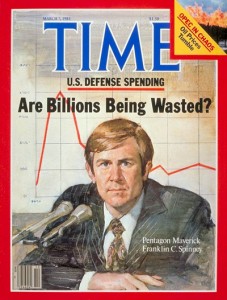
Chuck Spinney

Patrick Seale reviews an important new book – Histoire de Gaza – by Professer Jean-Pierre Filiu of the Institute for Political Science in Paris.

The Need to Defuse the Gaza Time-Bomb

by Patrick Seale

Agence Global, 18 Oct 2012

One of the most urgent tasks for the international community in 2013 must surely be to lift Israel’s cruel siege of Gaza — now entering its sixth year — and end the misguided boycott of its Hamas government. There is hardly a more flagrant example of injustice in the world today than the situation of the 1.6 million inhabitants of this hugely over-crowded Strip — many of them refugees driven out of Palestine by the new Israeli state in 1947-48. They must be allowed to live a normal life — to travel, to manufacture, to trade, to educate their children — free from the constant danger of Israeli air strikes.

French scholar Jean-Pierre Filiu, a professor at the prestigious Institute of Political Science in Paris, has published an important 400-page history of Gaza, from ancient times to the disturbed present. His Histoire de Gaza (Editions Fayard, Paris, 2012) is the most comprehensive ever written and should be required reading for all those concerned with the long agony of the Palestinians in their struggle for statehood.

It is impossible in a short article to do justice to Filiu’s sweeping narrative, meticulous research and detailed findings, but it is perhaps worth pointing out that he lays blame for the as yet unresolved and indeed worsening crisis on three main actors:

  • first and foremost on Israel, concerned only with its own security and brutally indifferent to Palestinian life;
  • secondly, on Fatah and Hamas, those old rivals, still locked in a fratricidal struggle as if unaware that their national cause is slipping away before their eyes;
  • and thirdly, on the humanitarian aid provided by the international community which has kept Gaza’s population alive but has also, paradoxically, prevented Gaza’s economic development and its efforts at self-sufficiency.

Read full article.

Phi Beta Iota:  Gaza is the worst of 5,000 distinct geo-cultural communities under seige.  It represents the complete absence of ethics in Western “diplomacy.”

Berto Jongman: Emergence of Heart Intelligence YouTube (5:40)

Collective Intelligence, Cultural Intelligence, Earth Intelligence, Gift Intelligence, Peace Intelligence
Berto Jongman

The heart is the first organ to develop, and the prime regulator of the rest of the body's chemistry and function.  From the provided description:

For over 22 years, Gregg Braden has searched high mountain villages, remote monasteries and forgotten texts to uncover their timeless secrets. Combining his discoveries with the best science of today, his original research crosses the traditional boundaries of science, history, and religion offering fresh insights into ancient mysteries.

The Institute of HeartMath is an internationally recognized nonprofit research and education organization dedicated to helping people reduce stress, self-regulate emotions and build energy and resilience for healthy, happy lives. Personal coherence, also known as psychophysiological coherence, refers to the synchronization of our physical, mental and emotional systems. It can be measured by our heart-rhythm patterns: The more balanced and smooth they are, the more in sync, or coherent, we are.

Personal coherence, also known as psychophysiological coherence, refers to the synchronization of our physical, mental and emotional systems. It can be measured by our heart-rhythm patterns: The more balanced and smooth they are, the more in sync, or coherent, we are.

Global coherence refers to the mental, physical, emotional and spiritual well-being of the greater community of human beings, while acting in concert with their own hearts, each other and nation to nation in harmony with our living planet. HeartMath believes coherence on a grand scale is highly achievable when large numbers of people focus their heart intelligence on a common goal.

http://www.heartmath.org   .   www.greggbraden.com

Berto Jongman: Genocide’s Definition Revisited – More About Cultural Extinction than Mass Violence

06 Genocide, 11 Society, Cultural Intelligence
Berto Jongman

Genocide's Definition Revisited

Alexander J. Motyl

World Affairs, 19 October 2012

If you think you know what Raphael Lemkin, the originator of the term genocide, thought about genocide, think again. A dissertation-in-progress on Lemkin and the history of the United Nations Genocide Convention by Douglas Irvin-Erickson, a doctoral student in global affairs at Rutgers University-Newark, is likely to change how we think and talk about genocide.

As Irvin-Erickson writes in an article (“The Romantic Signature of Raphael Lemkin”) scheduled to appear in the Journal of Genocide Research:

Lemkin used the work of an art historian to define nations as “families of minds”…. Lemkin intended the word genocide to signify the cultural destruction of peoples, which could occur without a perpetrator employing violence at all. In his 1944 Axis Rule in Occupied Europe, Lemkin wrote that genocide was “a coordinated plan of different actions aiming at the destruction of essential foundations of the life of national groups, with the aim of annihilating the groups themselves.” A colonial practice, genocide had two phases: “One, the destruction of the national pattern of the oppressed group; the other, the imposition of the national pattern of the oppressor.”

Genocide, in other words, is not, in Lemkin’s understanding, about mass killing per se, but about the destruction of nations qua nations. Mass killing is, thus, a means to the end of genocide, and not its goal.

Lemkin adopted his definition of a nation as a family of minds in the context of his writing on the French genocide against Algeria, where he believed that the French colonial power was breaking the “bodily and mental integrity” of the Algerian people.… The goal of the genocide, Lemkin wrote, was to integrate Algerians into the French Republic and prevent Algeria from emerging from colonial rule.

Read full article.

Michel Bauwens: Redefining Happiness, Challenging Consumerism

Cultural Intelligence
Michel Bauwens

Redefining happiness

Challenging consumerism.

Al Ja-zeera,Wednesday, October 17

Many citizens of capitalist countries grow up in cultures that praise individualism and define success as owning bigger and better things. However, psychologists argue that a consumerist approach leaves many people unhappy. Some are challenging the consumption equals happiness mentality by intentionally living with less. So how are people altering the cycle of consumerism?

In this episode of The Stream, we speak to:

Erik Assadourian @Trans4mCultures Senior Fellow, Worldwatch Institute worldwatch.org

Annie Leonard @storyofstuff Co-Director, The Story of Stuff Project storyofstuff.org

Tom Shadyac Hollywood Film Director

What do you think? Is success defined by possessions?

Read full article with multiple videos and graphics.

SmartPlanet: Open Mind = Resilience

Advanced Cyber/IO, Collective Intelligence, Communities of Practice, Cultural Intelligence, Ethics

Defining ‘resilience’ as an innovation strategy

By | October 18, 2012, 5:51 PM PDT

CAMDEN, ME — On a chilly October day, a stone’s throw from a postcard-perfect New England harbor and across from an adorable town square, a group that included chief executives, grad students, physicians, public-school educators, activists, scientists, and artists gathered. Some members of this diverse crowd, assembled for the annual PopTech conference from October 17-20 at the Camden Opera House, were from large companies such as Nike, Google, and Procter & Gamble. Others were the twentysomething founders of start-ups that no one has ever heard of–yet. Or they were academics, investors, designers, engineers.

They came to listen to, and mingle with, the head of a public school for pregnant girls in Detroit; a Paralympic World Cup snowboarding gold medalist; an Icelandic childcare specialist; and a bank robber/hacker turned neuroscientist, among many others. While this roster is only a tiny sample of the PopTech speaker list, it offers a taste of the broad spectrum of voices and stories presented on the Opera House stage. As varied as they are, they all share the common theme of “resilience.” It is a topic that is gaining momentum not only as a coping strategy in an age of economic uncertainty and dramatic natural disasters, but also as an innovation strategy, too. And the first day of PopTech offered a number of lenses from which to understand the concept, which is also the conference’s theme.

“Resilience is the ability to recover, persist, or even thrive under disruption,” Andrew Zolli, curator and executive director of PopTech, said in his opening remarks.

“It’s not the same thing as robustness. It’s not the same thing as redundancy. It’s not about reserves. And it’s not about real-time information,” Zolli continued.

Read full article (safety copy below the line)

Continue reading “SmartPlanet: Open Mind = Resilience”

noble gold