NIGHTWATCH: CIA Kills Peace in Pakistan, Saudi Goes Nuclear [with Chinese Help?]

02 China, 04 Inter-State Conflict, 07 Other Atrocities, 08 Proliferation, 08 Wild Cards, 10 Security, 11 Society, Cultural Intelligence, Government, Idiocy, IO Deeds of War, Officers Call, Peace Intelligence, Strategy

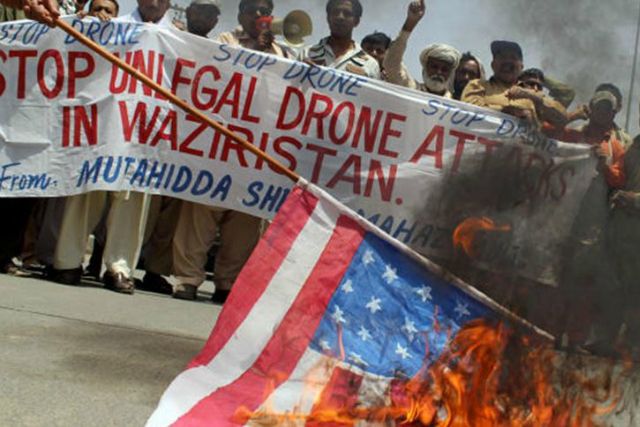
Pakistan-Pakistani Taliban: The Pakistani Taliban rejected peace talks with the government on Thursday after electing hardline militant Mullah Fazlullah as their new leader.

Earlier this month militant sources said that the consultative Shura council of the Tehrik-i-Taliban Pakistan (TTP) chose Khan Said Mehsud known as Sajna as the new leader. But the election of Sajna, who leads the Pakistani Taliban in South Waziristan, reportedly was opposed by Taliban's other groups. Fazlullah was reported to have strongly objected to the choice of Sajna.

Shahidullah Shahid, the main spokesman for the TTP said talks with the government were a “waste of time” and the new chief Maulana Fazlullah was against them. “Holding of peace talks is not even an issue to discuss — this government has no authority, it is not a sovereign government, it is a slave, a slave of America. Holding peace talks is a waste of time.”

Fazlullah's men shot and wounded Malala Yousafzai last year, instantly turning Malala into a global hero for the education of girls.

Comment: Fazlullah's election does not necessarily mean that negotiations will never occur. Hardline leaders often are the only ones capable of negotiating with credibility. But that is for the future. Meanwhile, no peace talks are likely in the near term. Pakistani Pashtun savagery against Pashtun women will increase, including murder attempts against Malala in the UK.

Fazlullah's election signifies rejection of Prime Minister Sharif's peace overture. It also highlights a degenerative leadership pattern resulting from the US program of leadership decapitation. First, there is always someone waiting for the chance to be leader. Second, the new leaders are less experienced and wise than the men they replace. Third, the new generation of leaders is more extreme and theologically rigid than its predecessors. Finally, the new leaders tend to be unknown to intelligence relative to their predecessors. Decapitation is not a permanent solution to an insurgency or an uprising.

Continue reading “NIGHTWATCH: CIA Kills Peace in Pakistan, Saudi Goes Nuclear [with Chinese Help?]”

Michael Shank: Why the White House Won’t Win the Afghanistan War…

04 Inter-State Conflict, 05 Civil War, 08 Wild Cards, Civil Society, Director of National Intelligence et al (IC), DoD, Government, Ineptitude, IO Deeds of War, Military, Officers Call, Peace Intelligence, Strategy
Michael Shank

Why the White House won't win the Afghanistan war

Washington Times, Wednesday, November 6, 2013 –

Cause, Conflict, Conclusion by Michael Shank, Ph.D.

WASHINGTON, November 7, 2013 — U.S. Secretary of State John Kerry desperately needs a win on the Afghanistan war. Unfortunately, however, it appears increasingly unlikely he will get one.

Click on Image to Enlarge

Despite repeated visits and discussions, Kerry has so far failed to secure a clean Bilateral Security Agreement with Afghan President Hamid Karzai. Without an agreement, all U.S. and NATO forces – including the approximately 10,000 that the Pentagon wants to keep in country – would have to leave the country next year.

The immediate sticking point is on whether U.S. troops will receive immunity for misdeeds during the deployment, but the larger issue centers on respect, sovereignty and judicial non-interference.

Local populations are overwhelmingly against immunity for U.S. troops. In Afghanistan, most cases currently slide without reprimand or justice. This includes countless stories of abuse accompanying night raids, which Karzai has repeatedly attempted to ban. As is the case in Iraq, the Philippines and elsewhere, local populations want accountability within their own courts for U.S. troops who commit abuses in their countries. Americans would assuredly want the same treatment for foreign troops on U.S. soil.

After 12 years at war with Afghanistan, we continue to miss the mark on four fronts: strategy, cost, accountability and perception.

Continue reading “Michael Shank: Why the White House Won't Win the Afghanistan War…”

4th Media: Turkey Has Let Foreign Supported Terrorists from 83 Countries Enter Syria to Topple Assad Government

Peace Intelligence

4th media croppedTurkey Has Let Foreign Supported Terrorists from 83 Countries Enter Syria to Topple Assad Government

Syrian Deputy Foreign Minister Faisal Muqdad says Ankara government has let militants from 83 countries to enter Syria.

Turkey, one of the key supporters of the war in Syria, has been widely criticized by Damascus for leaving its borders open to smugglers to enter force and weapons.

A report by the American Pentapolis Agency of statistics on September showed at least 130 thousand non-Syrian militants are fighting in Syria.

Most of these militants used to enter Syria from Lebanon, Jordan and Turkey, but nowadays Turkey borders are militants’ major supply rout which has turned Aleppo, located near northeastern borders of Syria with Turkey, a main bastion for foreign-backed militant groups.

Muqdad further referred to the Geneva 2 talks aimed at finding a solution to end the conflict and said, Syrian government is determined to help the Geneva-based talks bear results, and to do that ‘putting an end to violence and terrorism must be the top most priority”.

Read full article.

Neal Rauhauser: Greater Irans Greatest Problem — US Fumbling with Geo-Political Terrain It Does Not Understand…

Cultural Intelligence, Earth Intelligence, Peace Intelligence
Neal Rauhauser
Neal Rauhauser

Greater Iran’s Greatest Problem

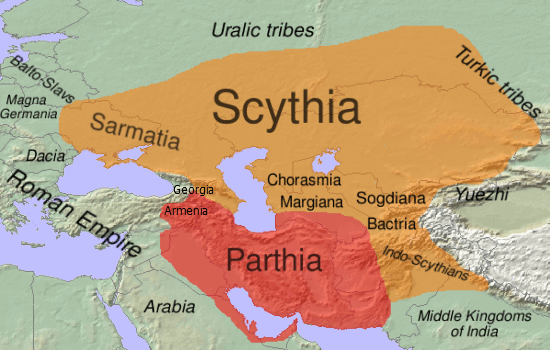
The current political boundaries of the Islamic Republic are a fraction of what the Persian empire was at it’s peak. This map of Scythia & Parthia shows what have been fairly stable boundaries for Iranian culture – from the Tigris river in the west to the Indus in the east.

Geographically this area is known as the Persian or Iranian Plateau

The current nations within Greater Iran’s territory include Georgia, Armenia, Azerbijan, Iraq, Turkmenistan, Uzbekistan, Tajikstan, Afghanistan, and portions of Pakistan, Kyrgyzstan and the Uighur portion of China.

This area is not a contiguous plateau, but it’s all elevated, often rugged, and it lays between Anatolia to the west and the Hindu Kush to the east. I have previously written about Anatolia’s water problems in Losing The Euphrates.

Click on Image to Enlarge

This article, Iran Becoming Uninhabitable, contained this stark quote from a former agriculture minister.

Kalantari said that the “deserts in Iran are spreading, and I am warning you that South Alborz and East Zagros will be uninhabitable and people will have to migrate. But where? Easily I can say that of the 75 million people in Iran, 45 million will have uncertain circumstances.” Kalantari continued, “If we start this very day to address this, it will take 12 to 15 years to balance.”

Somalia, Afghanistan, and Mali each dried past the point of sustaining their populations, descended into chaos, and became havens for illicit networks and terrorist groups.

Full post with two more maps below the line.

Continue reading “Neal Rauhauser: Greater Irans Greatest Problem — US Fumbling with Geo-Political Terrain It Does Not Understand…”

Stuart Umpleby: The Triple Bottom Line & Current Challenges

Collective Intelligence, Commercial Intelligence, Cultural Intelligence, Earth Intelligence, Peace Intelligence
Stuart Umpleby
Stuart Umpleby

The triple bottom line — people, profits, planet — is a recent business concept.  See http://en.wikipedia.org/wiki/Triple_bottom_line. We are now facing major issues on all three:

1.  People.  The safety of people is threatened by a)  vulnerable cyber infrastructure.  See the National Geographic video American Blackout; and b) inequality leading to lower standards of living for the middle class.  See the recent books by Hedrick Smith, Joseph Stiglitz, and Jeffrey Sachs.

2.  Profits.  See the various films and books on the financial crisis.  For example, in the book Thirteen Bankers Simon Johnson, former chief economist at the IMF, and James Kwak say that “too big to fail is too big.”  Yet the banks are getting bigger and they have great influence in writing the laws on banking regulation.

3.  Planet.  I had heard that sea level might rise by 3 feet by the end of the century.  The National Geographic program Earth Under Water suggests perhaps as much as 16 feet in 100 years and another 16 feet in the next 100 years.  See .

These numbers may be high.  However, what actions should we be taking in order to minimize the problem and to prepare for whatever sea level rise occurs?

I think systems science, and reflexivity theory, would be helpful in understanding these phenomena.

Continue reading “Stuart Umpleby: The Triple Bottom Line & Current Challenges”

Parag Khanna: The End of the Nation-State?

Cultural Intelligence, Earth Intelligence, Peace Intelligence
Parag Khanna
Parag Khanna

The End of the Nation-State?

New York Times, 14 October 2013

Singapore — Every five years, the United States National Intelligence Council, which advises the director of the Central Intelligence Agency, publishes a report forecasting the long-term implications of global trends. Earlier this year it released its latest report, “Alternative Worlds,” which included scenarios for how the world would look a generation from now.

One scenario, “Nonstate World,” imagined a planet in which urbanization, technology and capital accumulation have brought about a landscape where governments give up on real reforms and subcontract many responsibilities to outside parties, which then set up enclaves operating under their own laws.

The imagined date for the report’s scenarios is 2030, but at least for “Nonstate World,” it might as well be 2010: though most of us might not realize it, “nonstate world” describes much of how global society already operates. This isn’t to say that states have disappeared, or will. But they are becoming just one form of governance among many.

A quick scan across the world reveals that where growth and innovation have been most successful, a hybrid public-private, domestic-foreign nexus lies beneath the miracle. These aren’t states; they’re “para-states” — or, in one common parlance, “special economic zones.”

Across Africa, the Middle East and Asia, hundreds of such zones have sprung up in recent decades. In 1980, Shenzhen became China’s first; now they blanket China, which has become the world’s second largest economy.

The Arab world has more than 300 of them, though more than half are concentrated in one city: Dubai. Beginning with Jebel Ali Free Zone, which is today one of the world’s largest and most efficient ports, and now encompasses finance, media, education, health care and logistics, Dubai is as much a dense set of internationally regulated commercial hubs as it is the most populous emirate of a sovereign Arab federation.

This complex layering of territorial, legal and commercial authority goes hand in hand with the second great political trend of the age: devolution.

Continue reading “Parag Khanna: The End of the Nation-State?”

noble gold