See link in message below. Graphic British media reporting. Comments at bottom are from Marine Colonel who sent to me. Stuff like this also happened in Vietnam; village chiefs were a frequent target. Believe it would be naive to believe it could not happen here in U.S. Don't think we have a good handle on who is exploiting narco smuggling routes north from Mexico. No reason I know of to believe it could not be AQ, TB, LH, or IRGC (Quds Force)
This is a stomach-turning read. But it is the real face of what will come here if we continue to pretend Islamist terrorism is defeated. You all have seen the AQ torture and executions in Syria…the USG are arming to fight Assad. Those of us who were in Iraq, Afghanistan and the Sudan have seen this up close. These types must be dealt with ruthlessly and with no quarter given ever. They are fighting a war against us, so this is not a law enforcement matter IMHO.
When a country is threatened by an insurgency, what efforts give its government the best chance of prevailing? Contemporary discourse on this subject is voluminous and often contentious. Advice for the counterinsurgent is often based on little more than common sense, a general understanding of history, or a handful of detailed examples, instead of a solid, systematically collected body of historical evidence. A 2010 RAND study challenged this trend with rigorous analyses of all 30 insurgencies that started and ended between 1978 and 2008.
This update to that original study expanded the data set, adding 41 new cases and comparing all 71 insurgencies begun and completed worldwide since World War II. With many more cases to compare, the study was able to more rigorously test the previous findings and address critical questions that the earlier study could not. For example, it could examine the approaches that led counterinsurgency forces to prevail when an external actor was involved in the conflict. It was also able to address questions about timing and duration, such as which factors affect the duration of insurgencies and the durability of the resulting peace, as well as how long historical counterinsurgency forces had to engage in effective practices before they won. A companion volume, Paths to Victory: Detailed Insurgency Case Studies, offers in-depth narrative overviews of each of the 41 additional cases; the original 30 cases are presented in Victory Has a Thousand Fathers: Detailed Counterinsurgency Case Studies.
1. President Obama's opening lines at the U.N. on Tuesday looked down on people who would think to settle disputes with war. Obama was disingenuously avoiding the fact that earlier this month he sought to drop missiles into a country to “send a message” but was blocked by the U.S. Congress, the U.N., the nations of the world, and popular opposition — after which Obama arrived at diplomacy as a last resort.
2. “It took the awful carnage of two world wars to shift our thinking.” Actually, it took one. The second resulted in a half-step backwards in “our thinking.” The Kellogg-Briand Pact banned all war. The U.N. Charter re-legalized wars purporting to be either defensive or U.N.-authorized.
3. “[P]eople are being lifted out of poverty,” Obama said, crediting actions by himself and others in response to the economic crash of five years ago. But downward global trends in poverty are steady and long pre-date Obama's entry into politics. And such a trend does not exist in the U.S.
On Monday, September 23, the President of Estonia, Toomas Hendrik Ilves, gave the key note address at the United Nations panel discussion entitled “A Secure and Free Internet.” That day he was also hailed in a thorough profile on Buzzfeed as “The President of Twitter.”
Today Ilves spoke about Internet freedom and cybersecurity at Columbia University, as part of their World Leaders Forum, with the authority and expertise of a university professor, complete with a patterned bow tie. His talk this afternoon was basically an introductory lecture on modern warfare and the philosophy of informational technologies, punctuated by references to the books taught in Columbia College's common core curriculum.
Ilves compared the Internet revolution to “a sped up version of industrialization.” After going on a technological tangent, he half-heartedly apologized, but pointed out that, “we will all have to know a little bit of technology in order to survive in the future.”
How did he become such a vocal influence and thought leader, online and off, in Internet politics and cybersecurity? Ilves himself traces it back to 2007, when Estonia became the first target—or at least the first target to go public with the information—of cyberattacks motivated by politics.
In an op-ed for the New York Times earlier this year, Ilves wrote that the 2007 attacks were in fact a “blessing—Estonia took cybersecurity seriously earlier than most.”
For more information contact:
Jeffrey T. Richelson – 202/994-7000 nsarchiv@gwu.edu
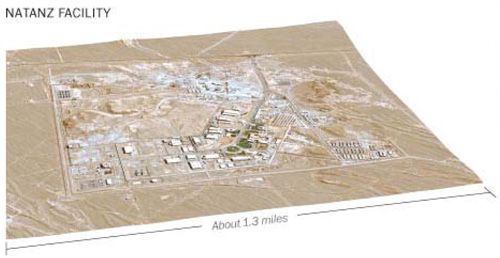
Washington, D.C., September 23, 2013 – While the focus on Syria's chemical weapons use, and the possibility of military action against Syrian government targets pushed aside, for a while, the issue of how to deal with Iran's nuclear program,1 the two situations have one thing in common — their reported reliance on underground facilities to shield the production and storage of weapons of mass destruction.
Documents posted today by the National Security Archive show that such sites in Syria are only the latest in a long line of alleged and real underground facilities that have posed a high priority challenge for U.S. and allied intelligence collection and analysis efforts, as well as for military planners. There may be more than 10,000 such facilities worldwide, many of them in hostile territory, and many presumably intended to hide or protect lethal military equipment and activities, including weapons of mass destruction, that could threaten U.S. or allied interests.
Today's posting features 21 new documents, in addition to the 41 records from the Archive's initial March 23, 2012, posting on this subject. The new materials include several concerning a key topic of Cold War intelligence collection and analysis — hardened and underground communications facilities. Also included for the first time are draft charters for the National Reconnaissance Office (NRO) working group on hardened and buried targets. The majority of the new materials consist of reports from the Asian Studies Detachment (ASD) of the 500th Military Group of the Army Intelligence and Security Command. The ASD reports, based on open source intelligence, focus on various aspects of hardened and buried facilities in North Korea and China.
The 21 new items, with one exception, were acquired via Freedom of Information Act requests or research in the National Archives. The original posting described in detail the agencies and programs the U.S. government has brought to the task of identifying and assessing underground structures in foreign countries since World War II.
Saudi Intelligence Behind Chemical Attacks in Syria But Unfortunately Nobody Will Dare Say That
A senior United Nations official who deals directly with Syrian affairs has told Al-Akhbar that the Syrian government had no involvement in the alleged Ghouta chemical weapons attack: “Of course not, he (President Bashar al-Assad) would be committing suicide.”
When asked who he believed was responsible for the use of chemical munitions in Ghouta, the UN official, who would not permit disclosure of his identity, said: “Saudi intelligence was behind the attacks and unfortunately nobody will dare say that.” The official claims that this information was provided by rebels in Ghouta.
Nandan Nilekani moved from working in business to government (Illustrator: Sumit Kumar)
When Nandan Nilekani began working on providing a unique identification number to half of India's billion-plus people four years ago, he ran into a wall of problems.
The main criticism was that 120bn rupees(£1.72bn; $1.89bn) project was also the world's biggest biometric exercise.
Not surprisingly Mr Nilekani, info-tech whizz turned head of the Unique Identification Authority of India, faced tough questions over access and misuse of personal information, surveillance, profiling, securing of confidential information by the government and threats of budget cuts. A parliamentary panel even trashed the idea, saying it would be “misused”.


 This update to that original study expanded the data set, adding 41 new cases and comparing all 71 insurgencies begun and completed worldwide since World War II. With many more cases to compare, the study was able to more rigorously test the previous findings and address critical questions that the earlier study could not. For example, it could examine the approaches that led counterinsurgency forces to prevail when an external actor was involved in the conflict. It was also able to address questions about timing and duration, such as which factors affect the duration of insurgencies and the durability of the resulting peace, as well as how long historical counterinsurgency forces had to engage in effective practices before they won. A companion volume, Paths to Victory: Detailed Insurgency Case Studies, offers in-depth narrative overviews of each of the 41 additional cases; the original 30 cases are presented in Victory Has a Thousand Fathers: Detailed Counterinsurgency Case Studies.